
I had spent thirty-one years learning how not to panic.
The Army teaches you that fear is information, not instruction. You notice it, understand it, and keep moving.
That training had carried me through emergency briefings, sleepless deployments, difficult commands, and calls that began with someone saying, “Ma’am, we have a situation.”
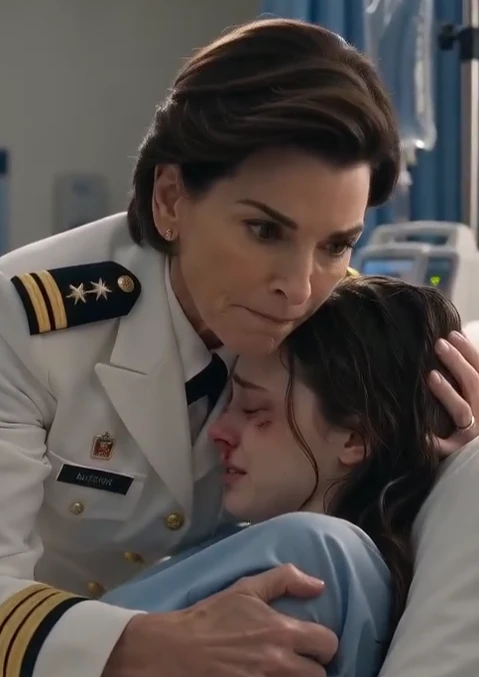
None of it helped when I opened a hospital room door in Charlotte and saw my daughter.
For several seconds, I did not move.
Hannah lay beneath a thin white blanket, almost hidden inside it.
Her brown hair was tangled around her face. One eye was badly swollen. A narrow cut marked the corner of her lower lip. Dark marks covered both forearms, and there was another bruise along the side of her neck.
A plastic hospital bracelet circled her wrist.
Her wedding ring was gone.
Beside the bed sat a clear bag containing a damaged cell phone, one cracked shoe, and the torn sleeve of a pale blue blouse.
I forgot my rank.
Forgot the uniform I was still wearing after driving directly from Fort Liberty.
Forgot the nurse standing near the window.
All I could see was the child who had once waited at the airport holding a handmade sign that said WELCOME HOME MOM in purple marker.
“Hannah.”
Her name came out quietly.
Her good eye moved toward me.
For one second, she looked confused.
Then her face changed.
“Mom?”
I crossed the room.
She tried to sit up too quickly.
“Easy.”
I moved the chair away from the bed and leaned over her.
Hannah raised both arms carefully.
I bent toward her, and she wrapped them around my shoulders.
The sound she made was small.
Almost silent.
That frightened me more than screaming would have.
Hannah had always cried loudly.
At six, she had cried because her goldfish died and asked me whether fish went to heaven.
At fourteen, she cried for two days after her best friend moved to Denver.
At twenty-seven, when my father died, she sobbed into my winter coat outside the funeral home.
This was different.
She was trying not to make noise.
As if someone might hear.
I rested one palm against the back of her head.
“I’m here.”
Her fingers closed around the fabric of my uniform.
“Please don’t leave.”
“I’m not leaving.”
“You promise?”
“Yes.”
She held on tighter.
“I need you to promise.”
“I promise.”
The nurse quietly stepped outside and closed the door.
I stayed bent over Hannah until her breathing slowed.
When she finally loosened her arms, I straightened and sat beside her.
She looked toward the door immediately.
That movement told me more than the injuries.
“Who are you expecting?”
“Nobody.”
“Hannah.”
She swallowed.
Her fingers tightened around the blanket.
“I don’t know.”
I kept my voice level.
“You’re safe in this room.”
She looked at me.
“No, I’m not.”
I felt something cold settle inside my chest.
“Tell me why.”
She shook her head.
“Mom, I made everything worse.”
“No.”
“You don’t know what happened.”
“Then tell me.”
Her eyes filled again.
She looked toward the window.
Rain streaked the glass. Beyond it, Charlotte was gray beneath a low November sky.
“I tried to leave.”
I waited.
Hannah had always hated silence.
As a teenager, she would fill every quiet moment with music, questions, gossip, or stories about school.
Now I let the silence stay.
Eventually, she continued.
“Grant found the suitcase.”
Grant Whitmore.
My son-in-law.
Thirty-four years old.
Private equity.
Expensive suits.
Perfect teeth.
The kind of man who remembered birthdays because his assistant reminded him.
I had never trusted him completely.
That fact had caused several arguments between Hannah and me.
Not because Grant was openly rude.
He was too polished for that.
My uneasiness came from smaller things.
He corrected Hannah in front of people.
He answered questions directed at her.
If she changed plans, he wanted an explanation.
If she spent money, he called it irresponsible.
If he spent money, he called it an investment.
He was always smiling when he did these things.
Once, at Christmas dinner, Hannah mentioned wanting to return to graduate school.
Grant laughed.
“Someone has to remember we have a mortgage.”
Hannah laughed too.
Nobody else did.
Later, I asked her whether she was happy.
She became defensive.
“Mom, not every marriage works like the military.”
“I didn’t say it should.”
“You don’t like Grant.”
“I’m trying to understand him.”
“No, you’re evaluating him.”
Maybe I had been.
I had spent most of my adult life evaluating risk.
But I had also respected Hannah enough to step back.
That decision had bothered me for the last six hours.
Now it felt unbearable.
“What suitcase?” I asked.
“The one I packed.”
“When?”
“Tuesday.”
It was Friday.
“You’ve been trying to leave for three days?”
She shook her head.
“Longer.”
My hand went still on my knee.
“How long?”
She stared at the blanket.
“Almost four months.”
I did not speak.
She looked ashamed.
That made me angry.
Not at her.
Never at her.
At whoever had taught her that needing help was something to be ashamed of.
“Why didn’t you call me?”
“I tried.”
“When?”
“A month ago.”
My mind immediately went through every conversation we had.
There had been a Sunday call when Hannah sounded distracted.
A Tuesday text saying she had a migraine.
A missed call at 11:40 one night that she later said had been accidental.
I remembered all of them.
“Grant was standing beside me,” she said.
My stomach tightened.
“He made you call?”
“He wanted to hear what I said.”
I kept my expression calm.
“Did he take your phone?”
“Sometimes.”
“Sometimes?”
“When he thought I was being unreasonable.”
“What does unreasonable mean?”
“Wanting to go somewhere alone.”
I stared at her.
She continued before I could speak.
“He said I was embarrassing him. He said his family had a reputation.”
“Hannah, did Grant do this to you?”
Her eyes closed.
The answer was already there.
I waited anyway.
She nodded.
My first instinct was not disciplined.
My first instinct was old and primitive and personal.
I wanted to find Grant.
I wanted to demand answers immediately.
I wanted him standing in front of me without his family, his money, or his careful voice.
Training does not remove anger.
It teaches you not to let anger decide what happens next.
I breathed slowly.
“Was anyone else involved?”
Hannah’s eyes opened.
“Yes.”
“Who?”
She looked toward the door again.
“His brother.”
“Lucas?”
Another nod.
“And Evelyn?”
Hannah did not answer.
That answer was worse.
Evelyn Whitmore was Grant’s mother.
Widowed.
Elegant.
Controlled.
Born into money and then married into more of it.
She served on hospital boards, museum boards, university committees, and charity foundations.
At Hannah’s wedding, she had given a speech about how proud she was to welcome “a strong young woman” into the Whitmore family.
Afterward, she told me privately that Hannah would need time to learn “how our family handles things.”
I had not liked the phrase.
I liked it even less now.
“What did Evelyn do?” I asked.
Hannah pressed her lips together.
“She knew.”
“Knew what?”
“Everything.”
I felt my jaw tighten.
“She saw me once.”
“After Grant injured you?”
“Yes.”
“What did she do?”
“She sent a doctor.”
“A doctor came to the house?”
“He works for the family.”
“Name?”
Hannah looked surprised.
I took out my phone.
“Name, Hannah.”
“Dr. Peter Malloy.”
I typed it.
“What did he do?”
“He looked at my ribs and told me I didn’t need the hospital.”
“Did he ask what happened?”
“Yes.”
“What did you say?”
“I fell.”
“Why?”
“Grant was in the room.”
I typed that too.
Hannah watched me.
“You’re writing everything down.”
“Yes.”
“You believe me?”
The question broke something inside me.
I lowered the phone.
“Hannah, look at me.”
She did.
“I believe you.”
Her face crumpled.
“You don’t need proof for me to believe you.”
She started crying again.
I moved my chair closer.
She reached for my sleeve, and I let her hold it.
After several minutes, she whispered, “They kept saying nobody would believe me.”
“Who said that?”
“Evelyn.”
My voice remained quiet.
“What exactly did she say?”
Hannah wiped her cheek.
“She said their family had known judges longer than I’d been alive.”
I stared at her.
“She said Grant’s father donated to the police foundation. She said one call could turn me from a victim into an unstable wife trying to extort them.”
I continued typing.
“She said if I went public, their media people would make everyone think I was lying.”
My anger became colder.
Cold anger was more useful.
“What happened Tuesday?”
“I packed while Grant was at work.”
“Where were you going?”
“To Claire’s.”
Claire Benson had been Hannah’s best friend since college.
“Did Claire know?”
“No. I was just going to show up.”
“What stopped you?”
“Grant came home early.”
“Why?”
“I don’t know.”
“He found the suitcase?”
“Yes.”
Hannah’s breathing changed.
I stopped typing.
“You don’t need to tell me everything right now.”
“I do.”
“No.”
“If I stop, I might not finish.”
I put the phone down.
“Then take your time.”
She stared at the wall.
“He asked where I was going.”
I waited.
“I told him I was leaving.”
Her fingers pulled at a loose thread on the blanket.
“He laughed at first.”
“Then?”
“I said I had copied some documents.”
That word caught my attention.
“Documents?”
Hannah immediately looked toward me.
Then toward the door.
Her fear sharpened.
“What documents?” I asked.
She whispered, “Not here.”
Before I could respond, voices sounded in the corridor.
A man laughed.
I recognized it.
Grant.
Hannah went rigid.
“No.”
I stood.
“Stay here.”
“Mom—”
“I’m staying in the room.”
The door opened before I reached it.
Grant walked in wearing a charcoal coat over a white shirt.
Behind him came Evelyn and Lucas Whitmore.
They looked as though they had just left a business lunch.
No panic.
No visible concern.
No uncertainty.
Grant’s eyes moved from me to Hannah.
His expression hardened.
“Rebecca.”
He had stopped calling me Colonel after his second year of marriage to Hannah.
Usually he called me Rebecca because he knew I disliked the false familiarity.
I did not correct him.
Evelyn walked in behind him.
Her gray hair was perfectly arranged.
She carried a leather handbag that probably cost more than the first car I owned.
“Colonel Sloan,” she said.
“Mrs. Whitmore.”
Lucas remained near the door.
He was thirty-eight, broader than Grant, and less polished.
He worked for the family investment office and had the permanent smirk of a man who had spent his life discovering that consequences usually belonged to other people.
Grant looked at Hannah.
“Seriously?”
Hannah pulled the blanket higher.
I stepped between the bed and the three of them.
Grant looked at me.
“She’s been telling stories again.”
I said nothing.
He continued.
“Hannah has not been herself lately.”
“What happened to her?”
“She fell.”
“Where?”
“Guesthouse stairs.”
“When?”
“Last night.”
“What time?”
His eyes narrowed.
“I don’t know. Around eleven.”
“Were you there?”
“Yes.”
“Did you call the ambulance?”
“No.”
“Who did?”
“She did.”
Hannah whispered, “That’s a lie.”
Grant sighed.
“Hannah.”
“She didn’t have a phone,” I said.
He looked at me.
“What?”
“You said she called an ambulance.”
His expression changed almost invisibly.
I noticed.
“So which phone did she use?”
Evelyn stepped forward.
“This interrogation is unnecessary.”
I turned toward her.
“You called it an interrogation.”
“You’re behaving like this is some kind of military incident.”
“My daughter is in a hospital.”
“And she received treatment.”
“You don’t seem concerned about why.”
Evelyn’s expression remained pleasant.
“Hannah has been under considerable emotional strain.”
I almost smiled.
“Everyone keeps saying that.”
“Because it is true.”
“What does emotional strain have to do with the injuries?”
“She fell.”
“Grant says that too.”
“Because that is what happened.”
Hannah raised her voice.
“No.”
Everyone looked at her.
Her face had gone pale.
Grant took one step toward the bed.
I moved sideways into his path.
He stopped.
“Hannah,” he said, “you need to stop.”
She looked at him.
“You locked the door.”
Lucas laughed.
A quiet laugh.
Not because something was funny.
Because he wanted Hannah to hear that he was not worried.
I turned toward him.
“Something amusing?”
Lucas lifted both hands.
“This whole performance.”
“What performance?”
“You showing up in uniform.”
I looked down at the green Army service uniform I had not had time to change out of.
I had been in a leadership conference when Claire called.
Not Hannah.
Claire.
A nurse had found Claire’s name listed as an emergency contact in Hannah’s wallet and reached her first.
Claire called me twenty-three minutes later.
I left immediately.
Lucas looked at the insignia on my jacket.
“You think that scares anybody?”
“No.”
He smiled.
“Good.”
Evelyn glanced at him.
“Lucas.”
He ignored her.
“Our family has handled worse situations than this.”
I looked at him.
“What situations?”
His smile faded slightly.
Evelyn answered quickly.
“He means scandals.”
“Scandals?”
“Business disputes. Lawsuits. People making false accusations.”
Grant looked at Hannah.
The meaning was clear.
Hannah lowered her eyes.
Evelyn continued.
“We have relationships in this city, Colonel.”
“So I’ve heard.”
“Good. Then perhaps you understand that turning a private marital problem into a public spectacle would be very unfortunate.”
“For whom?”
“For everyone.”
“That is vague.”
Her polite smile returned.
“Judges know us. Attorneys know us. Police leadership knows us. Newspaper owners have attended our dinners.”
Lucas added, “Your rank won’t mean much outside a base.”
I looked at him.
“I’m aware of how civilian law works.”
“Then you know screaming about your daughter isn’t going to change anything.”
“I haven’t screamed.”
That silenced him.
Grant rubbed his forehead.
“Can we stop this?”
I turned toward him.
“Yes.”
He looked relieved.
“Leave.”
His relief disappeared.
“What?”
“You three need to leave the room.”
“This is my wife.”
“She asked me not to leave her.”
“She isn’t thinking clearly.”
Hannah raised her voice.
“I’m thinking clearly.”
Grant looked past me.
“You’re making a mistake.”
She stared at him.
“No. Marrying you was the mistake.”
His face changed.
For the first time, something ugly appeared beneath the control.
“Careful.”
One word.
Quiet.
Enough.
I looked directly at him.
“Do not speak to her like that.”
He turned toward me.
“You don’t know what she’s done.”
“What has she done?”
He said nothing.
I waited.
“Go ahead.”
Evelyn interrupted.
“This is exactly why we shouldn’t discuss private matters in a hospital.”
I looked at her.
“Then leave.”
Her smile disappeared.
“You are a guest here.”
“So are you.”
“This hospital knows our family very well.”
That sentence bothered me.
Not because of the implied threat.
Because she had chosen the word hospital.
I looked toward the call button beside Hannah’s bed.
Before I could press it, a nurse opened the door.
She was the same nurse who had left earlier.
Her badge read M. ALVAREZ, RN.
“Is everything all right?”
“No,” I said.
Evelyn smiled instantly.
“Yes. Family discussion.”
Nurse Alvarez looked at Hannah.
“Ms. Whitmore?”
Hannah shook her head.
“I want them to leave.”
Grant looked at her sharply.
The nurse turned toward him.
“Then I need everyone except the patient’s approved visitor to step outside.”
Grant laughed.
“I’m her husband.”
“She has the right to limit visitors.”
“I’d like to speak to your supervisor.”
“You’re welcome to do that outside.”
Lucas muttered something under his breath.
Evelyn gave Nurse Alvarez a cold look.
“Do you know who I am?”
The nurse paused.
“Yes.”
Evelyn seemed satisfied.
Then the nurse said, “That doesn’t change the visitor policy.”
For the first time that day, I felt something close to gratitude.
Grant stared at Hannah.
“This isn’t over.”
Hannah looked away.
I memorized the sentence.
Evelyn walked toward the door.
She stopped beside me.
Her perfume smelled faintly of jasmine.
“You should think very carefully about what you do next.”
I looked at her.
“I am.”
Her eyes narrowed.
“That was advice.”
“I understood.”
Lucas opened the door.
They left.
Nurse Alvarez closed it behind them.
Then she turned the lock.
Hannah started crying.
The nurse went directly to her.
“You’re okay.”
Hannah shook her head.
“No.”
“You’re safe here.”
“They know people here.”
Nurse Alvarez hesitated.
I noticed.
“What does that mean?” I asked.
She glanced toward the door.
Then lowered her voice.
“Mrs. Whitmore has been on the hospital foundation board.”
I looked at Hannah.
She closed her eyes.
Of course.
I turned back to the nurse.
“Who has access to my daughter’s chart?”
“Clinical staff.”
“Can her husband access it?”
“Not unless she authorizes him.”
“Has he?”
The nurse paused.
“I need to check.”
“Please.”
She nodded.
“There’s also something else.”
Hannah opened her eyes.
The nurse walked toward the cabinet.
“I found this when we changed her gown.”
She removed a small clear evidence bag.
Inside was Hannah’s damaged phone.
Beneath it was something smaller.
A black microSD card.
Hannah’s face changed instantly.
“Where did you find that?”
“Under the blanket when you arrived.”
Hannah looked at me.
Her breathing quickened.
“That’s mine.”
Nurse Alvarez placed the bag on the side table.
“Security asked us not to handle the phone because it may be relevant to your injuries.”
I looked at the card.
Something had been scratched into the plastic.
Three letters.
RUN.
I turned toward Hannah.
“What is on it?”
She did not answer.
A knock came from the door.
All three of us froze.
“Who is it?” Nurse Alvarez called.
“Grant.”
Hannah’s entire body tightened.
The door handle moved.
“Open the door.”
Nurse Alvarez stepped toward it.
“You need to leave the floor.”
“I need my wife’s phone.”
I looked at the evidence bag.
That was fast.
Too fast.
Grant had left less than two minutes earlier.
How did he know the phone was here?
Nurse Alvarez said, “Hospital security is being contacted.”
Silence.
Then Grant said, “Fine.”
His footsteps moved away.
I looked at Hannah.
“Does he know about the card?”
She whispered, “I think so.”
“What’s on it?”
She stared at the bag.
“Everything.”
Two hospital security officers arrived ten minutes later.
A police officer came fifteen minutes after that.
I did not like the first officer.
His name was Daniel Price.
He entered smiling.
Not friendly.
Familiar.
He looked at Hannah’s chart, then at me.
“Colonel Sloan.”
“You know who I am?”
“I was told.”
“By whom?”
He smiled.
“Dispatch.”
Maybe.
He turned toward Hannah.
“Mrs. Whitmore, your husband says you had an argument at home.”
I watched her.
She looked frightened again.
Officer Price continued.
“He says you were drinking.”
“I wasn’t.”
“He says you became upset.”
“I didn’t.”
“He says you fell down several steps while trying to leave.”
Hannah stared at him.
I spoke.
“You’ve already talked to her husband?”
He looked at me.
“Yes.”
“Before speaking to the injured person?”
“He was available.”
“I see.”
He did not like my tone.
“Ma’am, I’m trying to determine what occurred.”
“So am I.”
He turned back to Hannah.
“Did your husband intentionally injure you?”
“Yes.”
The answer came quietly but immediately.
Officer Price stopped writing.
“Okay.”
“His brother too.”
Another pause.
“And his mother stopped me from leaving.”
Officer Price looked toward me.
Then back at Hannah.
“Do you have evidence?”
I almost spoke.
Stopped myself.
Hannah needed to answer.
She stared at the blanket.
“I have something.”
Officer Price leaned closer.
“What?”
Her eyes moved toward the evidence bag.
Before she could speak, I asked, “Are you recording this interview?”
Officer Price looked at me.
“I’m taking notes.”
“That wasn’t my question.”
He sighed.
“No.”
“I’d prefer a formal recorded statement.”
“Colonel, this is a hospital interview.”
“Then we can wait.”
His face tightened.
“Wait for what?”
“For a detective from the appropriate unit.”
He closed his notebook.
“You military people love procedure.”
“I like records.”
Something changed in his expression.
Only briefly.
Then he looked toward the door.
“I’ll have someone follow up.”
“Who?”
“Detectives.”
“When?”
“As soon as possible.”
He began walking away.
I stood.
“Officer Price.”
He stopped.
“What?”
“You didn’t ask whether Grant Whitmore had access to the room.”
He frowned.
“What?”
“You didn’t ask whether Hannah is afraid to go home. You didn’t ask whether there are weapons in the house. You didn’t ask whether this has happened before.”
He stared at me.
“You want to do my job?”
“No. I want someone to do it.”
The room went silent.
Nurse Alvarez looked down, hiding her reaction.
Officer Price opened the door.
“I’ll note your concerns.”
“I’m sure you will.”
He left.
Hannah looked at me.
“That’s what they do.”
“What?”
“Make everything disappear.”
I sat beside her.
“No.”
“You saw him.”
“I saw one officer.”
“He knows them.”
“We don’t know that.”
“I do.”
“How?”
She pointed toward the memory card.
I stared at it.
“What’s on there, Hannah?”
She finally looked directly at me.
“Records.”
“What kind?”
“Grant’s records.”
My stomach tightened.
“Financial?”
“Yes.”
I lowered my voice.
“Why do you have them?”
“I wasn’t trying to investigate him.”
“Start at the beginning.”
She leaned back carefully.
“Last year, Grant asked me to help organize documents for the Whitmore Foundation.”
Hannah had worked in nonprofit accounting before marrying Grant.
After the wedding, she became financial manager for one of the family charitable organizations.
I had never liked that arrangement.
But Hannah loved the work.
At least at first.
“He said they needed someone they trusted,” she continued.
“What did you find?”
“Payments.”
“To whom?”
“I didn’t understand at first.”
She looked toward the door.
“Consulting fees. Donations. Legal retainers. Media contracts.”
“Those sound normal.”
“Some were.”
“And others?”
She swallowed.
“Some were to people who had helped the family.”
“What kind of help?”
“Cases disappearing.”
I stared at her.
“Explain.”
“There was an employee at one of their companies who accused Lucas of attacking him after an argument.”
“When?”
“Three years ago.”
“I never heard about that.”
“Almost nobody did.”
“What happened?”
“Police report vanished. The employee received a settlement through a consulting company.”
I felt cold again.
“What else?”
“A former assistant accused Grant of harassment.”
My eyes stayed on her.
“Before you married him?”
“Yes.”
“Did you know?”
“No.”
“What happened to her?”
“She signed something. Then a local reporter started asking questions.”
“And?”
“The reporter’s newspaper received a large advertising contract from one of the Whitmore companies.”
I stared at Hannah.
She continued.
“Then the story never ran.”
I looked toward the memory card.
“How much is on that?”
“A lot.”
“Did you copy everything?”
“Not everything.”
“What did you copy?”
“Transactions. Emails. Audio.”
“Audio?”
Hannah nodded.
“I started recording conversations after Evelyn threatened me.”
My mind shifted immediately into planning.
“Where is the original data?”
“Some on Grant’s office system. Some on mine.”
“Do they know you copied it?”
“Grant found out Tuesday.”
“That’s why you tried to leave?”
“I was already planning to leave. That’s why he wouldn’t let me go.”
I stared at her.
“Hannah, this is bigger than a marriage problem.”
“I know.”
“Who else knows about this card?”
“Claire knows I copied something. She doesn’t know what.”
“Anybody else?”
“No.”
I picked up my phone.
Hannah grabbed my sleeve.
“Don’t call anyone.”
“I’m not calling the police.”
“Then who?”
“A lawyer.”
“I don’t know who we can trust.”
“I do.”
Major General Samuel Reid had retired six years earlier.
He had been my commander for part of my career, then became a close family friend.
His daughter, Elaine, was a federal prosecutor.
I had attended her wedding.
She had attended my father’s funeral.
I did not call Samuel.
I called Elaine.
She answered on the third ring.
“Rebecca?”
“I need legal advice for Hannah.”
Her voice changed immediately.
“Is she okay?”
“No.”
“Where are you?”
“Charlotte.”
“Hospital?”
“Yes.”
“What happened?”
“I’m not explaining it over an unsecured phone.”
Silence.
Then Elaine said, “Understood.”
“I have physical evidence and potentially digital evidence involving more than domestic abuse.”
Another pause.
“How much more?”
“Possible corruption. Payments to public officials. Suppressed cases.”
Her voice became professional.
“Do not open the digital evidence on a hospital computer.”
“I wasn’t going to.”
“Do not give it to local law enforcement until we know who is involved.”
“That was also my thought.”
“Can you secure it?”
“Yes.”
“I’m going to make two calls.”
“To whom?”
“One person at the U.S. Attorney’s Office and one federal investigator I trust.”
“Elaine.”
“Yes?”
“My daughter is frightened.”
“I understand.”
“No. I need you to understand what I’m asking.”
She was silent.
“I’m asking whether I can trust these people with her life.”
Elaine answered without hesitation.
“Yes.”
“Good.”
“I’ll call you back.”
I ended the call.
Hannah stared at me.
“You called a federal prosecutor?”
“I called Elaine.”
“Mom.”
“What?”
“She’s a federal prosecutor.”
“She’s also someone I’ve known since she was nineteen.”
“That doesn’t make this less terrifying.”
“No.”
I leaned toward her.
“But we’re done letting the Whitmores choose the rules.”
Hannah looked at the evidence bag.
“What if the card isn’t enough?”
“It doesn’t need to be everything.”
“What if they say I altered it?”
“Then experts will examine it.”
“What if they know somebody?”
“They probably do.”
She stared at me.
“That doesn’t scare you?”
“Yes.”
She looked surprised.
“I am scared, Hannah.”
“You don’t look scared.”
“That’s different.”
I rested both hands on my knees.
“Being afraid does not mean they win.”
Elaine called back eighteen minutes later.
A federal agent named Marcus Hale was on his way.
Not to take over the case formally.
Not yet.
To preserve evidence and determine jurisdiction.
He arrived wearing plain clothes.
No dramatic entrance.
No group of agents.
Just a forty-something man carrying a laptop bag and an expression that suggested he had not smiled since breakfast.
He showed identification.
I examined it carefully.
He did not seem offended.
“Colonel Sloan?”
“Yes.”
“I understand there may be digital evidence.”
“There is.”
He looked at Hannah.
“I won’t take anything without explaining what happens next.”
Hannah nodded.
Agent Hale pulled a chair closer but stayed several feet from the bed.
“My understanding is you obtained files from systems you were authorized to access through your employment.”
“Yes.”
“Did you bypass passwords or security restrictions?”
“No.”
“Did you copy files?”
“Yes.”
“Did you modify them?”
“No.”
“Where are the copies?”
Hannah looked at the evidence bag.
“The card.”
He nodded.
“Any others?”
She hesitated.
“Yes.”
I looked at her.
“You said this was the only copy.”
“I said nobody else knew.”
“Where are the others?”
“At Claire’s.”
“How?”
“I mailed her a book.”
I stared at her.
“When?”
“Monday.”
“What book?”
She almost smiled.
“Pride and Prejudice.”
“Of course.”
Agent Hale looked between us.
“Is something hidden inside?”
“A USB drive inside the spine.”
“Does Claire know?”
“No.”
I exhaled slowly.
“You planned this.”
Hannah looked ashamed again.
“I was scared.”
“No.”
I shook my head.
“You were careful.”
For the first time since I entered the room, something like pride appeared beneath my anger.
My daughter had not been helpless.
She had been trapped.
There was a difference.
Agent Hale asked, “What is on the USB?”
“More than the card.”
“Then why the card?”
“Audio recordings.”
He looked at her.
“Of what?”
“Evelyn.”
“Threatening you?”
“Yes.”
“Grant?”
“Yes.”
“Anyone else?”
“Lucas. Dr. Malloy. A police captain.”
Agent Hale stopped writing.
“Name?”
Hannah whispered, “Thomas Reddick.”
I knew the name.
Captain Thomas Reddick had appeared beside Evelyn Whitmore in charity photographs.
I had seen him at the Whitmore Christmas gala two years earlier.
The memory came back sharply.
He had shaken my hand and joked that between the Army and the police department, the city was “well defended.”
I felt sick.
Agent Hale’s expression remained neutral.
“What is Captain Reddick saying on the recording?”
Hannah looked down.
“He tells Evelyn not to worry about me filing a report.”
“Exact words?”
“I don’t remember exactly.”
“That’s fine. We won’t guess.”
He turned toward me.
I appreciated that sentence.
No guessing.
No assumptions.
Evidence.
He looked back at Hannah.
“I’d like to preserve this card using forensic procedures.”
“Will it leave the hospital?”
“Yes.”
“Can Grant get it?”
“No.”
“Can local police?”
“Not without proper process.”
She looked at me.
I nodded.
She whispered, “Okay.”
Agent Hale placed the card into a new evidence envelope, documented the transfer, and asked Nurse Alvarez to witness it.
Every step was written down.
Every signature dated.
Every movement recorded.
I watched Hannah relax slightly as the paperwork grew.
People often complain about procedure.
But procedure can be protection when powerful people are counting on confusion.
After the card was secured, Agent Hale asked another question.
“Do you have somewhere safe to go after discharge?”
“My apartment,” I said.
He looked at me.
“Location?”
“Near Fort Liberty.”
“That may help.”
Hannah shook her head.
“They’ll follow us.”
“We’ll address that.”
“How?”
He looked at her.
“Carefully.”
I liked him more than Officer Price.
The next problem came from the hospital itself.
At six that evening, a physician I had not met entered the room.
Dr. Martin Graves.
He glanced at Hannah’s chart.
“Mrs. Whitmore, I understand you may be ready for discharge tomorrow.”
Nurse Alvarez, standing behind him, frowned.
I noticed.
The doctor continued.
“Your scans don’t show anything requiring continued admission.”
“That’s good,” I said.
He looked at me.
“Yes.”
“What about documentation of her injuries?”
“Already in the chart.”
“Photographs?”
He hesitated.
“Some.”
“I requested a complete forensic examination.”
His expression changed.
“That isn’t usually necessary unless law enforcement requests it.”
Nurse Alvarez spoke.
“The patient requested it.”
Dr. Graves looked irritated.
“We’re not an evidence collection center.”
I stared at him.
“This hospital has a forensic nursing team.”
He looked at me.
“You seem very informed.”
“I had several hours to read.”
Nurse Alvarez said quietly, “Dr. Graves, the forensic nurse has already been paged.”
He turned toward her.
“By whom?”
“Me.”
His expression hardened.
Before he could respond, Hannah said, “I want the exam.”
He looked at her.
“You understand this may be uncomfortable.”
“Yes.”
“And could prolong your stay.”
“Yes.”
“Fine.”
He left.
Nurse Alvarez watched the door close.
Then she whispered, “He plays golf with Mr. Whitmore.”
I looked at her.
“Which Mr. Whitmore?”
“Grant’s uncle.”
Of course he did.
Hannah looked terrified again.
I took out my phone.
Agent Hale had given me a number.
I sent one message.
Potential hospital conflict.
He replied less than a minute later.
Document names. Do not confront. Federal team aware.
That was exactly what I intended.
The forensic nurse arrived at seven.
Her name was Dana Cho.
She was calm, direct, and careful.
She asked me to leave for part of the examination.
I did.
I hated it.
But Hannah needed privacy more than I needed control.
I sat in the hallway in my uniform, staring at a vending machine.
For the first time all day, I was alone.
That was when my hands started shaking.
Not much.
Enough that I noticed.
I put them beneath my arms and stared at the floor.
A memory came back.
Hannah at eight years old.
I had been leaving for a deployment.
She stood beside my car wearing pink pajamas under her winter coat.
“Do you have to go?”
“Yes.”
“Why?”
“Because it’s my job.”
“Can’t somebody else do it?”
I had crouched in front of her.
“Sometimes people have to do difficult things because they’re responsible for them.”
She had frowned.
“That sounds stupid.”
At the time, I laughed.
Now I sat outside her hospital room wondering whether I had spent too much of her childhood teaching her to endure difficult things.
Maybe she learned that strength meant staying.
Maybe she had seen me leave for deployments, work through grief, handle crises, and keep moving no matter what.
Maybe she thought asking for help meant failing.
The thought hurt.
When the door opened, Dana stepped out.
“She’s asking for you.”
I stood.
“How is she?”
“She did very well.”
That was something medical people say when they do not want to describe suffering.
I entered.
Hannah looked exhausted.
I sat down.
She looked at me.
“Mom?”
“Yes?”
“Why didn’t I tell you?”
The question surprised me.
“I don’t know.”
“I kept thinking about it.”
“You don’t owe me an explanation.”
“I think I do.”
“No.”
“I thought you’d tell me to leave.”
I stared at her.
“I would have.”
“I know.”
“Was that bad?”
“No.”
She looked toward the ceiling.
“But I wasn’t ready.”
I understood.
Maybe for the first time.
“I thought if I told you, everything would become real.”
I nodded slowly.
“And I knew you’d believe me.”
That was the part I did not expect.
“Why would that stop you?”
“Because then I couldn’t pretend anymore.”
I leaned back.
Hannah continued.
“Grant always apologized.”
I waited.
“He’d say he was under pressure. Or I embarrassed him. Or I pushed him.”
Her voice became smaller.
“Then he’d cook breakfast the next morning.”
I closed my eyes briefly.
“He’d buy flowers.”
I said nothing.
“He’d say we were going to start over.”
I looked at her.
“And you wanted to believe him.”
“Yes.”
“That doesn’t make you weak.”
“I feel weak.”
“You survived long enough to collect evidence against an entire family.”
She almost smiled.
“That sounds very Army.”
“It probably is.”
She looked at me.
“I thought you’d hate him.”
“I do.”
“Mom.”
“Do you want me to lie?”
A tiny laugh escaped her.
Then she winced.
“Don’t make me laugh.”
“Sorry.”
“I still loved him.”
“I know.”
“Part of me still does.”
“I know.”
“How?”
“Because love doesn’t disappear on command.”
Her eyes filled.
“I hate that.”
“So do I.”
I stayed with her until she slept.
At 2:14 the next morning, someone tried to enter Hannah’s room.
The lock stopped them.
I woke immediately.
The handle moved again.
I stood.
“Who is it?”
No answer.
Then footsteps.
I opened the door only after calling security.
The hallway was empty.
Hospital security reviewed footage.
A man wearing maintenance clothing had entered the floor using a staff access card.
He left before security reached him.
The access card belonged to an employee who had reported it missing earlier that night.
Agent Hale arrived at 3:05.
He watched the footage twice.
“Do you recognize him?”
“No.”
Hannah did not either.
Nurse Alvarez stared at the screen.
“I’ve never seen him.”
Agent Hale made a call.
Within an hour, two federal agents were stationed nearby.
The hospital administration suddenly became extremely cooperative.
Funny how institutions change when someone with more authority starts asking questions.
At six, Agent Hale entered with new information.
“The card is authentic.”
Hannah gripped the blanket.
“What did you find?”
“I can’t discuss everything yet.”
“Is it enough?”
He considered his answer.
“It is significant.”
I watched him.
“What does significant mean?”
“It means this is no longer being treated as an isolated assault investigation.”
Hannah closed her eyes.
I asked, “What else?”
“There are recordings referencing payments to law enforcement officers, private investigators, a judge’s campaign organization, and several intermediaries.”
My stomach tightened.
“A judge?”
“Potentially.”
“Name?”
“I can’t provide that yet.”
“Fair.”
Hannah whispered, “What about Grant?”
Agent Hale looked at her.
“There are recordings of your husband discussing how to prevent you from reporting what happened.”
Her breathing stopped for a second.
“And Evelyn?”
“Yes.”
“Lucas?”
“Yes.”
“What happens now?”
Agent Hale sat.
“Now we verify.”
She looked disappointed.
I understood why.
Evidence feels like an ending when you have risked everything to collect it.
In reality, evidence is a beginning.
“You mean arrests?” she asked.
“I mean we verify.”
“How long?”
“I can’t promise.”
Her face tightened.
I leaned toward her.
“Hannah.”
She looked at me.
“We don’t need fast. We need solid.”
Agent Hale nodded slightly.
“Exactly.”
Claire arrived later that morning carrying the copy of Pride and Prejudice.
She looked as if she had not slept.
The moment she saw Hannah, she covered her mouth.
“Oh my God.”
Hannah started crying.
Claire walked to the bed and carefully wrapped both arms around her.
“I’m sorry.”
“You didn’t know.”
“I should have.”
“No.”
Claire looked at me.
“Mrs. Sloan.”
“Rebecca.”
She had known me twelve years and still called me Mrs. Sloan.
I pointed toward the chair.
“Sit.”
She placed the book on the table.
Agent Hale collected it.
Inside the spine was a small USB drive.
The contents were larger than the memory card.
Much larger.
Financial records.
Emails.
Calendar entries.
Internal memos.
Audio.
Photographs of handwritten notes.
Copies of agreements.
Hannah had apparently spent months assembling them.
I stared at her.
“When were you doing all this?”
“At night.”
“Grant never noticed?”
“He sleeps heavily.”
That almost sounded normal.
It made everything worse.
Claire stayed for an hour.
Before leaving, she looked at me.
“Can I tell you something?”
“Yes.”
She lowered her voice.
“I tried asking Hannah about Grant last year.”
I glanced toward the bed.
Hannah was speaking with Nurse Alvarez.
“What did she say?”
“That I was jealous.”
“Were you?”
“No.”
“What did you notice?”
“Little things.”
Of course.
It was always little things first.
“She stopped going out without him.”
I nodded.
“She changed clothes before he got home because he criticized what she wore.”
My jaw tightened.
“She stopped answering calls after eight.”
I listened.
“And once at dinner, he called six times in twenty minutes.”
“Why didn’t you tell me?”
Claire looked ashamed.
“She asked me not to.”
I wanted to be angry.
Instead I understood her.
Hannah had asked all of us to believe the version of her marriage she was trying to survive.
We had.
“She made me promise.”
Claire wiped beneath one eye.
“I thought respecting her meant staying out of it.”
“So did I.”
She looked at me.
“That was wrong.”
“Maybe.”
“You don’t sound sure.”
“Because I don’t know what the right thing would have been.”
I glanced toward Hannah.
“We can spend years asking what we should have noticed.”
“What should we do instead?”
“Notice what she needs now.”
Claire nodded.
That was enough.
Hannah was discharged the following afternoon.
Not through the main entrance.
Agent Hale arranged a secure exit.
No drama.
No convoy.
One unmarked vehicle.
Two agents.
Me.
Hannah wearing borrowed clothes Nurse Alvarez brought from home.
As we moved through a service hallway, Hannah stopped.
“What?”
“My phone.”
“The broken one?”
“Yes.”
“It’s evidence.”
“No. The other one.”
I stared at her.
“What other one?”
She looked embarrassed.
“I hid a prepaid phone in the chapel.”
I closed my eyes.
“Hannah.”
“I told you I was planning.”
“Apparently you were planning a small intelligence operation.”
She almost smiled.
“Second row. Under the last bench.”
Agent Hale stared at her.
“How long has it been there?”
“Two weeks.”
“Battery?”
“Probably dead.”
“What’s on it?”
“Messages.”
“To whom?”
“Me.”
He frowned.
“Explain.”
“I sent myself notes whenever something happened.”
Agent Hale nodded slowly.
“That may matter.”
One agent retrieved the phone.
Then we left.
The Whitmores never saw us.
For the first week, Hannah stayed in my guest room.
She slept twelve hours the first night.
Four the second.
One the third.
Trauma has no schedule.
Some mornings she woke hungry and wanted pancakes.
Other mornings, she stared at coffee for an hour.
Sometimes she talked constantly.
Sometimes I did not hear her voice until dinner.
I returned to work part-time.
My command gave me space without asking for details.
The official explanation was “family emergency.”
That was enough.
At home, I learned to stop asking, “Are you okay?”
It was a useless question.
Instead I asked things with answers.
“Do you want the blinds open?”
“Soup or pasta?”
“Do you want company?”
“Do you want the television on?”
“Do you want Claire here?”
Small choices.
Hannah had spent months losing choices.
I tried to give them back.
Three days after she came home, she stood in my kitchen staring at a drawer.
“What are you looking for?”
“Scissors.”
I pointed.
She opened the drawer.
Then froze.
There was a roll of silver duct tape inside.
Her breathing changed instantly.
I walked toward her but stopped several feet away.
“Hannah?”
She slammed the drawer shut.
“I’m fine.”
“No.”
“I said I’m fine.”
I remained where I was.
She pressed both palms against the counter.
Grant had used duct tape to seal boxes.
That was all she told me.
I threw the roll away later without mentioning it.
The next morning, she noticed.
“You didn’t have to do that.”
“I know.”
She nodded.
Neither of us said more.
The first arrest happened nine days after the hospital.
Not Grant.
Officer Daniel Price.
I learned from Elaine.
He was accused of improperly accessing records and passing information connected to Hannah’s case.
When I told Hannah, she sat completely still.
“The officer from the hospital?”
“Yes.”
“He told Grant?”
“According to Elaine, investigators believe someone in the department notified the Whitmores after your ambulance call.”
Hannah stared at me.
“So they knew before they arrived.”
“Yes.”
“That’s how Grant knew about the phone.”
“Maybe.”
She looked nauseated.
“We were right.”
“Yes.”
“That doesn’t make me feel better.”
“I know.”
Two days later, Captain Thomas Reddick was placed on administrative leave.
Then Dr. Malloy’s clinic announced he was “temporarily unavailable.”
Then a local news station reported federal search warrants connected to several Whitmore businesses.
That was when the family went public.
Evelyn released a statement.
She called the investigation “a misunderstanding fueled by a distressed family member.”
No names.
No direct accusation.
Everyone knew who she meant.
Hannah read the statement twice.
Then a third time.
“She’s doing exactly what she said.”
I took the tablet from her.
“Don’t read comments.”
“I need to know what people are saying.”
“No, you don’t.”
“You can’t order me around.”
“You’re right.”
I put the tablet down.
“Do what you want.”
She stared at me.
I walked toward the kitchen.
After a few minutes, she followed.
“I hate when you do that.”
“What?”
“Agree.”
I almost smiled.
“I’m learning.”
She sat at the counter.
“Some people believe her.”
“Some people believe anything.”
“Some people think I did this for money.”
“What money?”
“I don’t know.”
“Exactly.”
“She has people saying I was unstable.”
“Were you?”
Hannah looked offended.
“Mom.”
“I’m serious. Did you have anxiety? Depression? Did you ever seek treatment?”
“Yes.”
“Then they’ll probably use it.”
She stared at me.
“You’re supposed to tell me it doesn’t matter.”
“It shouldn’t matter.”
“That’s different.”
“Yes.”
I sat across from her.
“They may use anything they can.”
She looked frightened.
“We should know that before it happens.”
She nodded slowly.
“My therapist has records.”
“Okay.”
“I started seeing her because Grant said I was paranoid.”
“Was she independent?”
“Yes.”
“Good.”
“I told her some things.”
“Then tell Elaine.”
Hannah looked at me.
“You really think this is going to get worse.”
“Yes.”
She was silent.
“Do you regret taking the card?” I asked.
She thought for a long time.
“No.”
“Good.”
“Ask me tomorrow.”
“Fair.”
Grant contacted her for the first time through an attorney.
The letter was polite.
Painfully polite.
He wanted to discuss “an amicable resolution.”
Hannah laughed when she read it.
Then she cried.
Then she tore it in half.
Then she apologized to Elaine for destroying correspondence.
Elaine had scanned it already.
The divorce petition came next.
Grant filed first.
He accused Hannah of removing confidential business materials.
Hannah sat at my dining table reading the filing.
“He’s saying I stole from them.”
“Yes.”
“They kept me locked inside a building.”
“I know.”
“He still thinks this is a business dispute.”
“His attorneys may think that’s safer.”
She looked at me.
“What do we do?”
“We let your attorney answer.”
“You’re not going to tell me to fight?”
“Hannah, filing legal documents is how we fight.”
She frowned.
“That sounds like something Elaine would say.”
“She’s influencing me.”
The financial portion of the divorce became almost comical.
Grant initially wanted a confidentiality agreement.
Hannah refused.
Then he wanted return of all copied documents.
Federal investigators already had them.
Then he wanted control over Hannah’s public statements.
Her lawyer nearly laughed.
Finally, he offered a large settlement.
Hannah pushed the papers away.
“I don’t want their money.”
Her attorney, Susan Park, leaned back.
“You may be entitled to marital assets regardless.”
“I don’t care.”
Susan looked at me.
I lifted both hands.
“Her decision.”
Hannah looked surprised.
“What?”
“You thought I’d tell you to take it?”
“You’re practical.”
“I am.”
“You always say money gives people choices.”
“It does.”
“So?”
“So this is your choice.”
She stared at me.
Then looked at Susan.
“I want what is legally mine. Nothing tied to silence.”
Susan smiled faintly.
“That is also practical.”
The federal case grew.
It was no longer only about Hannah.
Investigators located the former employee Lucas had allegedly attacked.
Then Grant’s former assistant.
Then a contractor who claimed a Whitmore executive had pressured him to alter invoices.
Then another woman.
Then another employee.
People who had remained silent began talking because someone else had gone first.
That someone was Hannah.
She hated being called brave.
The first journalist who requested an interview described her that way.
Hannah refused.
“I wasn’t brave.”
I looked up from my coffee.
“You copied records while planning an escape.”
“I was terrified.”
“Those things can exist together.”
“I hate that word.”
“What word?”
“Brave.”
“Why?”
“Because people say it after something terrible happens. Like it makes the terrible thing better.”
I considered that.
“Fair.”
She looked at me.
“You’re agreeing again.”
“I’m getting good at it.”
Months passed.
The bruises faded.
The fear did not disappear as quickly.
Hannah began therapy twice a week.
Then once a week.
She rented a small apartment in Raleigh instead of returning to Charlotte.
I helped her move.
Not because she needed me to.
Because she asked.
The apartment was on the third floor of a brick building above a bakery.
The kitchen was tiny.
The windows were old.
The bathroom sink leaked.
Hannah loved it.
She stood in the empty living room surrounded by boxes.
“No cameras.”
I looked at her.
“What?”
“Grant had cameras everywhere.”
“I know.”
“I don’t want any here.”
“Then don’t have them.”
“No smart doorbell.”
“Okay.”
“No shared passwords.”
“Good.”
She walked toward the window.
“I want ugly curtains.”
“Why ugly?”
“Because Evelyn picked every curtain in the house.”
I laughed.
“So revenge curtains.”
“Exactly.”
We bought mustard-yellow curtains that afternoon.
They were terrible.
Hannah smiled every time she looked at them.
The first time I saw Grant after the hospital was eleven months later.
Federal courthouse.
He looked smaller.
Not physically.
His suit still fit perfectly.
His hair was still neat.
But the confidence was gone.
He stood beside two attorneys.
Evelyn was several feet away with her own counsel.
Lucas sat behind them.
Hannah and I entered from the opposite side.
Grant looked at her.
She stopped walking.
I waited beside her.
He took one step forward.
An attorney said something quietly to him.
He stopped.
Hannah breathed in.
Then kept walking.
That was all.
No confrontation.
No speech.
No dramatic exchange.
It mattered anyway.
Inside the courtroom, the proceedings were complicated.
Charges involving obstruction, unlawful payments, conspiracy, evidence tampering, and financial misconduct had grown from the original investigation.
Not every allegation survived.
Some were dismissed.
Some changed.
Some defendants cooperated.
Real cases are messy.
They do not unfold with perfect lines between villains and consequences.
Officer Price eventually pleaded guilty to charges related to unauthorized access and false statements.
Captain Reddick resigned before entering his own plea agreement.
Dr. Malloy faced separate professional discipline and criminal investigation.
Several city officials were investigated but never charged.
A judge whose campaign organization appeared in the financial records denied knowing about improper contributions.
Investigators could not prove every suspicion.
That frustrated Hannah at first.
“They’re getting away with parts of it.”
Elaine answered carefully.
“Courts deal in what can be proved.”
“But we know.”
“Knowing and proving are different.”
Hannah hated that answer.
So did I.
But it was true.
Grant eventually entered a plea in the federal case while still facing state charges related to Hannah.
Lucas did the same months later.
Evelyn fought longer.
Of course she did.
She hired public relations firms.
Changed attorneys twice.
Released statements about family loyalty.
Claimed Hannah had misunderstood conversations.
Claimed financial payments were charitable donations.
Claimed police contacts were ordinary civic relationships.
Then prosecutors played the recording.
I was in the courtroom.
Hannah sat beside me.
Evelyn’s voice filled the room.
Calm.
Elegant.
Exactly as I remembered it.
She was telling someone that Hannah’s complaint would never become “a real problem.”
Then another voice asked about police.
Evelyn answered that Thomas would “keep it where it belongs.”
Hannah lowered her head.
I looked toward her.
She raised one hand slightly.
Not asking me to do anything.
Just telling me she was all right.
I remained still.
The recording continued.
Then Grant’s voice.
Then Lucas.
The card marked RUN had held more than fear.
It had held their certainty.
People become careless when they believe nobody can challenge them.
They speak differently.
They joke.
They make plans aloud.
They assume everyone in the room belongs to them.
Hannah had listened.
And recorded.
The divorce became final before all the criminal cases ended.
Hannah did not celebrate.
Neither did I.
We went to lunch.
A small Vietnamese restaurant near her attorney’s office.
She ordered soup.
I ordered rice.
Halfway through lunch, she looked at her left hand.
The ring had been gone almost a year, but she still sometimes rubbed the place where it used to sit.
“That’s it.”
“Yes.”
“I thought I’d feel different.”
“How do you feel?”
“Hungry.”
I smiled.
“That’s promising.”
She took another spoonful.
“Do you think I wasted four years?”
“No.”
She looked at me.
“Really?”
“Do you?”
“Sometimes.”
I folded my napkin.
“You survived four years. You learned things. You lost things. You found things.”
“That sounds like motivational poster nonsense.”
“Probably.”
She smiled.
I continued.
“I don’t think every painful year needs to become a lesson.”
She looked surprised.
“Sometimes it was just bad.”
“Exactly.”
“That’s depressing.”
“Also freeing.”
“How?”
“You don’t have to be grateful for it.”
She stared at me.
Then smiled slowly.
“I like that.”
“So do I.”
Two years after the hospital, Hannah testified at a sentencing hearing.
She almost refused.
Not because she was afraid of Grant.
Because she was tired of explaining.
“I’ve told investigators everything.”
“I know.”
“I testified already.”
“I know.”
“I don’t want to be the woman who tells the worst thing that happened to her forever.”
“Then don’t.”
She looked at me.
“But Susan says the judge should hear from me.”
“Do you want the judge to hear from you?”
“I don’t know.”
“That means you still have a decision.”
She walked around her apartment.
The ugly yellow curtains were still hanging.
“I want him to understand what Grant did.”
“Then say that.”
“I don’t want cameras.”
“Ask about restrictions.”
“I don’t want my name in every headline.”
“You may not control that.”
She stopped.
“I hate when you say true things.”
“My greatest skill.”
She eventually testified.
Her statement was short.
She did not describe every injury.
She did not list every threat.
She spoke about control.
About being told her memory was wrong.
About losing access to money.
About learning which facial expression would keep dinner peaceful.
About packing suitcases twice and unpacking them because she was afraid.
About the night she realized Grant was more frightened of the files she had copied than of losing his wife.
Then she said something I will never forget.
“I spent years believing powerful people were powerful because everyone obeyed them. I eventually learned they were powerful because people believed resistance was useless.”
Grant did not look at her.
Evelyn did.
Her expression was impossible to read.
Hannah finished.
She returned to the bench beside me.
I whispered, “You okay?”
She gave me an irritated look.
“That question again?”
I smiled.
“Sorry.”
“Ask me about lunch.”
“What do you want for lunch?”
“Burger.”
“Good.”
That was that.
People sometimes ask me whether my military career helped save my daughter.
I hate the question.
It suggests rank was the thing Evelyn underestimated.
She was right about one thing.
My rank did not control civilian courts.
It did not command police.
It did not give me special legal power.
What my career gave me was patience.
Documentation.
The ability to distinguish urgent from reckless.
The instinct to preserve evidence before confronting people.
The knowledge that systems matter.
But none of those things saved Hannah by themselves.
Nurse Alvarez mattered.
Dana Cho mattered.
Elaine mattered.
Agent Hale mattered.
Claire mattered.
The former employees who finally agreed to speak mattered.
Attorneys mattered.
Investigators mattered.
And more than anyone, Hannah mattered.
She hid the card.
She copied the files.
She recorded the threats.
She mailed the backup.
She ran.
I arrived afterward.
For a long time, that bothered me.
Mothers want to believe we can arrive before the worst moment.
We cannot always.
Sometimes our children live entire lives in rooms we cannot see.
The best we can do is make sure that when the door finally opens, they know where they can go.
Three years after that night, Hannah invited me to dinner.
She had moved again.
Still Raleigh.
Bigger apartment.
Better plumbing.
No yellow curtains.
I noticed immediately.
“What happened to the revenge curtains?”
“They served their country.”
I laughed.
Her new curtains were simple white linen.
The windows were open.
Music played quietly.
There were plants everywhere.
Hannah had never kept plants alive before.
Now she had at least twelve.
“You’re becoming your grandmother.”
“Because of plants?”
“She had thirty.”
“She also smoked in the kitchen.”
“Fair.”
Hannah handed me a plate.
We ate on the balcony.
For most of dinner, we talked about ordinary things.
My retirement plans.
Her job.
Claire’s new baby.
A terrible television series we both watched.
Then Hannah became quiet.
“Mom.”
“Yes?”
“Do you still have the uniform you wore that night?”
The question surprised me.
“Yes.”
“Why?”
“I still have all my uniforms.”
“No, I mean why did you keep that one?”
“It’s a uniform.”
She stared at me.
“You know what I mean.”
I looked at her.
“I didn’t keep it because of the hospital.”
“You never wore it again.”
That was true.
I retired the following year.
The uniform stayed in a garment bag.
I had not thought much about why.
Hannah smiled slightly.
“I used to think when you walked into that room, everything changed because Colonel Sloan arrived.”
I shook my head.
“No.”
“I know that now.”
I waited.
“Everything changed because my mom arrived.”
For a moment, I could not answer.
She looked embarrassed.
“Too sentimental?”
“A little.”
“I knew it.”
I smiled.
Then I looked out over the city.
“I was terrified.”
“That night?”
“Yes.”
“I didn’t know.”
“You weren’t supposed to.”
“Why?”
“Because you had enough fear for both of us.”
She thought about that.
“Were you afraid of Evelyn?”
“Yes.”
“Grant?”
“Yes.”
“Lucas?”
“Yes.”
“The police?”
“Yes.”
She frowned.
“You didn’t act like it.”
“Fear and obedience are different things.”
Hannah looked toward the railing.
“That sounds like something you’d put on a plaque.”
“I’m retired. I’m allowed to be philosophical now.”
She smiled.
Then she became serious again.
“I still think about the card.”
“So do I.”
“I almost didn’t take it.”
I looked at her.
“What happened?”
“Grant left his office unlocked.”
“When?”
“The night before I packed.”
She leaned back.
“I went in to get tax documents. His laptop was open.”
I listened.
“There was an email from Evelyn.”
“What did it say?”
“She wrote that if I tried to leave, they needed to know how much I had seen.”
I felt the old cold anger again.
“So you copied the recordings?”
“No.”
“I had already copied them.”
“What did you do?”
“I saw an SD card beside the computer.”
She smiled faintly.
“It was from one of the security cameras. Grant had saved some office footage because he thought an employee was stealing.”
“And?”
“I realized I needed something small.”
She looked at me.
“Something I could hide.”
“The card.”
“Yes.”
“You replaced the footage?”
“I erased it and copied the audio files onto it.”
I stared at her.
“You never told investigators that?”
“I did.”
“You never told me.”
“You were already worried enough.”
I almost laughed.
“You were protecting me?”
“A little.”
“That seems backward.”
“We’re both annoying.”
“Apparently.”
She looked out over the balcony.
“I scratched RUN into it because I thought I might freeze.”
“Freeze?”
“When it was time to leave.”
I said nothing.
“I thought if I saw the word, I’d remember what I was supposed to do.”
I pictured her alone in Grant’s office.
Holding that tiny card.
Scratching three letters into the black plastic.
Not because she knew she would win.
Because she did not know whether she would move at all.
“That card wasn’t a message to me,” I said.
“No.”
“It was a message to yourself.”
“Yes.”
I nodded.
“That makes more sense.”
She smiled.
“Agent Hale said it was dramatic.”
“He said that?”
“No.”
“I was going to say that sounded unlike him.”
She laughed.
Then she looked at me.
“Do you want to know something strange?”
“Sure.”
“I don’t think about Grant much anymore.”
“That’s not strange.”
“It feels strange.”
“Why?”
“Because for years, everything was about him.”
She looked around her apartment.
“What mood he was in. What he wanted for dinner. Whether he’d checked my phone. Whether his mother was coming over.”
She exhaled.
“Now some days I get to bedtime and realize I never thought about him once.”
“That sounds healthy.”
“It feels quiet.”
I understood that word.
Quiet.
Not silence forced by fear.
Not the silence of a hospital room.
Not the silence before someone decides whether to believe you.
The good kind.
The kind where nothing is demanded.
Hannah stood and collected the plates.
I followed her inside.
As she placed them in the sink, I noticed something framed on the bookshelf.
A photograph.
Not from her wedding.
Not from childhood.
From a hiking trip she took with Claire the previous summer.
Hannah stood on a mountain overlook wearing an old baseball cap.
Her hair was blowing across her face.
She was laughing.
I stared at it.
“What?”
She had noticed.
“Nothing.”
“You’re doing the mom face.”
“What mom face?”
“The one where you stare at me and get emotional.”
“I don’t have a face.”
“You definitely do.”
I looked at the photograph again.
She was right.
I was emotional.
Not because she looked happy.
Happiness comes and goes.
I had learned not to demand permanent happiness from anyone.
She looked free.
That was different.
I walked toward the sink.
“Need help?”
“No.”
“I can dry.”
“I have a dishwasher.”
“I know how modern appliances work.”
“Debatable.”
I picked up a towel anyway.
She washed one wineglass by hand and gave it to me.
I dried it.
Then another.
No grand ending.
No dramatic promise.
Just dishes.
An open window.
Traffic below.
My daughter standing beside me in a home nobody else controlled.
Years earlier, Evelyn Whitmore had looked at my uniform and told me my rank meant nothing.
In the narrowest sense, she had been correct.
Rank did not expose her.
Rank did not protect Hannah.
Rank did not control judges, newspapers, police departments, or courts.
The thing Evelyn failed to understand was simpler.
She thought power came from making people afraid to speak.
Hannah eventually spoke anyway.
First to herself with three scratched letters.
Then to me.
Then to a nurse.
Then to investigators.
Then to a courtroom.
Each time, the world she feared became a little smaller.
I placed the last glass beside the sink.
Hannah looked at me.
“You staying for dessert?”
“What is it?”
“Chocolate cake.”
“I’m staying.”
“I knew it.”
She opened the refrigerator.
I sat at the counter.
For the first time in years, neither of us was waiting for a phone to ring.
Nobody was coming through the door.
Nobody was deciding what Hannah was allowed to say.
Outside, the city continued without noticing us.
Inside, my daughter cut two pieces of cake.
She placed one in front of me.
And the quiet belonged entirely to her.
