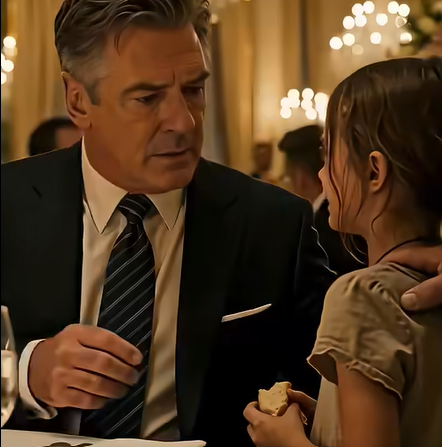
My dad had dreamed of walking me down the aisle since I was little. Even after he got sick, he refused to give that up. Three weeks after my wedding, the photographer sent our gallery. When I reached photograph 212, I noticed my dad’s hand pressed against my husband’s jacket pocket.
My dad wanted a daughter his whole life.
He told me once that when the nurse came into the hallway and said, “It’s a girl,” he had to sit down because his knees stopped working.
Mom always rolled her eyes when he told that story, but Dad never changed a word of it.
He called me Daddy’s Girl before I could walk.
At 29, I could call him from work about a flat tire, and he’d still answer, “How’s my Daddy’s Girl?”
He started talking about my wedding when I was seven. Not because he was eager to marry me off.
Dad simply assumed that someday there would be an aisle, and if there was an aisle, he would be beside me.
When I was little, he’d sometimes take my hand and squeeze it three times.
One squeeze for each word.
“I love you.”
By the time I brought Daniel home, Dad had apparently been preparing for years.
He ironed a shirt for dinner and spent an hour pretending he hadn’t.
When Daniel later called to ask for his blessing before proposing, Dad hung up and cried in the garage for 20 minutes
He then came inside claiming he’d been looking for a wrench.
Dad liked Daniel, but what mattered more was that he watched him.
Once, after I’d had a miserable week at work.
Daniel, being Daniel, drove across town just to bring me dinner and left because I was too tired for company.
Dad heard about it and said, “Good. He knows taking care of you doesn’t always mean being in the room.”
The wedding was 11 months away when Dad got sick.
At first, we thought it was something treatable. Then came specialists, scans, another specialist, and finally the conversation nobody in our family wanted to have.
By spring, Dad couldn’t cross his bedroom without stopping to breathe.
By summer, Mom had moved a chair into the hallway because sometimes even the distance between his bed and wheelchair was too much.
The wedding was in September, and by summer everyone had an opinion.
My aunt was the first to say it aloud. “You can’t make him do that aisle.”
“I’m not making him do anything.”
“You know what I mean.”
I did.
The church aisle was almost a hundred feet long. Dad couldn’t walk it anymore, so my uncle would have to push his wheelchair while I walked beside him. Even that would exhaust him.
A week later, Mom sat across from me at the kitchen table.
“Sweetheart, it could take him ten minutes.”
“Then it takes ten minutes.”
“There’ll be 140 people watching.”
“So?”
“Let your brother walk you. Dad can sit at the front. He’ll still see everything.”
I knew she wasn’t trying to hurt me. She was frightened. We all were.
But I couldn’t stop thinking about a man who had spent 29 years assuming that one day he’d take my hand at the back of a church.
Then Dad said it himself.
He wouldn’t look at me.
He stared at the arm of his wheelchair and rubbed one thumb over the fabric.
“Maybe your brother should take you down.”
I crouched in front of him. “Why?”
“I’ll slow the whole thing up.”
That was what bothered him. His body was failing him, and somehow Dad was still more worried about embarrassing me by being slow. “No,” I said, waiting until he finally looked at me.
“It was our dream,” I said. “Yours and mine. Everyone can wait.”
Dad’s eyes filled, but he blinked hard and looked away.
Then he said the sentence he’d been saying all year.
“I’m taking my girl down that aisle.”
So he practiced.
That’s the part that still undoes me.
My uncle would come over and push Dad’s wheelchair slowly up and down the hallway while Dad sat upright with his left hand held out, imagining mine inside it.
Sometimes he’d manage one trip, then say, “I need to lie down.”
Once, she found him sitting alone in the hallway afterward, staring toward the living room as though it were the altar. When she asked if he was all right, he told her, “I just need to know I can get her there.”
He also became obsessed with the logistics.
“Do I hand you to Daniel?”
“Dad.”
“Or does he come get you?”
“I don’t think anyone cares.”
“I care.”
He asked me three times.
Eight months before the wedding, he’d bought a dark navy suit. By September, it hung from him. The collar stood nearly an inch from his neck, and Mom had to move the button on his trousers.
Dad looked at himself in the mirror and tugged at the jacket. “Well, at least I won’t split my pants dancing.”
Mom laughed. I couldn’t.
When I saw him dressed that morning, I went into the bathroom and cried where he couldn’t see me. Dad was waiting at the back of the church when I arrived.
My uncle stood behind his wheelchair. Dad looked at my dress for several seconds without speaking.
“Well?” I asked.
He cleared his throat. “You look all right.”
“Just all right?”
“Don’t fish for compliments.”
Then his face crumpled. I bent down and hugged him. “Hey.”
“I’m fine.”
“You are clearly not fine.”
He laughed and wiped his face. Then he held out his hand. “Ready, Daddy’s Girl?”
I took it. We went down that aisle so slowly. Nobody complained. Nobody checked a watch. My uncle pushed carefully, stopping once when Dad lifted his hand slightly because he needed to catch his breath.
I could hear people crying behind us, but I kept my eyes forward.
Halfway there, Dad squeezed my hand. Three times.
I squeezed back. Three times.
By the time we reached Daniel, Dad was breathing hard. Daniel stepped toward us, but Dad didn’t let go of my hand.
For a second, I thought he’d forgotten. Then he squeezed three times again. Finally, his fingers loosened.
Daniel bent down to hug him, and I saw Dad’s hand move toward the breast pocket of Daniel’s jacket.
I assumed he was steadying himself.
Daniel’s expression changed, but before I could wonder why, Dad pulled his hand away. Then the ceremony began. Dad made it through dinner but left the reception early. Before Mom wheeled him out, he kissed my cheek and whispered, “Told you I’d get you there.”
“You did.”
“Slowly.”
“Everyone survived.” He smiled.
Dad died 12 days later.
There are things I remember clearly about those days.
Other things I don’t remember at all.
I remember Mom calling. I remember Daniel taking the phone from my hand.
I remember standing in my childhood bedroom staring at Dad’s slippers beside the bed and thinking it was ridiculous that something could look so ordinary when its owner was gone.
Mostly, I remembered the aisle.
He got there.
His body fought him for every foot as everybody waited, but he got there.
And got me there.
Nine days after Dad died, our photographer sent the wedding gallery.
There were 411 photographs, and Daniel and I went through them slowly on the couch.
Dad appeared everywhere. Dad watching me enter. Dad beside Mom. Dad laughing at dinner. Dad leaning back in his wheelchair with his eyes closed while everyone danced.
Then I reached photograph 212.
I stopped.
Dad was at the altar.
His hand was pressed against the breast pocket of Daniel’s jacket, and Daniel had bent his head close to him. I remembered that moment. I’d thought Dad was steadying himself.
But Daniel wasn’t holding him. Daniel was listening. I enlarged it.
“Daniel.”
He looked over. “What?”
I turned the laptop toward him. “What was Dad putting in your pocket?”
Daniel’s face changed, but he didn’t answer immediately.
He stood, went into our bedroom, and opened the closet.
A moment later, I heard the lid of the shoebox where he kept things he was afraid of losing.
When he returned, he sat beside me.
Then he put a photograph in my hands.
It was old enough that the colors had turned warm and slightly orange. One corner was soft from being handled.
Dad was sitting in the brown armchair that used to stand beside the window in our first house.
He looked impossibly young, his shirt sleeves rolled to his elbows.
There was a newborn baby against his chest.
Me.
One of Dad’s hands supported my entire head. He wasn’t looking at the camera. He was looking down at me as though nothing else existed in the room.
I knew that chair. I knew that shirt from other photographs. But I’d never seen this picture.
“Where did you get this?”
Daniel nodded toward it.
“Turn it over.”
My grandmother’s faded handwriting was at the top, along with the date I was born.
Underneath was Dad’s handwriting in blue ink, pressed hard enough to dent the paper.
“I’ve been holding her since this day. Now I’m handing her to you. She’s the most precious thing I’ve ever held. Take care of my girl. I trust you.”
I couldn’t breathe.
Then I saw the smaller sentence underneath.
“Thank you for waiting for us at the end of that aisle.”
Suddenly I understood why he’d kept asking whether he was supposed to hand me to Daniel.
I covered my mouth. Daniel put his arm around me, but I kept staring at Dad’s handwriting.
“When did he give you this?”
“Three weeks before the wedding.”
Dad had called Daniel one Tuesday while I was at work and asked him to come over alone. When Daniel arrived, Dad was in his chair with the photograph already waiting on the side table.
His handwriting had deteriorated badly by then.
Some days he could barely sign his name.
“He must’ve written it earlier,” Daniel said. “On a good day.”
Dad had planned it. While everyone else was wondering whether Dad could reach the end of the aisle, he’d been deciding what he wanted to leave there when he did.
“Why didn’t you give it to me?”
Daniel looked at the photograph. “Because after the wedding, he made me promise I’d wait.”
“Until when?”
“Until it felt right.”
I looked back at photograph 212 on the laptop. “At the altar.”
Daniel went quiet.
“What happened there?”
He stared at the picture for a moment. “He wasn’t putting anything in my pocket,” Daniel said. “He was checking that I still had the photograph.”
Dad had asked Daniel to carry the photograph during the ceremony because he’d planned for me to receive it when we reached the altar.
Twenty-nine years earlier, he’d held his newborn daughter against his chest.
On my wedding day, that moment was resting over Daniel’s heart. I touched the image on the screen. “So why didn’t you give it to me?”
Daniel’s eyes filled. “He told me not to give it to you.”
“But why?”
Daniel swallowed. “He said, ‘Don’t give it to her today. She’s having a good day.'”
That broke me. I had spent the entire wedding watching Dad.
Was he breathing too hard?
Was he tired? Was he hurting? Could he make it through dinner? Would this be our last family photograph?
Dad knew exactly what his illness had already taken from us.
And when he reached the altar, with a goodbye sitting inches from his hand, he decided I didn’t need another one.
I was having a good day.
He wanted me to keep it.
For months afterward, I kept returning to that question he’d asked three times.
I’d thought Dad was obsessing over wedding etiquette because he wanted everything right.
Now I understood he hadn’t really been asking how to hand me over.
He’d been trying to understand how to let go.
Dad had held me for 29 years.
He’d carried me when I was small, taught me to ride a bicycle, waited up when I started dating.
He had cried in a garage when Daniel asked to marry me.
Then spent his last months practicing how to travel a hundred feet of church carpet.
He knew he was dying. But he also knew I was beginning something.
He refused to let his ending become the center of my beginning.
I keep the photograph on my side of the bed now, propped against the lamp.
Some mornings, I turn it over and read the message.
“I’ve been holding her since this day.”
Then I look at Dad’s hand beneath my newborn head.
Sometimes I open wedding photograph 212 too.
Twenty-nine years separate those pictures.
In the first, Dad is holding me for the beginning. In the second, his hand is touching the pocket containing that same moment while Daniel bends down to hear him.
For a long time, I thought the most important photograph from my wedding would be the one of Dad and me coming down the aisle.
It isn’t.
It’s 212.
Because now I know what was happening inside that frozen second.
Dad hadn’t been trying to give me away. He was trusting someone else to keep holding what he knew he couldn’t hold forever.
And Daniel understood something Dad had struggled to understand all year.
Dad hadn’t slowed down my wedding. He’d given me more time with him.
A hundred feet.
Ten minutes.
Three squeezes at a time.
I had known what those three squeezes meant since I was little. I just hadn’t known how much he was trying to fit inside them that day.
He got there.
He was slow, and everybody waited, and he got there. When we finally reached the altar, Dad kept holding my hand for a few seconds longer than he needed to.
At the time, I thought he’d forgotten to let go.
He hadn’t forgotten.
He was just taking his time.
Enjoyed the read? Here is another story you will love: Our water bill kept climbing, but the city insisted there was no leak. Then one evening, I spotted our neighbor crouched beside our outdoor faucet with a hose running through the fence. I was already heading for his door when my husband texted, “Don’t let him know you saw.”