
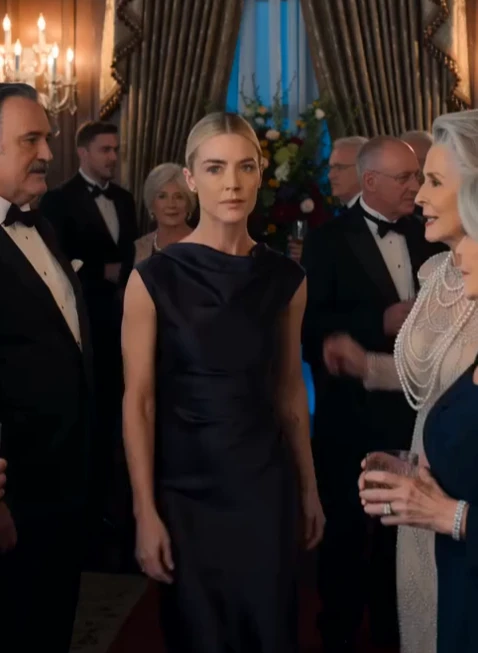
“Move, Claire.”
My mother said it quietly enough that most people nearby probably thought she was asking me to make room.
She was smiling for the photographer.
Her fingernails pressed into the inside of my wrist.
I looked down at her hand, then back at her face.
Her smile never changed.
Behind us, my younger brother Ryan stood beneath a banner that read WELCOME HOME, CAPTAIN RYAN MERCER. Red, white, and blue ribbons hung from the edge of my parents’ patio. Someone had tied small flags to the backs of the folding chairs.
Ryan was standing between Dad and his fiancée, Natalie, looking uncomfortable in the way he always did when too many people were praising him.
The photographer raised his camera.
“Immediate family first.”
Mom’s fingers pressed harder.
“That means Ryan, Natalie, your father, and me.”
I stared at her.
“I’m immediate family.”
Her eyes flicked toward me for half a second.
“Claire.”
That one word carried thirty-four years of instruction.
Don’t make this difficult.
Don’t embarrass us.
Don’t force me to explain why you don’t belong in the picture.
I had heard different versions of it most of my life.
When Ryan won his first middle-school wrestling tournament, Mom wanted a picture with “the athlete and his parents.”
When he graduated from high school, I had been asked to hold everyone’s jackets while they posed.
When he received his commission after ROTC, Mom asked me to take the family picture because she said hiring a photographer for a small ceremony would be silly.
I had smiled and done it.
For years, that had been easier.
I looked toward Ryan now.
He noticed.
His eyebrows came together slightly.
He opened his mouth, but Mom leaned closer to me before he could speak.
“You’ve always struggled to understand your place.”
My face went still.
It was an old skill.
Not from childhood.
From later.
From places my mother knew nothing about.
I said, “I know exactly where my place is.”
Her fingers tightened.
Then she pulled my arm toward her side.
The sleeve of the loose blue blouse I had been wearing slid halfway up my forearm.
A black marking appeared beneath the fabric.
It was small.
Less than three inches across.
Most people who saw it assumed it was a strange geometric design.
A narrow circle.
Three broken lines.
A small downward-pointing triangle in the center.
No words.
No dates.
No names.
Mom had seen pieces of it before and hated it.
She once asked whether I had gotten it during “one of those phases.”
I told her something close enough to the truth.
“It reminds me of people I worked with.”
She had rolled her eyes.
That afternoon on the patio, I expected the same reaction.
Instead, the conversation behind us stopped.
Not gradually.
One second I could hear a retired major telling a story about a helicopter landing in a field somewhere in eastern Europe.
Then nothing.
I looked across the patio.
Colonel Ethan Graves was standing near the bar.
He was one of Dad’s invited guests, although technically he was there because of Ryan. Ryan had served under one of Graves’s former officers, and Graves had recently taken a senior training position at Fort Liberty.
I had noticed him when he arrived.
Men like him were difficult for me not to notice.
Not because of the uniform. He was wearing a gray polo shirt and khaki pants.
It was the way he watched exits.
The way he positioned himself where he could see the patio door and most of the yard without looking as if he were trying.
The way he listened more than he spoke.
Two other men stood beside him.
Both had been introduced as retired special operations soldiers.
All three were staring at my forearm.
Graves slowly lowered his glass.
His expression changed.
Not surprise exactly.
Recognition.
The two men beside him exchanged a glance.
One straightened.
The other looked down for a moment, as if he had accidentally seen something he wasn’t supposed to see.
Mom finally noticed.
Her fingers left my wrist.
Colonel Graves walked across the patio.
People stepped aside without being asked.
He stopped a few feet from me.
His eyes remained on the marking.
“Where did you get that?”
Dad laughed uneasily.
“Probably one of Claire’s mysterious adventures. She never tells us much.”
Graves didn’t look at him.
He looked at me.
I pulled my sleeve down.
“That was a long time ago.”
His expression hardened.
“How long?”
“Almost eleven years.”
One of the retired soldiers behind him muttered something under his breath.
Graves heard it.
So did I.
“About right.”
Mom gave a small laugh.
“Is this some military thing? Claire never served.”
Ryan turned toward her.
“Mom.”
“What?”
He looked at me.
For the first time all afternoon, he was no longer smiling.
I saw the question in his face.
It was a question he had asked me before.
Not directly.
Never directly.
But Ryan had noticed things over the years.
He had noticed that I knew how to read the ribbons on his uniform before anyone explained them.
He had noticed that I could pronounce the names of foreign bases correctly.
He had noticed that when he complained once about an instructor making them navigate at night, I had asked what map scale they were using.
He had stared at me.
I had changed the subject.
Now Colonel Graves said, “Ma’am, I’m asking you directly. Where did you get that marking?”
Mom looked offended by the word ma’am.
I almost smiled.
“I didn’t get it in a shop,” I said.
Graves waited.
Neither of us wanted this conversation.
That much was obvious.
I looked toward Ryan.
His homecoming party had already become something else.
That was the last thing I wanted.
“Colonel,” I said quietly, “this really isn’t the place.”
His eyes moved from my face to my covered forearm.
Then something softened in his expression.
He nodded.
“You’re right.”
I thought that would end it.
Then the retired soldier to his left spoke.
“Were you with Lantern?”
The name hung in the warm afternoon air.
Nobody in my family reacted because nobody knew what it meant.
I did.
Graves turned sharply toward the man.
“Tom.”
The man closed his mouth.
Dad frowned.
“What’s Lantern?”
“No reason to discuss it,” Graves said.
Mom gave another brittle laugh.
“Well, now I’m curious. Apparently my daughter has joined some secret club.”
Ryan stared at me.
“Claire?”
I could have lied.
I had lied by omission for years.
Not because I was ashamed.
Because there had once been rules.
Later, when those rules no longer applied, silence had become a habit.
And eventually the habit became useful.
If my parents believed I had spent most of my twenties doing ordinary civilian contract work overseas, they asked fewer questions.
It was easier than explaining why I missed Christmas.
Easier than explaining why I disappeared for months.
Easier than discussing friends whose names I would not bring into casual conversation.
Most of all, it was easier than competing.
Everything in our family somehow became a competition.
When I made the dean’s list in college, Mom mentioned Ryan’s baseball statistics.
When I accepted a position in Washington, Dad reminded everyone that Ryan had been selected for ROTC.
When I bought my first house, Mom spent dinner talking about how Ryan was considering graduate school.
I learned early that sharing good news created work.
So I stopped sharing.
By thirty, I had become the relative who was “doing something with logistics.”
It was wonderfully boring.
No one asked follow-up questions about logistics.
Now eighty people were watching me.
I sighed.
“Can we finish Ryan’s picture?”
Mom stared at me as if I had deliberately created the scene.
“You’re the one holding everyone up.”
I almost laughed.
Colonel Graves looked at her.
There was no anger on his face.
That somehow made the moment worse.
“Mrs. Mercer,” he said, “I think perhaps everyone should give your daughter a little space.”
Mom blinked.
Dad stepped forward.
“Ethan, I’m missing something.”
Graves gave me a questioning look.
Permission.
I appreciated that.
I shook my head once.
He understood.
“Then it isn’t mine to explain.”
Mom folded her arms.
“Oh, for heaven’s sake. Claire, if this is another one of your dramatic secrets—”
“Mom,” Ryan said.
His voice was firmer this time.
She turned.
“This is your party.”
“I know.”
“You’ve been gone nine months. Everyone came here for you.”
“I know that too.”
“Then why are we talking about Claire’s tattoo?”
Ryan glanced at Graves.
“Because Colonel Graves looks like he’s seen a ghost.”
One of the retired soldiers coughed into his fist.
Graves almost smiled.
Ryan came around the table.
He stopped beside me.
He didn’t put an arm around me.
Ryan knew I disliked being crowded when I was upset.
Instead, he stood close enough that his shoulder nearly lined up with mine.
“Claire,” he said, “what is Lantern?”
I looked at my brother.
There were small changes in him after every deployment.
People usually noticed the obvious things.
He had lost weight.
His face was darker from months of sun.
There were new lines around his eyes.
I noticed other changes.
The way he checked his phone more often when Natalie was out of sight.
The way he automatically moved his chair so his back wasn’t toward an open doorway.
The way he had gone quiet when someone popped a champagne cork earlier.
Experience changes habits before it changes stories.
Ryan knew that now.
Maybe that was why I finally answered.
“It was a joint task group.”
His brow tightened.
“What kind?”
“A small one.”
Dad laughed once.
“She means consultants. Claire worked for some contracting company.”
I looked at him.
“No.”
The single word stopped him.
Dad’s mouth remained slightly open.
Mom’s face changed.
Not much.
But I saw it.
Confusion first.
Then irritation.
She disliked discovering information late.
Especially information about her own children.
“What do you mean, no?” she asked.
“I wasn’t a civilian contractor then.”
Ryan’s eyes widened.
“Then what were you?”
I took a slow breath.
“Army.”
Silence.
My father’s expression was almost comical.
“Army?”
“Yes.”
“You were in the Army?”
“Yes.”
“When?”
“From twenty-two until thirty-one.”
Ryan stared at me.
“You served nine years?”
“Eight years, ten months.”
“You never told me.”
“I did tell you.”
“No, you didn’t.”
“I sent you a message when I enlisted.”
He searched his memory.
Then I watched him find it.
His face changed.
“Oh my God.”
Mom looked between us.
“What message?”
Ryan rubbed a hand over his mouth.
“When I was sixteen.”
I nodded.
His eyes stayed on me.
“You said you were taking a government position and would be away for training.”
“That was accurate.”
“I thought you meant some federal internship.”
“You were sixteen.”
“You could have corrected me later.”
“Yes.”
“Why didn’t you?”
I looked past him toward the patio.
Because you finally had something that was only yours.
I didn’t say it immediately.
Ryan had wanted the military from the time he was fourteen.
Dad had taken him to air shows.
Mom had bought him biographies about generals.
He watched documentaries about West Point even though he eventually chose ROTC.
The Army became the one part of his identity our parents never compared with mine.
I knew what that freedom felt like.
I had no intention of taking it from him.
So I said, “You were excited about your own path.”
Ryan looked almost annoyed.
“That doesn’t answer the question.”
“It answers more than you think.”
Mom stepped closer.
“Why would you hide something like that?”
I stared at her.
She genuinely didn’t know.
That was the part that surprised me.
“You never asked what I did.”
Mom’s eyebrows rose.
“That’s ridiculous.”
“Is it?”
“We talked constantly.”
“We talked about the family.”
“You are family.”
I almost responded.
Then Dad said, “What did you do in the Army?”
Graves shifted his weight.
That was enough to remind me that certain details still weren’t appropriate.
“Intelligence support at first.”
Ryan’s head snapped slightly toward me.
“What MOS?”
“Thirty-five Mike.”
His eyes widened.
“Human intelligence?”
“Yes.”
Dad looked lost.
Ryan wasn’t.
“You were HUMINT?”
“For a while.”
“And then?”
I hesitated.
Ryan looked at the colonel.
Then back at me.
“And then Lantern?”
I nodded.
One of the retired soldiers walked away from the group and set his drink on the bar.
He didn’t leave.
He simply seemed to understand that the conversation had become personal.
People around the patio began talking quietly again, although most were pretending not to listen.
The photographer lowered his camera completely.
Mom noticed him.
“Can we please finish the photo?”
Nobody moved.
She looked furious.
“This entire afternoon is supposed to be for Ryan.”
“It still is,” I said.
“Then stop turning it into something about you.”
Something inside me went quiet.
Not angry.
Just tired.
I had spent the entire morning making sure the day was about Ryan.
I arrived at seven-thirty to help the caterer because Mom said she was overwhelmed.
I picked up two trays of pastries after the bakery made the wrong order.
I drove across town for extra ice.
I assembled the framed photographs of Ryan’s unit that Dad wanted displayed near the entrance.
I found extension cords for the patio speakers.
I changed into my blouse in the downstairs bathroom because Mom asked me not to use the guest room since Natalie’s relatives needed it.
When people arrived, I carried drinks.
I found chairs for older guests.
I kept track of Ryan’s gifts.
I fixed the printer when Dad decided he wanted copies of a speech he had written.
And when Mom decided I did not belong in the family photograph, I had been prepared to move.
Until she told me I didn’t understand my place.
Maybe everyone has one sentence they are tired of hearing.
That was mine.
I looked at my mother.
“I’m not trying to make anything about me.”
“Then move.”
Ryan turned toward her.
“No.”
Mom blinked.
Ryan nodded toward me.
“She stays in the picture.”
“Ryan—”
“It’s my homecoming party, right?”
“Yes.”
“Then I want my sister in the photo.”
I looked at him.
He gave me the smallest smile.
It was the smile he used when we were children and he was about to do something Mom would dislike.
“Actually,” he said, “I want one with just Claire first.”
Mom’s face fell.
“Ryan.”
He grinned now.
“What? I haven’t seen her in almost a year.”
The photographer raised his camera uncertainly.
I shook my head.
“Don’t start a family war.”
Ryan leaned slightly toward me.
“I think that ship left port ten minutes ago.”
Despite myself, I laughed.
And the sound seemed to give everyone permission to move again.
The photographer took several pictures.
First Ryan and me.
Then Ryan and Natalie.
Then the full family.
Mom stood beside Dad.
I stood beside Ryan.
Nobody mentioned the marking again during the pictures.
But afterward, Colonel Graves found me near the kitchen.
I was stacking empty plates beside the sink.
“You really do help out,” he said.
I looked over.
He was standing in the doorway.
I smiled faintly.
“Someone has to.”
“You don’t have to do that.”
“Stack plates?”
He nodded toward the patio.
“You know what I mean.”
I did.
I returned to the dishes.
“They’re my family.”
“That wasn’t what I meant either.”
I stopped.
For a moment we simply looked at each other.
Then he said, “You were at Darun Province.”
It wasn’t a question.
I lowered my voice.
“Parts of it.”
“What year?”
“You know what year.”
He inhaled slowly.
The kitchen suddenly felt smaller.
“My team lost contact for thirty-six hours in Darun.”
I said nothing.
“We were told the route out had been built from information provided by a local network.”
I dried my hands.
“You were Gold Three?”
His expression changed.
“Jesus.”
I looked toward the open window over the sink.
The party noise drifted through the screen.
Ryan was laughing at something.
For a second, my mind was nowhere near my parents’ backyard.
Dust.
A broken radio.
A cheap plastic fan turning above a table.
Maps that never stayed flat because every window in the building had to remain open.
A young interpreter named Sami drinking tea so sweet I could smell the sugar from across the room.
I pushed the memory away.
Graves studied my face.
“You built that network.”
“Not alone.”
“But you were there.”
“Yes.”
He nodded slowly.
“I never knew your real name.”
“That was the idea.”
“We knew someone called Finch.”
I smiled despite myself.
“That was a terrible name.”
“It kept twelve people alive.”
The smile disappeared.
I looked down at the counter.
“There were more people involved than me.”
“There always are.”
He stepped farther into the kitchen.
“I met a medic from that operation years later. He said Finch stayed behind after the first evacuation because two sources hadn’t reached the checkpoint.”
I stared at him.
Graves stopped.
“That was you.”
“Colonel.”
“I’m not asking for details.”
“Good.”
“I’m saying thank you.”
I didn’t know what to do with that.
Praise had always made me uncomfortable, especially when attached to old operations.
People saw the outcome.
They didn’t see the mistakes.
They didn’t see how terrified everyone had been.
They didn’t see the arguments or the hours spent waiting for messages that might never come.
They didn’t see Sami standing in a doorway, refusing to leave until his sister arrived.
They didn’t see me vomiting behind a concrete wall after we finally reached safety because my body had held itself together until it no longer needed to.
Hero was a word people used when they wanted the story to be simple.
Most stories were not.
“I was doing my job,” I said.
“So was your brother.”
I looked at him.
He smiled.
“And I imagine you’d tell me he deserves all the attention he’s getting today.”
“He does.”
“So do you.”
“That’s different.”
“Why?”
“Because this isn’t my day.”
Graves leaned against the counter.
“You know, I have two daughters.”
I waited.
“One is a pediatric dentist. The other runs a construction company. If I discovered one of them had spent nine years doing something I didn’t know about, I’d have questions.”
“So does my family.”
“That isn’t what I saw outside.”
I looked toward the doorway.
He lowered his voice.
“What I saw was someone telling a grown woman where she belongs.”
I felt heat rise behind my eyes and hated it.
I opened a cabinet and put away a stack of plates that did not need to be put away yet.
“My mother is complicated.”
“Most are.”
“She loves us.”
“I’m sure.”
“She just—”
I stopped.
Graves waited.
“She likes things to make sense.”
“That sounds reasonable.”
“In her version.”
“Ah.”
I laughed once.
“That’s the problem.”
Graves nodded.
He understood more than I wanted him to.
Outside, someone called his name.
Before leaving, he looked at me again.
“For what it’s worth, I didn’t recognize the design because it was printed in some handbook.”
“I know.”
“Men remembered it.”
My throat tightened.
“Colonel—”
“Ethan.”
“Ethan.”
He nodded.
“Men remembered the people who wore it.”
Then he walked back outside.
I stood alone in the kitchen.
For the first time all afternoon, my hands were shaking.
I pressed my palms against the edge of the counter until they stopped.
“Finch?”
I turned.
Ryan stood in the doorway.
Of course he had heard.
He held two bottles of water.
He extended one toward the counter instead of placing it directly in my hand.
I picked it up.
“How much did you hear?”
“Enough to develop a serious older-sister complex.”
I twisted the cap.
“Don’t.”
“I’m joking.”
“You’re not very good at it.”
“I spent nine months with artillery officers. My standards collapsed.”
I smiled.
He didn’t.
“Why didn’t you tell me?”
There it was again.
This time, no audience.
No Mom.
No photographer.
Just my little brother.
I leaned back against the sink.
“You really want the answer?”
“Yes.”
“Because I didn’t want to ruin this for you.”
He frowned.
“Ruin what?”
“The Army.”
He stared at me.
“That makes no sense.”
“When you were seventeen, you came home from that ROTC orientation and talked for three hours.”
“I did not.”
“You absolutely did.”
“Maybe two.”
“Three. Dad fell asleep.”
Ryan laughed.
“I remember that.”
“You were so excited. You had a plan. For once, nobody was comparing you to me.”
His smile faded.
I continued.
“You don’t remember how things were when we were kids?”
“Of course I do.”
“No, you remember your side.”
He became quiet.
“When you were in elementary school and you got a B, Dad would ask why you couldn’t study like Claire.”
Ryan looked down.
“When I got into Duke, Mom spent your entire birthday telling relatives about my scholarship.”
“That wasn’t your fault.”
“I know.”
“When I quit piano, she said you practiced every day.”
“I quit violin the next year and she told me you never gave up on baseball.”
Ryan looked back at me.
I laughed softly.
“We were being used against each other.”
He considered that.
“I hated you sometimes.”
“I know.”
“You knew?”
“You weren’t subtle.”
“I was twelve.”
“You hid a dead frog in my backpack.”
His mouth twitched.
“That was unrelated.”
“It was very related.”
He finally laughed.
Then he grew serious.
“So when I decided to join…”
“I wasn’t going to say, ‘Actually, Ryan, I’m already in the Army, and by the way, let me tell you how much more interesting my job sounds.’”
“You think I would’ve seen it like that?”
“At eighteen? Yes.”
He considered it.
“Probably.”
“Exactly.”
“But later?”
I looked at the bottle in my hands.
“Later it got harder to explain.”
“Because of the classified work?”
“Partly.”
“What’s the other part?”
“Every year I waited made the conversation stranger.”
He nodded.
“That I understand.”
“And you were happy. You were building your own career. We talked more once you joined.”
“We did.”
“You called me after your first field exercise.”
“You laughed at me.”
“You packed six pairs of socks for twelve days.”
“I had other socks.”
“You had cotton gym socks.”
“I survived.”
“Barely.”
He smiled.
Then his eyes moved toward my sleeve.
“Can I see it?”
I hesitated.
Then I rolled the fabric to my elbow.
Ryan studied the marking.
Up close, the lines were clearly imperfect.
It had not been professionally done.
One edge was slightly crooked.
The circle was darker on the left side.
Ryan noticed.
“Who did it?”
“A medic.”
“With what?”
“You don’t want to know.”
He glanced at me.
“I definitely want to know.”
“Then I definitely won’t tell you.”
He looked again.
“What does it mean?”
“It didn’t officially mean anything.”
“Unofficially?”
I traced the air above the design without pressing a finger to it.
“The circle was supposed to be the team. The three lines represented the three sections working together. The triangle was a route marker.”
“For what?”
“Home.”
Ryan swallowed.
“How many of you had it?”
“Not many.”
“Are they still around?”
“Some.”
He heard what I didn’t say.
“Do you talk to them?”
“A few.”
“How often?”
“Birthdays. Holidays. When someone has a baby. When someone’s marriage falls apart.”
Ryan nodded.
“That sounds familiar.”
“It should.”
He looked toward the patio.
“Mom is furious.”
“She’ll recover.”
“She thinks you made her look foolish.”
“I didn’t tell Colonel Graves to recognize anything.”
“I know.”
“Does she?”
“No.”
I lowered my sleeve.
“That also sounds familiar.”
Ryan remained beside the doorway.
After a moment, he said, “I’m sorry.”
“For what?”
“For letting you carry everything today.”
“That’s not necessary.”
“Yes, it is.”
“You just got home.”
“I have two functional arms.”
“So do I.”
“Apparently yours have classified tattoos.”
I gave him a look.
He grinned.
Then he said, “Seriously, Claire. I came outside this morning and you were moving tables while Mom told me to sit down because I must be exhausted.”
“You were exhausted.”
“I slept ten hours.”
“Show-off.”
“She asked you to pick up ice while three cousins were standing around.”
“I was already going out.”
“She sent you to fix Dad’s printer.”
“I know Dad’s printer.”
“She made you refill the drinks.”
“Ryan.”
He looked directly at me.
“And then she asked you to leave the family photo.”
The humor disappeared.
I took a drink of water.
“She’s been doing that kind of thing for years.”
“I know.”
I looked at him.
He rubbed the back of his neck.
“I knew some of it.”
“Then why are you surprised?”
“Because I told myself it didn’t bother you.”
That landed harder than I expected.
Ryan continued.
“You always acted like nothing bothered you.”
“That was convenient.”
“For all of us.”
I didn’t answer.
He took a slow breath.
“I’m sorry.”
This time I accepted it.
“Thank you.”
Someone shouted Ryan’s name from the yard.
He didn’t move.
“You should go.”
“In a minute.”
“It’s your party.”
“I’ve heard.”
I smiled.
Ryan looked at me one more time.
“Tomorrow.”
“What?”
“You and me. Breakfast.”
“I have work.”
“So do I.”
“You’re on leave.”
“Exactly. My schedule is wide open.”
I shook my head.
“Breakfast.”
“Fine.”
“And you’re telling me everything you can legally tell me.”
“That may be very little.”
“I’ll accept diagrams.”
“No.”
“PowerPoint?”
“Absolutely not.”
“Army-approved interpretive dance?”
“Get out of the kitchen.”
He laughed and walked outside.
I watched him go.
For the first time that day, I felt like I had actually welcomed my brother home.
The party continued for another three hours.
Mom barely spoke to me.
Dad tried several times.
Unfortunately, my father had never learned how to ask difficult questions without making them sound like accusations.
Around six, he found me gathering empty bottles from a table.
“So you were really enlisted.”
I dropped two bottles into the recycling bin.
“Yes.”
“Why didn’t you tell us?”
“I did.”
“You know what I mean.”
“Yes.”
He shifted beside the table.
My father was sixty-four then, broad-shouldered, gray-haired, still carrying himself like the high school football coach he had been for thirty years.
He understood hierarchy.
He understood visible achievement.
He understood trophies, promotions, uniforms, certificates.
What he struggled with was anything that happened quietly.
“When did you enlist?” he asked.
“After graduate school.”
“You finished your master’s at twenty-two.”
“Yes.”
“You went straight in?”
“About four months later.”
“I thought you took a position with the Department of Agriculture.”
I almost laughed.
“That was Aunt Linda.”
His forehead creased.
“No, Linda worked for—”
He stopped.
I waited.
He looked embarrassed.
“Right.”
“Right.”
He glanced toward the house.
“Your mother thought you worked for State.”
“I did eventually.”
“State Department?”
“For a period.”
“Doing what?”
“Dad.”
He raised a hand.
“I understand. You can’t talk about it.”
“Some things I can.”
“Then tell me those.”
I studied his face.
For years, I had imagined this conversation.
In some versions I was angry.
In others I listed every birthday he had forgotten to call because he was attending one of Ryan’s games.
I reminded him about the college graduation dinner where he spent twenty minutes discussing my first job and two hours talking about Ryan’s pitching prospects.
In every imaginary version, my father finally understood.
Standing beside a recycling bin at Ryan’s homecoming party, none of those speeches felt useful.
So I gave him the simplest truth.
“I joined because I wanted to.”
He waited.
“I was good at languages. I was good at listening. I didn’t mind difficult places. The Army offered training I couldn’t get anywhere else.”
“Were you in combat?”
I looked at him.
“That’s not a simple question.”
“It sounds simple.”
“It isn’t.”
His jaw tightened.
“Were people shooting at you?”
“Sometimes.”
His face changed.
I regretted answering.
Dad sat down heavily in a patio chair.
I remained standing.
He stared at the grass.
“Your mother and I would have—”
“What?”
His head lifted.
“We would have been worried.”
“I know.”
“We had a right to know.”
“I was twenty-two.”
“We were your parents.”
“And I was an adult.”
“That doesn’t mean—”
“I’m not saying you had no reason to care. I’m saying I had reasons not to explain.”
He looked away.
After a moment, he said, “Was it because we were focused on Ryan?”
I didn’t answer quickly enough.
Dad closed his eyes.
“Claire.”
“It was more complicated.”
“That means yes.”
“It means more complicated.”
He rubbed both hands over his face.
“I thought you liked being independent.”
“I did.”
“You never asked us for anything.”
“Exactly.”
He looked at me.
I wished he hadn’t.
Because the hurt on his face made me feel guilty, and part of me resented feeling guilty.
“You really think we didn’t care what happened to you?”
“No.”
“Then what?”
“I think you cared in a way that didn’t require knowing me very well.”
He became completely still.
I continued before I lost the nerve.
“You loved the version of me that caused the least trouble. Claire is capable. Claire handles things. Claire doesn’t need help. Claire can pick up the cake. Claire can change her plans. Claire won’t mind.”
Dad’s eyes dropped.
“I didn’t mind most of the time.”
“That makes it better?”
“It makes it complicated.”
He gave a tired laugh.
“You keep saying that.”
“Because families are.”
He nodded slowly.
Across the yard, Ryan was talking with several friends from college.
Dad watched him.
“You know why we worried about him more.”
I did.
Ryan had asthma as a child.
Nothing severe after he was eleven, but when he was younger there had been emergency room visits, inhalers, nights when Mom sat beside his bed counting his breaths.
Fear creates habits too.
By the time Ryan was healthy and strong, my parents had become used to watching him closely.
I had become used to not being watched at all.
“I know,” I said.
Dad nodded.
“We nearly lost him when he was six.”
“I remember.”
“You were there.”
“Yes.”
“You were fourteen.”
“I know.”
“You stayed awake with him all night after he came home.”
I looked at the grass.
I remembered Ryan asleep beside me on the living room sofa.
I remembered his small chest rising beneath a Spider-Man blanket.
I remembered being afraid to go upstairs because I thought if I stopped watching him, he might stop breathing.
Dad’s voice softened.
“We decided you were strong.”
I looked at him.
“That wasn’t always a compliment.”
“No.”
He swallowed.
“I suppose it wasn’t.”
For a long moment neither of us spoke.
Then he asked, “Did you like it?”
“The Army?”
“Yes.”
“Parts.”
“Do you miss it?”
“Parts.”
“Were you good at it?”
I smiled slightly.
“Parts.”
Dad laughed.
“You really won’t give me anything.”
“I was good enough.”
Colonel Graves happened to pass behind us.
He heard that.
He stopped.
“More than good enough.”
I closed my eyes.
“Ethan.”
Dad turned.
Graves lifted both hands.
“I’m leaving.”
“You are not helping.”
“I noticed.”
Dad stood.
“What do you know?”
Graves looked at me.
I gave him a warning stare.
He smiled.
“Only that your daughter is determined to make herself sound extremely ordinary.”
“She does that,” Dad said.
“Maybe stop helping her.”
Then Graves continued toward the driveway.
Dad watched him leave.
When he turned back to me, his expression was different.
Not proud.
Not yet.
Pride would have irritated me anyway.
He simply looked curious.
It might have been the first time in years that my father looked at me and wondered who I was instead of assuming he already knew.
That was enough.
By seven-thirty, most guests had gone.
Natalie’s parents left after helping pack food into containers.
Ryan’s friends promised to meet him downtown later in the week.
Colonel Graves shook Ryan’s hand and told him to enjoy his leave.
Before leaving, he came over to me.
He didn’t say anything dramatic.
He simply nodded once.
I nodded back.
Mom saw.
Of course she saw.
Mom saw every social signal in a room.
It was one of her talents.
After the last unfamiliar car disappeared down the road, I started folding chairs.
“Leave those,” Ryan said.
“I can help.”
“Claire.”
“What?”
“You’ve been helping for twelve hours.”
“Nine.”
“You arrived at seven-thirty.”
“I took a coffee break.”
He carried two chairs toward the garage.
“Go home.”
“Mom will complain.”
“Mom is already complaining.”
From inside the house, we could hear cabinets closing harder than necessary.
Ryan winced.
“See?”
I folded another chair.
“I’m not afraid of her.”
“Neither am I.”
“You’re terrified.”
“Deeply.”
I laughed.
He placed the chairs against the garage wall.
“You coming for breakfast tomorrow?”
“Yes.”
“Nine?”
“Eight.”
“That is an unreasonable civilian hour.”
“You’re the soldier.”
“I’m on leave.”
“Eight-thirty.”
“Fine.”
He went inside.
I finished the chair in my hands and carried it toward the garage.
Mom appeared in the doorway.
“Claire.”
I stopped.
She had changed out of the pale dress she wore for the party and into beige pants and a cardigan.
Her hair was still perfect.
My mother could survive a hurricane and somehow keep her hair in place.
“We need to talk.”
I almost said no.
Instead, I set the chair against the wall.
“Okay.”
She looked toward the house.
“Not here.”
We walked around the side yard.
Dad had planted hydrangeas there years ago because Mom wanted something that would look good in photographs.
Most of the blooms had already begun fading for the season.
Mom stopped near the fence.
“What exactly was that performance?”
I stared at her.
“What performance?”
“Don’t do that.”
“Do what?”
“Pretend you don’t know.”
“I genuinely don’t.”
She folded her arms.
“You embarrassed me in front of everyone.”
“How?”
“Colonel Graves practically interrogated you in the middle of the party.”
“I asked him not to.”
“You could have prevented the entire thing.”
“How?”
“By covering that thing.”
I looked at my sleeve.
“It was covered.”
“You know what I mean.”
“No, Mom. I really don’t.”
She exhaled sharply.
“You stood there while everyone realized your father and I didn’t know our own daughter had been in the military.”
“That wasn’t my goal.”
“But you enjoyed it.”
I almost walked away.
Then I realized I was tired of walking away.
“No.”
She looked surprised.
“I didn’t enjoy any part of it.”
“You expect me to believe that?”
“Yes.”
“You always do this.”
“Do what?”
“Make people feel guilty without saying anything.”
I stared at her.
“That’s impressive.”
“What is?”
“That you’ve managed to make my silence offensive too.”
Her mouth tightened.
“There. That tone.”
“Mom.”
“No. You don’t get to act superior.”
“I’m not.”
“You’ve spent your entire life acting as though you’re above all this.”
I looked around the yard.
“All what?”
“Family.”
That hurt.
She saw it.
For a second, something like satisfaction crossed her face.
Not because she wanted to hurt me.
Because she wanted proof that she could still reach me.
I understood that only later.
At the time, I said, “I spent today setting up Ryan’s party.”
“That isn’t what family means.”
“I spent last Thanksgiving cooking half the meal because you had the flu.”
“That isn’t what I mean.”
“I drove Dad to his colonoscopy.”
“Claire.”
“I sent you money when the basement flooded.”
“We paid you back.”
“Six months later.”
Her voice rose.
“This is exactly what I’m talking about. You keep records.”
“No. I remember my own life.”
Mom looked toward the patio, worried someone might hear.
There was almost nobody left.
Still, she lowered her voice.
“You think because you’re competent, everyone owes you gratitude.”
“No.”
“Then what do you want?”
The question stopped me.
For years, I had wanted her to ask it.
Now I didn’t know how to answer.
Finally, I said, “I wanted you not to pull me out of a family picture.”
Her expression shifted.
Such a small thing.
I think that bothered her most.
If I had demanded apologies for thirty years of favoritism, she could have argued.
If I had accused her of being a terrible mother, she could have defended herself.
Instead, I had asked for a place in a photograph.
Her gaze dropped toward my wrist.
“I shouldn’t have done that.”
“No.”
“You were being stubborn.”
“I was standing beside my brother.”
“You knew I wanted a certain arrangement.”
“I’m your daughter.”
“I know that.”
“Then why was I the easiest person to remove?”
She opened her mouth.
Nothing came out.
I waited.
Mom looked away.
After a few seconds she said, “Ryan had just come back from a difficult deployment.”
“I know.”
“This was important.”
“I know.”
“Natalie is going to be his wife.”
“I know.”
“I wanted a nice photograph.”
“I know.”
Every answer became quieter.
Mom finally looked at me.
“You always seemed like you didn’t care about those things.”
There it was.
The same assumption Dad had made.
“You never asked.”
She shook her head.
“I shouldn’t have to ask whether my daughter wants to be included.”
“No. You shouldn’t.”
For once, she heard the meaning.
Her shoulders lowered.
“You could have told us about the Army.”
“I could have.”
“You chose not to.”
“Yes.”
“That hurts.”
“I know.”
She waited for an apology.
I didn’t give one.
Instead, I said, “Being left out hurts too.”
Mom stared at the ground.
A mosquito buzzed near my ear.
Somewhere down the street a lawn mower started.
The ordinary sounds made the conversation feel stranger.
Mom said, “Were you ever in serious danger?”
I hated the question.
Not because she asked.
Because her voice sounded like a mother’s voice.
Not the organized hostess.
Not the woman who had spent decades dividing affection according to who needed it most.
Just my mother.
I answered carefully.
“Yes.”
Her face went pale.
“How serious?”
“Mom.”
“How serious?”
“Enough.”
Her eyes filled.
She turned away immediately.
Mom hated crying in front of people.
I looked at the hydrangeas.
She said, “And I didn’t know.”
“No.”
“What if something had happened?”
“There were procedures.”
“That is not an answer.”
“The Army would have contacted you.”
She turned back.
“That’s supposed to make me feel better?”
“No.”
“What would they have said?”
“I don’t know.”
“You do know.”
I exhaled.
“They would have said what they say to families.”
Her lips pressed together.
I regretted the whole conversation.
Mom looked at my sleeve.
“Is that why you got that?”
“Partly.”
“Because someone didn’t come home?”
I said nothing.
She closed her eyes.
“I’m sorry.”
The words were barely audible.
I had heard my mother apologize before.
For arriving late.
For forgetting an ingredient.
For interrupting someone.
I could not remember hearing her apologize to me for something that mattered.
I didn’t know what to say.
She wiped beneath one eye.
Then, because she was still my mother, she said, “I still think tattoos are unattractive.”
I laughed.
A real laugh.
She almost smiled.
“There you are,” she said.
“What does that mean?”
“You haven’t laughed with me in years.”
That wasn’t entirely true.
But it was true enough.
I leaned against the fence.
“Why do you do it?”
“Do what?”
“With Ryan.”
Her expression became guarded again.
I continued.
“Why has everything always been about protecting him?”
“You know why.”
“Because of the asthma?”
“He nearly stopped breathing in my arms.”
“I know.”
“You were old enough to understand.”
“I was fourteen.”
“You were always mature.”
“There it is.”
“What?”
“Because I was capable, I got less.”
Mom frowned.
“That isn’t fair.”
“I didn’t say you loved me less.”
Her eyes narrowed.
“Then what are you saying?”
“You expected less from him and more from me.”
She considered that.
“And because I usually managed it, you kept doing it.”
“I wanted you to be strong.”
“I know.”
“That’s a good thing.”
“Until strength becomes the only thing you’re allowed to be.”
Mom became quiet.
I looked toward the house.
Through the window, I could see Ryan opening containers in the kitchen.
Dad was handing him lids.
Normal life.
For years I had believed families changed through enormous confrontations.
Maybe that happened sometimes.
More often, I think they changed through uncomfortable conversations beside a fence while mosquitoes attacked your ankles.
Mom spoke again.
“I was proud of you.”
I looked at her.
“When?”
“Always.”
“That’s not what I asked.”
She flinched.
I hadn’t meant to sound harsh.
But I didn’t take it back.
“When were you proud of me?”
She thought.
That was the problem.
She had to think.
“Your graduation.”
“Which one?”
“College.”
“You spent the dinner talking about Ryan making varsity.”
“I did not.”
“Mom.”
She closed her eyes.
“I probably did.”
“My master’s?”
“You didn’t want a party.”
“Because the last one became about Ryan.”
“That’s not why.”
“It was partly why.”
She crossed her arms again, but now it looked less defensive.
More like she was cold.
“I thought you didn’t need that kind of attention.”
“I didn’t need it.”
I waited.
“I wanted it.”
Mom looked at me for a long time.
Then she nodded.
“I understand the difference.”
I wasn’t sure she did.
But it was a start.
When I finally left my parents’ house, it was almost nine.
Ryan walked me to my car.
“You okay?” he asked.
“Fine.”
He squinted.
“You always say fine when you’re not fine.”
“That’s not true.”
“You said fine after you broke your ankle.”
“It was a minor fracture.”
“You were on crutches.”
“I was fine.”
“You’re impossible.”
I opened the driver’s door.
Ryan stayed beside the car.
“Mom apologize?”
“How do you know?”
“I saw you laugh.”
“That proves nothing.”
“She only makes you laugh when she’s trying to recover from saying something terrible.”
I looked at him.
“You know her better than I thought.”
“I’ve had thirty years.”
“Twenty-nine.”
“My birthday is in two months.”
“Then twenty-eight years and ten months.”
He rolled his eyes.
“You’re still coming tomorrow.”
“Yes.”
“Bring the tattoo.”
“I was planning to leave it at home.”
“Eight-thirty.”
“Good night, Ryan.”
He stepped back from the car.
“Good night, Finch.”
I froze.
He grinned.
“Never call me that.”
“That reaction guarantees I will.”
“I know things about your childhood.”
“So do I.”
“I have photographs.”
“So does Mom.”
“She’ll give them to me.”
His confidence disappeared.
“Okay. Truce.”
I smiled.
“Breakfast.”
“Breakfast.”
I drove home with the windows cracked.
My house was twenty minutes away, a small brick place on a quiet street where most of the neighbors had lived longer than I had.
I parked in the driveway and sat behind the wheel without moving.
The day replayed in fragments.
Mom’s fingers around my wrist.
Graves lowering his glass.
Ryan saying Army as if the word had rearranged everything he knew about me.
Dad asking whether I had been in combat.
Mom asking what would have happened if I had never returned.
I thought about calling someone.
For several years after leaving the service, whenever something rattled me, I called Maya Chen.
Maya had been an intelligence analyst with Lantern.
She now taught history at a community college in Oregon and spent most of her free time complaining about students who used Wikipedia as a primary source.
I checked the time.
It was six on the West Coast.
I called.
She answered on the second ring.
“If this is about the fantasy football league, I already told Andre I’m not joining.”
“It’s Claire.”
A pause.
“Obviously. Your name is on the screen.”
“You always answer like that?”
“Only when I’m irritated.”
“What happened?”
She knew me too well.
I leaned my head against the seat.
“My family found out.”
Another pause.
“All of it?”
“Enough.”
“How?”
“My sleeve moved.”
Silence.
Then she started laughing.
I waited.
She continued.
I waited longer.
Finally I said, “Are you finished?”
“No.”
“Maya.”
“Sorry.”
“You don’t sound sorry.”
“I have told you for eight years this would happen.”
“You said I would accidentally use military time at Christmas.”
“I was close.”
“A colonel recognized the marking.”
She stopped laughing.
“Who?”
“Ethan Graves.”
This silence was different.
“Graves?”
“You know him?”
“No. I know the name.”
“So did half our team.”
“Apparently he was Gold Three.”
Maya let out a low whistle.
“That explains it.”
“He asked if I was Finch.”
“You told him?”
“He figured it out.”
“And your parents heard?”
“Ryan did.”
“Oh, I would pay money to see his face.”
“You’re a bad person.”
“Probably.”
I started the car long enough to close the windows, then shut it off again.
Maya’s voice softened.
“How are you really?”
“Tired.”
“That isn’t what I asked.”
“I don’t know.”
“Did they make it weird?”
“They are my family.”
“So yes.”
“Yes.”
“What did your mother say?”
“She apologized.”
Maya went silent again.
“What?”
“I know.”
“Your mother?”
“Yes.”
“The woman who told you your promotion announcement should wait until after Ryan’s college acceptance dinner?”
“The same.”
“I need proof of life. Has she been replaced?”
“She also told me the marking is ugly.”
“Okay. That’s her.”
I smiled.
Maya knew more about my family than they knew about her.
There had been long nights when talking about home was the only safe subject.
We shared stories in vehicles, offices, tents, airport terminals.
Maya knew about Ryan’s childhood asthma.
She knew about Dad’s obsession with football.
She knew Mom reorganized the refrigerator whenever she was anxious.
My family knew Maya as “a friend from work.”
That imbalance suddenly seemed ridiculous.
“Maya?”
“Yeah?”
“Did we do that too much?”
“Do what?”
“Keep everything separate.”
She thought.
“We did what made sense then.”
“And now?”
“Now you’re sitting in your driveway having an existential crisis.”
“How do you know I’m in the driveway?”
“You always call from the car when you don’t want to go inside yet.”
I looked at my dark front windows.
“I hate you.”
“No, you don’t.”
“No.”
I smiled.
“I don’t.”
She lowered her voice.
“You know you’re allowed to tell people you did something difficult.”
“I know.”
“You’re allowed to be proud.”
“I know.”
“Say it like you believe it.”
“I’m allowed to be proud.”
“Terrible delivery.”
“Maya.”
“Fine. We’ll practice.”
“I’m hanging up.”
“One more thing.”
“What?”
“Your brother.”
“Yeah?”
“Don’t make him feel stupid for not knowing.”
“I wouldn’t.”
“You might without meaning to.”
I frowned.
“How?”
“Because this is huge to him and old news to you.”
That stayed with me.
“Okay.”
“And Claire?”
“Yeah?”
“I’m glad they know.”
I stared through the windshield.
“Why?”
“Because you’ve been editing yourself around them for fifteen years.”
“Nine.”
“You started before the Army.”
I didn’t answer.
She was right.
“Go inside,” she said.
“I’m going.”
“And drink water.”
“Yes, Mom.”
“Your actual mother sounds exhausting. Don’t assign me that job.”
I laughed and ended the call.
The next morning, I reached the diner at eight-twenty.
Ryan was already there.
That alone told me he was serious.
My brother had never voluntarily arrived early for breakfast in his life.
He sat in a booth near the back with two coffees and a plate of toast.
I slid into the seat opposite him.
“You’re early.”
“I couldn’t sleep.”
“Jet lag?”
He looked at me.
“No.”
I understood.
The waitress came over.
I ordered eggs and potatoes.
Ryan waited until she left.
Then he placed his phone facedown on the table.
“No distractions.”
“That sounds ominous.”
“I made a list.”
I stared at him.
“You made a list?”
He pulled a folded sheet of paper from his pocket.
“Do not make fun of me.”
“I absolutely will.”
He unfolded it.
At the top he had written CLAIRE QUESTIONS.
I laughed so loudly the couple in the next booth looked over.
Ryan sighed.
“I hate you.”
“You titled it?”
“I organize information.”
“You alphabetized your DVDs by actor when you were thirteen.”
“That was a legitimate system.”
“It put Good Will Hunting beside The Bourne Identity.”
“Matt Damon continuity.”
I wiped beneath one eye.
“Fine. Ask.”
He looked at the paper.
“Number one. Rank.”
I groaned.
“You said legally tell me.”
“Staff sergeant when I left active service.”
His eyes rose.
“You made E-6?”
“Yes.”
“How fast?”
“Normal enough.”
“That is not an answer.”
“It’s the answer you’re getting.”
He wrote something.
“What are you writing?”
“Notes.”
“You’re ridiculous.”
“Number two. Schools.”
“No.”
“Why?”
“Because I know what you’re doing.”
“What?”
“Building a résumé in your head.”
He looked offended.
“I’m simply curious.”
“You’re a captain. You’re comparing.”
His face reddened.
I smiled.
“See?”
“Fine. A little.”
“That’s exactly why I didn’t tell you.”
He dropped the pen.
“Okay.”
We sat quietly.
Then he folded the list in half.
“No more résumé.”
“Good.”
“Tell me what it was like.”
That question I could answer.
Not fully.
But honestly.
So I did.
I told him about language school.
About spending hours listening to recordings until tiny differences in pronunciation became obvious.
About instructors who could tell when you had stopped studying before you admitted it.
I told him about my first assignment, where I spent more time writing reports than doing anything remotely exciting.
Ryan looked disappointed.
“Reports?”
“Endless reports.”
“How endless?”
“Imagine every PowerPoint you hate becoming a six-page memo.”
“That is terrible.”
“Exactly.”
I told him about learning that useful information usually arrived in boring packages.
A shopkeeper complaining about road closures.
A taxi driver mentioning which checkpoints had changed.
A grandmother noticing unfamiliar men renting a house two streets away.
I explained that intelligence work was often less about secrets and more about listening carefully to ordinary people.
Ryan stopped joking.
“So Lantern?”
I stirred my coffee.
“That came later.”
“How?”
“I was recommended.”
“By who?”
“Someone I worked for.”
“For what?”
“Languages. Field experience. Apparently I was good at noticing inconsistencies.”
Ryan smiled.
“You’ve been correcting my stories since I was six.”
“Exactly.”
“What did the unit do?”
“It wasn’t a unit in the normal sense. People rotated in and out. Different services. Different jobs.”
“Special operations support?”
“Sometimes.”
He nodded.
“And the marking?”
I looked at my sleeve.
“After Darun.”
His expression changed.
“Graves’s operation.”
“Yes.”
“What happened?”
I considered how much I could tell him.
Even years later, some details belonged to people other than me.
“There was an extraction plan.”
“For his team?”
“For several groups in the area.”
“Something went wrong.”
“Several things.”
“What did you do?”
“My part.”
“Claire.”
I looked at him.
“I’m not being modest. That’s the truth. My part depended on ten other people doing theirs.”
He leaned forward.
“What was your part?”
I took a breath.
“I had relationships with local sources who knew routes the conventional maps didn’t show.”
Ryan said nothing.
“One route became unusable. Another was being watched. We needed a third option.”
“You found it.”
“Someone I knew found it.”
“And trusted you enough to give it to you.”
“Yes.”
Ryan leaned back.
“How many people got out?”
“Enough.”
“That’s not a number.”
“No.”
He understood not to push.
Our food arrived.
For several minutes we ate quietly.
Then Ryan said, “Were you scared?”
I looked at him.
He seemed almost embarrassed by the question.
“Yes.”
“All the time?”
“No.”
“During Darun?”
“Yes.”
He nodded.
“I was scared this deployment.”
“I know.”
His fork stopped.
“How?”
“You called me at two in the morning twice.”
“I called everyone.”
“No. You called Mom in the afternoon so she wouldn’t know you were having trouble sleeping.”
Ryan looked down.
“You noticed that.”
“Yes.”
“I thought I hid it.”
“You did from her.”
He smiled without humor.
“I didn’t want her worrying.”
“I know.”
Then he looked at me and understood the irony.
“Oh.”
“Exactly.”
He laughed quietly.
“So I’m a hypocrite.”
“A little.”
“I told them almost nothing.”
“I know.”
“Dad thinks I spent nine months supervising maintenance.”
“You did supervise maintenance.”
“For maybe ten percent of my time.”
“Accurate enough.”
Ryan shook his head.
“This family is ridiculous.”
“Correct.”
He took another bite.
After a while he said, “I think I understand now.”
“What?”
“Why you didn’t tell us.”
I waited.
“Not all of it. But some.”
I nodded.
He looked toward the window.
“Can I tell you something that makes me look terrible?”
“Those are my favorite things.”
“When Graves recognized the marking…”
He paused.
“For about five seconds, I was jealous.”
I didn’t laugh.
He looked back at me.
“It was my party. These guys I respect were suddenly looking at you like…”
He searched for the word.
“Like what?”
“Like you were somebody.”
The sentence could have hurt.
Instead, it made me sad.
“I know that sounds awful.”
“No.”
“It does.”
“It sounds familiar.”
Ryan frowned.
I said, “That’s how Mom and Dad trained us.”
He leaned back.
I continued.
“If one of us is somebody, the other one must be less.”
He stared at his coffee.
“That’s stupid.”
“Yes.”
“I hate that.”
“So do I.”
He folded the abandoned question list smaller and smaller.
Finally, he said, “You know I’m proud of you, right?”
I looked at him.
“You don’t have to be.”
“That isn’t what I said.”
“I know.”
“I am.”
My throat tightened.
I drank coffee so I wouldn’t have to answer immediately.
Then I said, “I’m proud of you too.”
Ryan smiled.
“Even though I brought cotton socks to field training?”
“Despite that.”
“Growth.”
“Miracles happen.”
Breakfast lasted almost three hours.
We talked more in those three hours than we had in the previous year.
Not just about the Army.
About Natalie.
About my job.
About Ryan’s fear that he had built his entire identity around succeeding at something he wasn’t sure he wanted to do forever.
About my fear that leaving the service had made ordinary life feel strangely quiet.
We talked about Dad.
Mom.
Childhood.
At one point Ryan apologized for the frog again.
I told him I had put his baseball glove in the freezer the following week.
He stared at me.
“That was you?”
“Obviously.”
“I blamed Dad.”
“I know.”
“You let him take responsibility for twenty years?”
“Yes.”
“That’s cold.”
“The glove was colder.”
By the time we left the diner, something had changed between us.
Not because he knew about Lantern.
Because we had finally stopped acting like the roles our parents assigned us were permanent.
Ryan didn’t have to be the golden child.
I didn’t have to be the reliable one standing outside the photograph.
We could simply be brother and sister.
The situation with my parents took longer.
Dad began calling once a week.
At first, the conversations were almost painful.
He had no idea how to speak to me without asking for information.
“So,” he said during one call, “what are you working on?”
“Compliance review.”
“For whom?”
“Dad.”
“Right. Sorry.”
“It isn’t classified. It’s just boring.”
“Oh.”
Pause.
“How boring?”
“Very.”
Another pause.
“Did you watch the game?”
It was awkward.
But he kept calling.
Eventually we found things to talk about.
Books.
Home repairs.
A television series we both liked.
One Saturday he drove over because my garbage disposal stopped working.
I told him I could replace it myself.
He said, “I know.”
Then he replaced it anyway.
That mattered.
Mom changed differently.
She didn’t call more often.
She included me more deliberately.
At Thanksgiving, she asked what time worked for me before deciding dinner would be at two.
When I arrived, there was nothing waiting for me to fix.
That was so unusual I wandered around the kitchen suspiciously.
Mom noticed.
“What?”
“Nothing.”
“You’re looking for something.”
“I’m wondering what’s broken.”
“Nothing is broken.”
“No errands?”
“No.”
“No missing ingredients?”
“I bought everything yesterday.”
I narrowed my eyes.
“Are you feeling well?”
She almost smiled.
“Sit down, Claire.”
So I did.
Five minutes later, she asked me to open a jar.
Progress was not linear.
The biggest change came the following spring.
Ryan and Natalie got married in a small ceremony at a vineyard.
Nothing fancy.
Seventy guests.
No giant wedding party.
No military traditions beyond Ryan wearing his dress uniform at Natalie’s request.
I wore a green dress with sleeves to my elbows.
The marking on my forearm was visible.
Mom noticed when I arrived.
She said nothing.
During family photographs, the photographer began arranging everyone.
“Parents beside the couple,” she said. “Siblings just behind.”
I moved automatically toward the second row.
Mom looked over.
“Claire.”
My stomach tightened out of habit.
She waved me forward.
“No. Here.”
She indicated the place beside her.
I hesitated.
Ryan saw.
His smile grew.
“Mom said here.”
I walked forward.
Mom shifted slightly so there was room.
No one commented.
No speeches.
No emotional apology.
She simply made space.
Later, when the photographs came back, Mom framed one for her living room.
Ryan and Natalie were in the center.
Dad beside Ryan.
Mom beside Natalie.
I stood at the end beside Mom.
My forearm was visible.
So was the marking.
Several months after the wedding, I visited my parents and found Mom dusting the frame.
She noticed me looking at it.
“I like that picture.”
“It’s nice.”
“You look happy.”
“I was.”
She hesitated.
Then said, “You belong there.”
I looked at her.
She became suddenly interested in the dust cloth.
It wasn’t enough to erase everything.
Nothing could.
But I had learned something important by then.
Repair rarely arrives as one perfect conversation.
It comes in small corrections.
A chair saved at the table.
A phone call with no request attached.
Someone asking before assuming.
A space opened in a photograph.
Colonel Graves and I crossed paths again about a year after Ryan’s homecoming.
He was speaking at a professional conference in Washington.
I attended for work.
Afterward we had coffee in the hotel lobby.
“You tell them?” he asked.
“Enough.”
“Brother?”
“Too much.”
He smiled.
“Parents?”
“They’re learning.”
He nodded.
“Families are harder than operations.”
“Different rules.”
“No mission brief.”
“No extraction plan.”
“No intelligence preparation.”
“And everyone believes they’re in command.”
I laughed.
He glanced at my arm.
I had stopped covering the marking as often.
Not intentionally.
I simply thought about it less.
“Still talk to the old group?” he asked.
“Yes.”
“Good.”
He stirred his coffee.
“Did you ever regret leaving?”
“Sometimes.”
“That isn’t the same as wanting to go back.”
“I know.”
“Do you?”
I considered it.
“No.”
The certainty surprised me.
Graves nodded as if he had expected that answer.
“What changed?”
I looked through the hotel windows at people crossing the street.
“Nothing dramatic.”
He waited.
“I think I spent years believing the most important version of me was the one nobody could know about.”
“And now?”
“Now I think she was just one version.”
Graves smiled.
“That usually takes people longer.”
“It took me eleven years.”
“Exactly.”
When I got home that evening, there was a message from Ryan.
He had sent a photograph.
Mom and Dad were standing in their backyard beside the old welcome-home banner.
Apparently Dad had found it while cleaning the garage.
Ryan had written:
MOM WANTS TO KNOW IF WE SHOULD SAVE THIS FOR MY NEXT DEPLOYMENT.
A second message appeared.
I TOLD HER NO BECAUSE NEXT TIME YOU’RE DOING ALL THE DECORATIONS AGAIN.
Then a third.
KIDDING. DO NOT SEND CLASSIFIED PEOPLE AFTER ME.
I smiled.
I wrote back:
You’re doing your own ice runs.
His reply came instantly.
THIS FAMILY HAS FALLEN APART.
I put my phone down.
On the bookshelf across the room sat a small framed photograph from his wedding.
The full family picture.
For years, I had kept almost no family photographs in my house.
I told myself I wasn’t sentimental.
That wasn’t entirely true.
Pictures had always reminded me where everyone stood.
Ryan in the middle.
Mom leaning toward him.
Dad’s hand on his shoulder.
Me somewhere near the edge, often because I had just finished setting the camera timer or handing the camera to someone else.
The wedding photo was different.
Not because I stood closer to the center.
Because I no longer cared where the center was.
I had spent too many years measuring my place by where other people put me.
Daughter who could manage.
Sister who did not need reassurance.
Soldier who did not discuss what she had done.
Woman who kept difficult memories behind ordinary answers.
Useful.
Quiet.
Independent.
Invisible when convenient.
None of those things were entirely false.
That was why they had been so easy to live inside.
But none of them were the whole truth.
A week after the conference, Mom called.
“Are you busy Saturday?”
“Why?”
“We’re having dinner.”
“Who is we?”
“Your father, Ryan, Natalie, you, and me.”
“What’s the occasion?”
“No occasion.”
That alone sounded suspicious.
“What do you need?”
“Nothing.”
“Mom.”
She sighed.
“I do not need you to carry anything, repair anything, collect anything, organize anything, or arrive early.”
I smiled.
“That is an alarmingly specific list.”
“I’ve been thinking.”
“Dangerous.”
“Very funny.”
“What time?”
“Six.”
“I’ll be there.”
“And Claire?”
“Yes?”
There was a pause.
“You can bring a friend if you want.”
That was new too.
My family had often treated my life outside them as a vague administrative detail.
“I might.”
“Good.”
Another pause.
Then Mom said, “Wear whatever you like.”
I laughed.
“What was I wearing before?”
“You know what I mean.”
I did.
“Okay.”
That Saturday I arrived at six-oh-five.
On purpose.
Dad opened the door.
“You’re late.”
“Five minutes.”
He smiled.
“I’m practicing.”
“Practicing what?”
“Not assuming you’ll arrive early to help.”
“Very healthy.”
“I hated it.”
“I’m sure.”
Ryan appeared behind him carrying a bowl.
“Claire, thank God. The salad needs—”
Dad pointed at him.
“No.”
Ryan grinned.
“I’m kidding.”
From the dining room Mom shouted, “Ryan!”
“I said I was kidding!”
I walked inside.
Dinner was ordinary.
That was what made it good.
Dad overcooked the chicken slightly.
Natalie told a story about a coworker who accidentally sent an email to the entire office.
Ryan complained about a new training requirement.
Mom disagreed with him about politics and then surprised everyone by changing the subject before the argument became unbearable.
Nobody asked me about Lantern.
Nobody asked about missions.
Nobody asked what Colonel Graves knew.
Dad asked how work was going.
I told him.
Mom asked whether I liked the new coffee shop near my house.
I did.
Ryan asked if I had heard from Maya.
I stared at him.
“How do you know Maya?”
“You mentioned her at breakfast.”
“That was months ago.”
“I listen.”
The simple statement caught me off guard.
He noticed.
“So,” he said with a grin, “is that impressive?”
“A little.”
After dinner, Mom announced she wanted a picture.
Ryan groaned.
“Why?”
“Because everyone is here.”
“We were all here at Christmas.”
“And?”
“We took forty pictures.”
“Most were terrible.”
“They looked identical.”
“Your eyes were closed.”
“In one.”
“Seven.”
Dad stood.
“Just take the picture.”
Mom handed her phone to Natalie, then changed her mind because Natalie should be in it.
She looked around for somewhere to prop the phone.
Old instincts returned.
I started to stand.
“I’ll take it.”
Mom looked at me.
“No.”
“I don’t mind.”
“I do.”
She picked up Dad’s phone.
“Timer.”
Dad stared at her.
“You know how to use that?”
“Of course I do.”
She did not.
We spent three minutes explaining the timer.
Ryan laughed so hard he had to sit down.
Finally Mom balanced the phone against a stack of books.
“Ten seconds,” she announced.
“You set it for three,” I said.
“What?”
The light started blinking.
Mom hurried across the room.
We all tried to fit into frame.
Dad moved left.
Ryan told him he was blocking Natalie.
Mom told Ryan to stop talking.
I was still laughing when the phone took the picture.
It wasn’t a good photograph.
Dad was looking sideways.
Natalie’s eyes were half closed.
Ryan was laughing.
Mom was still adjusting her cardigan.
And I was in the middle of saying something.
Nobody looked polished.
Nobody looked heroic.
Nobody looked especially important.
We simply looked like a family.
Mom picked up the phone.
“Oh, that’s awful.”
“Send it to me,” I said.
She looked surprised.
“That one?”
“Yes.”
“Why?”
“I like it.”
Ryan leaned over her shoulder.
“I look amazing.”
“You look deranged.”
“Still amazing.”
Mom shook her head but sent the photograph to all of us.
Later that night, I saved it.
Not the wedding portrait.
Not Ryan’s formal homecoming photograph.
Not any of the pictures from award ceremonies or graduations.
That ridiculous blurry dinner photo became my favorite.
Because nobody had decided where I belonged before the camera went off.
We had simply made room for everyone who was there.
And for the first time in a very long time, that was enough.
