
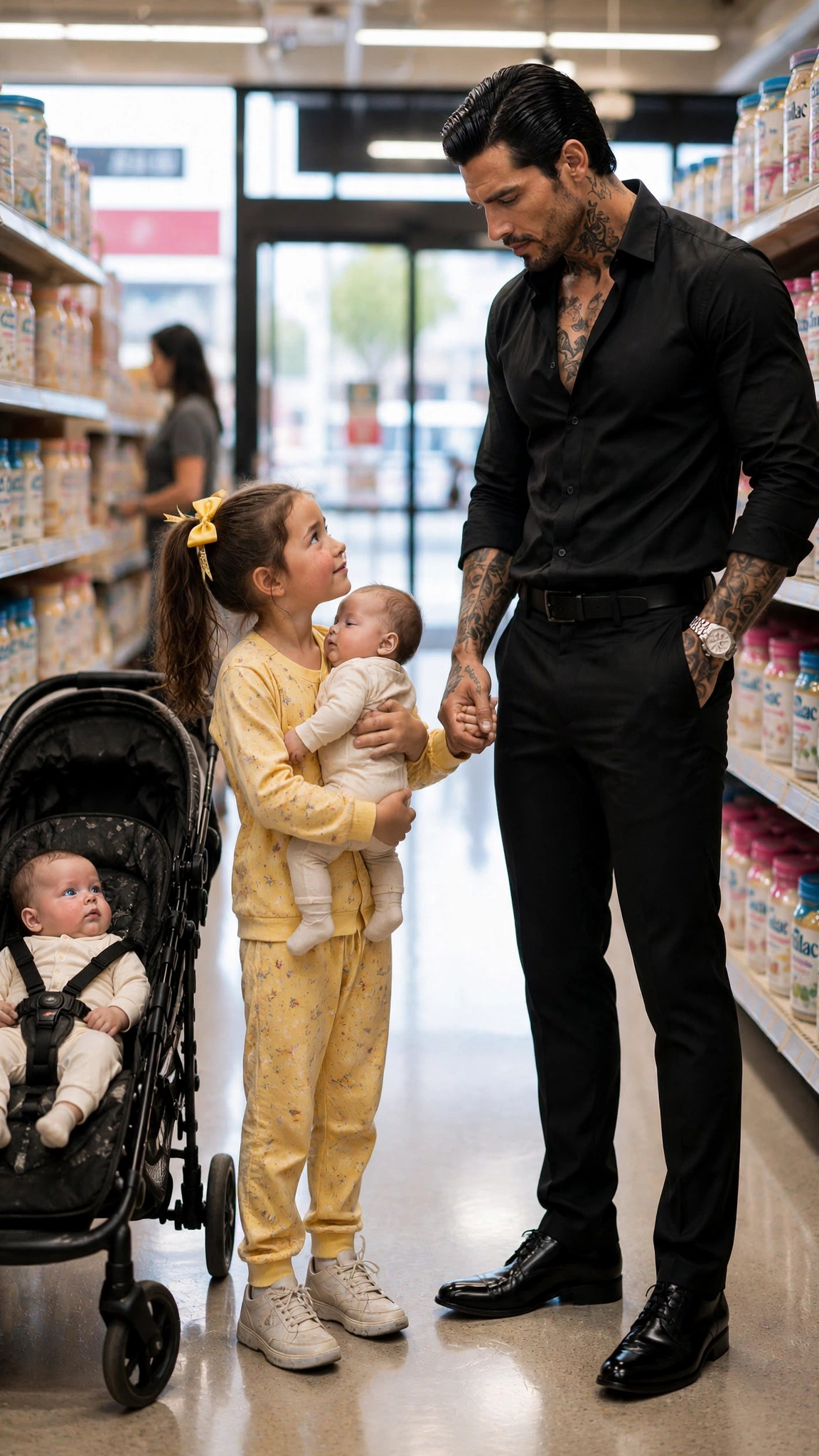
The address Sophie led us to was a rundown, peeling duplex on the industrial east side of the city. The paint was chipped, the front steps sagged under our boots, and the wind whistled mournfully through the warped window frames. It was the kind of neighborhood where police cruisers only came with sirens blaring, and secrets were buried under floorboards.
When we stepped inside the cramped, dimly lit apartment, the air smelled faintly of damp wood and vapor rub.
A woman was lying on a sagging floral sofa in the living room, wrapped in a heavy quilt despite the afternoon warmth. Her face was deathly pale, dark circles bruised beneath her eyes, and her breathing was shallow and ragged.
Hannah Carter.
Hearing the door open, she startled, her eyes flying wide with panic as she tried to sit up. When she saw me—towering over her in my tailored black suit, flanked by two towering men in sunglasses—all the color drained completely from her face.
“Sophie…” Hannah gasped, her voice cracking as she clutched the blanket to her chest. “Who… who are these men? What did you do?”
“Mom, don’t yell, they helped me!” Sophie rushed over to the sofa, immediately setting Noah down beside her mother while managing the stroller with expert care. “The store was out of the cheap kind, so the gentleman bought the good formula. And diapers. And food.”
Hannah looked up at me, her gaze shifting from my expensive shoes, up past my broad shoulders, to the faint lines of ink visible on my neck. She didn’t cower the way most people did when they realized who—or what—was standing in their living room. Instead, her jaw hardened, and a fierce, protective maternal instinct flashed in her eyes.
“We don’t accept charity,” Hannah said, her voice trembling slightly with fever, but laced with iron pride. “Take your groceries and get out of my house.”
“Your daughter walked three blocks in the cold because your pantry was empty while you were too sick to stand,” I replied evenly, taking a slow step forward, my hands resting in my trouser pockets. “Pride is a luxury for people who aren’t raising infants alone.”
“My children aren’t something a rich man gets to purchase with formula,” she shot back, coughing sharply into her elbow. “I don’t know who you are, mister, but we don’t need your pity.”
I wasn’t accustomed to people refusing me. In my world, compliance was bought, forced, or expected. Yet, looking at Hannah—defiant, broken down by illness, but refusing to bow—something shifted inside me.
I liked her immediately.
I didn’t argue. I didn’t flash my wealth or threaten her landlords. Instead, I pulled a small gold-embossed business card from my inner pocket, walked over, and placed it quietly on the scarred wooden coffee table beside a bottle of cough syrup.
“If the fever breaks, or if the babies need a doctor before morning, you call that number,” I told her, my voice low and steady. “If you don’t, your daughter will be carrying the weight of this household entirely on her own within forty-eight hours.”
Hannah stared at the card, her expression conflicting between anger and profound exhaustion.
We left quietly, closing the creaking front door behind us. But as I slid back into the leather seat of my armored SUV, a strange, uneasy sensation settled in the pit of my stomach. Milwaukee was my territory. Every dock, warehouse, and street corner answered to me. Yet sitting in that rundown apartment was a vulnerability I hadn’t planned for—a crack in the armor I spent a lifetime forging.
And out on the corner across the street, half-concealed behind the brick pillar of a shuttered laundry mat, a pair of binoculars flashed briefly in the sunlight. Someone was watching us.
