
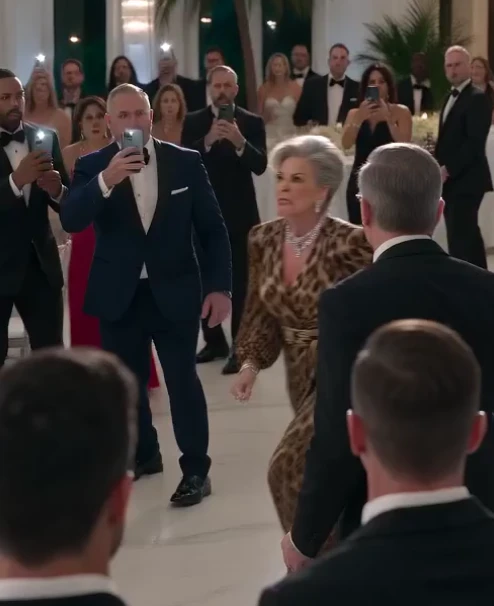
By six o’clock on the night of my engagement party, I had convinced myself that nothing could go wrong.
That should have been my first warning.
The private room at Willow House looked exactly the way I had imagined when Noah and I booked it three months earlier. Small candles sat inside clear glass holders along the windows. Pale flowers filled low bowls in the center of every table. Someone from the restaurant had opened the doors to the terrace because the September evening was warm, and music drifted quietly through the room without forcing anyone to raise their voice.
There were no giant banners with our names.
No ice sculpture.
No expensive photographer following us around.
That wasn’t our style.
We wanted dinner, wine, people we loved, and a few hours where no one had to worry about work the next morning.
For the first forty minutes, that was exactly what we had.
My best friend, Lena, had already cried twice.
The first time was when she saw the small sapphire ring on my finger.
The second was when she discovered the restaurant had made the lemon cake we used to buy by the slice when we were twenty-two and broke.
Noah’s father kept telling everyone how Noah had planned to propose during a hiking trip and then panicked because rain was forecast.
“I didn’t panic,” Noah said for the third time.
“You checked the weather every nine minutes,” his father replied.
“I was being prepared.”
“You carried an umbrella into the kitchen.”
Everyone around the table laughed.
I looked at Noah and caught his eye.
He smiled.
For a few seconds, I forgot the uncomfortable feeling that had been sitting at the bottom of my stomach since that morning.
I had known my mother would come.
I had known my younger sister, Kelsey, would come.
I had even known exactly what my mother would want to discuss.
But I had hoped she would wait one night.
Just one.
I should have known better.
My mother, Lorraine, had spent most of my life proving that boundaries were things other families needed.
In ours, privacy meant secrecy.
Saying no meant disrespect.
Having something of your own meant you had failed to consider whether Kelsey needed it more.
By thirty-one, I understood those rules perfectly.
I had also finally decided to stop following them.
That morning, six hours before the party, I had sat in a small office across from a lawyer named Angela Brooks and signed my name on four different documents.
My hand shook on the first one.
By the fourth, it didn’t.
Angela had looked at me across her desk.
“Are you sure?”
“Yes.”
“You understand what happens once these are submitted?”
“Yes.”
“And you understand that your mother may react badly?”
I had laughed once, without humor.
“She reacts badly when the grocery store moves the cereal aisle.”
Angela had almost smiled.
Then she became serious.
“You don’t have to do everything today.”
“I know.”
“You can wait.”
“I’ve been waiting for twelve years.”
That ended the discussion.
I left her office feeling sick, relieved, terrified, and lighter than I had felt since I was nineteen.
But no one at Willow House knew any of that.
Not my mother.
Not Kelsey.
Not our extended family.
Only Noah and Lena knew.
And Noah had promised not to say anything unless I asked him to.
That mattered.
My mother had spent years speaking for me.
Noah never did.
He waited until I found my own words.
That might have been one of the reasons I loved him.
I was standing near the terrace doors with his mother, Susan, when I saw Lorraine moving toward me.
She looked beautiful.
She always did at events.
She wore a navy dress that made her look younger than fifty-eight, gold earrings, and the same soft smile she used for church fundraisers, birthdays, weddings, graduations, and any other occasion where she wanted people to believe she was the warmest person in the room.
I knew that smile.
I had seen it five minutes before she told a sixteen-year-old version of me that Kelsey needed my birthday money more than I did.
I had seen it before she convinced me to cancel a college trip because Kelsey was having a difficult week.
I had seen it the day she asked me to co-sign a car loan for Kelsey after Kelsey had already stopped paying for the previous car.
Lorraine’s smile never frightened other people.
It frightened me.
“Rachel,” she said.
That was my name.
But the way she said it made it sound like an instruction.
Susan smiled at her.
“Lorraine, you must be so excited.”
“Of course.”
My mother looked at me.
“So excited.”
Then she placed her fingers around my forearm.
Not enough to cause pain.
Enough to tell me she wanted me to move.
“Can I borrow my daughter for a minute?”
Susan glanced at me.
It was a small look.
Most people wouldn’t have noticed.
I did.
Susan had learned enough about my family over the previous two years to ask permission with her eyes.
I could have said no.
Instead, old habit won for three seconds.
“Sure.”
Lorraine guided me toward the quieter end of the terrace.
Her fingers remained around my arm until we were partly hidden behind a tall planter.
Then she released me.
I immediately looked toward the dining room.
Noah was talking to my uncle Peter.
Kelsey stood near the bar laughing with two cousins.
She wore a cream blouse, fitted black trousers, and shoes that I knew had cost more than my monthly grocery budget.
She didn’t look desperate.
She looked exactly like she always looked when someone else was cleaning up her latest disaster.
My mother followed my eyes.
“We need to finish our conversation about Kelsey.”
I looked back at her.
“No, we don’t.”
Lorraine’s smile stayed in place.
“We absolutely do.”
“Not tonight.”
“Then tomorrow morning.”
“No.”
That was when the smile weakened.
Only slightly.
“What do you mean, no?”
“I mean I’m not giving her the money.”
My mother looked at me for several seconds.
“The full amount?”
“Any amount.”
“Rachel.”
“No.”
Her nostrils flared.
If anyone inside the dining room looked toward us, they probably saw a mother and daughter having a quiet emotional moment at an engagement party.
That was another skill Lorraine had perfected.
She could start a war while looking like she was discussing dessert.
“You told me you would think about it.”
“I did.”
“And?”
“And the answer is no.”
She glanced toward the dining room again.
“Lower your voice.”
“I’m speaking normally.”
“People can hear.”
“No one is listening.”
“I am not having this conversation where Noah’s family can watch you behave like this.”
I almost laughed.
“Behave like what?”
Her eyes hardened.
“You know exactly what I mean.”
I did.
I was behaving independently.
That was always the problem.
My father died when I was nineteen.
His name was Andrew Bennett, and for years after his death, I found it difficult to say his name without feeling as if something had tightened around my lungs.
He wasn’t perfect.
I know children like to turn dead parents into saints.
Dad forgot appointments.
He left coffee mugs everywhere.
He bought tools he didn’t know how to use.
Once he tried to repair our downstairs sink, made the leak worse, and spent half an hour sitting on the kitchen floor while water ran into a bucket because he was too embarrassed to call a plumber.
But he was patient.
And with me, patience mattered.
I was the quiet child.
Kelsey was loud, funny, fearless, and always moving.
Adults noticed her first.
Teachers remembered her.
Neighbors asked about her.
My mother understood her.
I was the girl who stayed at the edge of conversations and waited until I had something worth saying.
Dad never seemed bothered by that.
When I was twelve, he began taking me to a small diner on Saturday mornings.
Just the two of us.
I usually ordered pancakes.
He always ordered eggs and complained that the coffee was weak.
Sometimes we talked.
Sometimes we didn’t.
He never forced me.
That was probably why I eventually told him everything.
My first bad grade.
The boy I liked in tenth grade.
The teacher who embarrassed me in front of my class.
The fact that I wanted to study accounting even though my mother thought it sounded dull.
Dad listened.
Then he asked what I wanted to do.
Not what the family needed.
Not what would make things easier for Kelsey.
What I wanted.
When he died, I lost the only person in my family who regularly asked me that question.
It happened on a rainy Tuesday in November.
He was driving home from a work conference.
A truck lost control several miles outside town.
I remember the police officer standing in our living room.
I remember Lorraine screaming.
I remember Kelsey sitting on the stairs with both hands over her mouth.
I remember a neighbor coming into the kitchen and putting the kettle on because people never know what else to do when a family receives terrible news.
I remember none of the tea.
For months afterward, everything happened around me as if I were watching through thick glass.
Funeral.
Flowers.
Paperwork.
People telling me to be strong for my mother.
People telling me to look after my little sister.
Kelsey was sixteen.
I was nineteen.
No one told Kelsey to look after me.
That was the beginning of my new job.
I became the reliable one.
The calm one.
The one who could handle things.
Dad had a life insurance policy.
Most of it went to Lorraine.
He had also set aside individual funds for both daughters.
Mine was just under sixty thousand dollars after fees.
Kelsey would receive hers when she turned twenty-five.
Dad had established the accounts years earlier.
According to the letter included with mine, he wanted me to use the money for education, a home, travel, or something that made my future easier.
I never used it.
I finished college through scholarships, part-time work, and student loans that I paid off slowly afterward.
Every time I considered using Dad’s money, I changed my mind.
It was irrational.
I knew that.
Money wasn’t a person.
It wasn’t my father’s voice.
It wasn’t Saturday pancakes.
But leaving it untouched felt like keeping one promise intact.
Someday, I told myself, I would know exactly what Dad would have wanted me to do.
Years passed.
Then I met Noah.
And for the first time, I knew.
We wanted a house.
Nothing huge.
No gated neighborhood.
No five-bedroom place we couldn’t afford.
We wanted a small yard, a kitchen with enough counter space for Noah to make a mess while cooking, and a second room that could be an office now and maybe something else later.
We had saved thirty-eight thousand dollars together.
Dad’s money would give us a down payment without emptying our emergency savings.
When I imagined walking through the front door of a place that belonged to us, I didn’t feel guilty about using the inheritance.
I felt peaceful.
That was how I knew.
Then Kelsey’s life fell apart again.
Kelsey had always had a talent for making emergencies look temporary.
A missed rent payment was a banking issue.
A maxed credit card was the result of an unexpected expense.
A failed business was a bad market.
A breakup was always because the other person became unreasonable.
At twenty-six, she borrowed eight thousand dollars from my mother to open an online clothing boutique.
The boutique lasted seven months.
At twenty-seven, she moved to Chicago with a boyfriend named Darren.
Four months later, she came home after discovering Darren had been seeing someone else.
My mother paid the moving costs.
At twenty-eight, Kelsey leased a luxury SUV because she said she needed a reliable car to meet clients.
She worked from home.
At twenty-nine, she began planning a destination wedding with a man she had known for eleven months.
They separated before invitations went out.
The deposits were not refundable.
At thirty, she started another business, this time organizing wellness retreats.
That one lasted nine months.
Every failure was followed by the same family meeting.
My mother would call.
“Your sister needs help.”
At first, help meant dinner.
Then help meant four hundred dollars.
Then twelve hundred.
Then a loan.
Then co-signing.
Then letting Kelsey stay in my apartment.
I stopped saying yes to the larger requests after the car loan.
That was three years before my engagement.
Kelsey had promised she could make the payments.
For six months, she did.
Then I received a call from the lender.
She was two months behind.
I paid because my credit was attached.
When I confronted her, she cried.
Mom called me ten minutes later.
“She’s under a lot of pressure.”
“So am I.”
“You have a stable job.”
“That doesn’t mean I should pay for her car.”
“You know your sister isn’t good with money.”
I remember standing in my kitchen with the phone pressed between my shoulder and ear while I emptied the dishwasher.
“She’s twenty-eight, Mom.”
“And?”
“And she has to learn.”
“Family helps family.”
That sentence had controlled my life more effectively than any threat.
Family helps family.
Family forgives.
Family sacrifices.
Family doesn’t keep score.
Strangely, those rules almost always applied to me.
Kelsey was rarely asked to sacrifice anything.
Lorraine never seemed to notice.
Or maybe she noticed and preferred it.
Kelsey needed her.
I didn’t.
And I think that frightened my mother more than she would ever admit.
The latest disaster began two months before my engagement party.
Kelsey had invested money in a restaurant concept with two friends.
Not a full restaurant.
They wanted to create a small wine-and-cheese bar downtown.
I had heard about the idea at Christmas.
By February, they were looking at commercial spaces.
By March, Kelsey was posting design ideas online.
By April, one partner pulled out.
In May, the second partner discovered that the projected renovation costs were almost double what they expected.
By June, the whole plan collapsed.
Unfortunately, Kelsey had signed a personal guarantee on part of the lease and put several startup expenses on credit cards.
I found out because Mom invited me to lunch.
She spent the first fifteen minutes asking about wedding plans.
Then she said, casually, “Your sister is in a bit of trouble.”
I knew immediately.
“How much?”
Mom looked offended.
“Why do you always make everything about money?”
“Because you only describe Kelsey as being in trouble when money is involved.”
She looked down at her menu.
“She needs around fifty thousand.”
I almost dropped my glass.
“For what?”
“To settle everything.”
“Fifty thousand dollars?”
“She has obligations.”
“She has debts.”
“She made an investment.”
“It failed.”
Mom’s lips tightened.
“You don’t have to sound happy about it.”
“I’m not happy.”
“It sounds like you’re judging her.”
“I’m trying to understand why you invited me.”
She looked at me then.
I knew.
“No.”
“I haven’t asked anything.”
“You were about to.”
“Rachel.”
“No.”
“Let me finish.”
“I’m not giving Kelsey fifty thousand dollars.”
“I didn’t say fifty.”
“Then how much?”
She hesitated.
“Your father’s fund would cover what she needs and give her enough to start again.”
I stared at her.
For several seconds, the restaurant noise around us seemed to disappear.
“No.”
“Think about it.”
“I don’t need to.”
“It’s just sitting there.”
That sentence stayed with me.
Just sitting there.
As if the money had no history.
As if Dad had accidentally left cash in a kitchen drawer.
“It’s mine.”
Mom gave me a tired look.
“I know legally it’s yours.”
Legally.
That word told me exactly how she saw it.
I leaned back.
“And in every other way.”
“Kelsey is drowning.”
“Then she needs to talk to a financial adviser.”
“She needs her family.”
“She has had her family paying for her mistakes for ten years.”
Mom lowered her voice.
“That is unfair.”
“No. It’s accurate.”
“What happened to you?”
I blinked.
“What?”
“You used to care about your sister.”
“I do care.”
“Then act like it.”
That lunch ended with my mother crying quietly into a napkin and telling me Dad would be ashamed of how selfish I had become.
I went home and threw up.
That was the power she still had.
I knew she was manipulating me.
I knew Dad would never have asked me to destroy my own plans to rescue Kelsey again.
I knew all of it.
And still, for almost an hour, I sat on my bathroom floor wondering if I was a terrible person.
Noah found me there when he came home.
He sat on the floor across from me.
He didn’t put his arms around me.
He didn’t say anything dramatic.
He simply leaned his back against the cabinet and waited.
Finally, I told him.
All of it.
When I finished, he asked, “What do you want to do?”
The question broke something open inside me.
Not because it was new.
Because it sounded like Dad.
“I want to keep the money.”
“Okay.”
“I want to use it for our house.”
“Okay.”
“I don’t want Kelsey to lose everything.”
“That doesn’t mean you have to lose something instead.”
I stared at him.
He continued.
“You can care about her and still say no.”
That should have been obvious.
In my family, it felt revolutionary.
My mother didn’t accept the answer.
She called two days later.
Then again.
Then she sent messages.
Then my aunt called.
Then a cousin I barely spoke to sent me a paragraph about compassion.
That was another family tradition.
Lorraine rarely fought alone.
She collected people.
She told each person a slightly different version of the story.
To Aunt Maria, she said Kelsey needed temporary help and I was refusing out of old resentment.
To Uncle Peter, she said Kelsey might lose her apartment.
To my cousin Jade, she said I had become obsessed with money since meeting Noah.
That last one made me laugh.
Noah drove a seven-year-old Honda and considered paying extra for guacamole an important financial decision.
Still, the pressure worked.
Not enough to change my answer.
Enough to make me miserable.
Then my mother made a mistake.
Three weeks before the engagement party, she called me while I was at work.
I didn’t answer.
She left a voicemail.
I listened after lunch.
Her voice was calm.
“Rachel, I have tried to be patient, but you are forcing this into a place it doesn’t need to go. Your father left that money because he wanted his daughters safe. Kelsey is not safe financially. You are. If you refuse to help her, I will have to explain the situation to everyone. I don’t want to embarrass you, especially before the engagement party, but I won’t allow you to turn your back on this family.”
I listened twice.
Then I forwarded the voicemail to Noah.
He called me immediately.
“That’s a threat.”
“I know.”
“Are you okay?”
“No.”
“Do you want me to come get you?”
“No.”
A pause.
“What do you want?”
Again.
That question.
I looked through the glass wall of my office at coworkers moving between desks.
“I want this to stop.”
“Then let’s figure out how.”
That evening, we started writing everything down.
Not just the inheritance situation.
Everything.
Loans.
Payments.
Bills I had covered.
Things Mom had put in my name.
Promises she made on my behalf.
Years of pressure.
I opened old bank statements.
I found transfers I had forgotten.
Three hundred dollars.
Eight hundred.
Two thousand.
Four thousand.
A security deposit.
A car repair.
A credit card payment.
A plane ticket.
An emergency dental bill.
None of those things alone would have destroyed me.
Together, they told a story.
Over eight years, I had given Kelsey or my mother more than thirty-seven thousand dollars.
That didn’t include the car loan I had been forced to cover.
It didn’t include free housing.
It didn’t include the hours I spent solving problems.
Noah stared at the spreadsheet.
“Rachel.”
“I know.”
“Did you know it was this much?”
“No.”
He looked at me.
“Do you want me to say something?”
“Not yet.”
So he didn’t.
The next morning, I called Angela Brooks.
I knew her through work.
I told her I had questions about inheritance protections and family financial boundaries.
She asked me to come in.
The first meeting lasted ninety minutes.
The second lasted two hours.
What began as a question about protecting Dad’s money became something larger.
For years, my mother had kept several practical ties between us.
She was listed as an emergency contact on accounts she no longer needed access to.
She had copies of old legal documents.
She was still named as the primary beneficiary on one retirement account I had opened at twenty-three.
My name remained attached to a small family property management company Lorraine created after Dad died.
That company was barely a business.
It owned one duplex and managed two rentals for relatives.
I had done the bookkeeping for free for nearly nine years.
More importantly, I had personally guaranteed a business credit line after Mom convinced me the company needed it for renovations.
The balance was manageable.
But the credit line gave Lorraine something I had never fully understood.
A financial rope around me.
If I walked away from her, she could create problems.
Not ruin me.
But enough trouble to keep me involved.
Angela listened to the history.
Then she said, “Your mother has structured a lot of dependence around your reliability.”
That sentence made me sit very still.
Dependence around your reliability.
I had always thought Lorraine depended on me because she trusted me.
Angela helped me see the other side.
My competence was useful to her.
My guilt made it cheap.
Two weeks before the engagement party, I told my mother I wanted to be removed from the property company.
She laughed.
“After tax season.”
“No. Now.”
“Rachel, don’t be ridiculous.”
“I’m serious.”
“Who is going to do the books?”
“You can hire someone.”
“For something you can do in two hours a month?”
“It’s more than two hours.”
“You’ve always done it.”
“That doesn’t mean I have to keep doing it.”
There was a long silence.
Then she asked, “Is Noah making you do this?”
That made me angrier than anything else.
“No.”
“You were never like this before him.”
“I was exactly like this. I just didn’t say it out loud.”
She ended the call.
The next day, Kelsey called.
“You need to stop stressing Mom.”
I almost laughed.
“Did she tell you why?”
“You’re abandoning her business.”
“It isn’t really a business.”
“Wow.”
“What?”
“You’re so condescending now.”
“I’m not trying to be.”
“You think because you have a corporate job and a fiancé with a nice family that you’re better than us.”
There it was.
Another script.
I closed my eyes.
“Kelsey, I don’t think I’m better than you.”
“Then why won’t you help me?”
“Because I’ve helped you for years.”
“No one asked you to keep score.”
“I didn’t. That was the problem.”
She became quiet.
I continued.
“I love you. But I’m not giving you Dad’s money.”
“You don’t even need it.”
“You don’t get to decide that.”
“You have Noah.”
I stared at the wall.
“What does that mean?”
“He makes good money.”
“So?”
“So you’re not alone.”
“And you think that means Dad’s inheritance should become yours?”
“I think Dad would want us to support each other.”
“I supported you.”
“Not when it actually matters.”
I ended the call before I said something cruel.
Then I sat at my desk and cried quietly for five minutes.
Afterward, I washed my face and went back to work.
I was beginning to understand that doing the right thing for myself could still hurt.
I had always assumed healthy decisions would feel strong.
Mostly, they felt sad.
The morning of my engagement party, Angela called.
Everything was ready.
I drove to her office at ten.
Noah offered to come.
I asked him not to.
I needed to do it myself.
Angela had prepared the documents in a neat stack.
The first formally removed me from the family property company.
The second revoked my personal guarantee once the existing balance was paid from company reserves.
We had discovered the business had enough cash to clear the line of credit.
Lorraine simply preferred keeping the cash available.
The third changed every outdated beneficiary designation and legal authorization connected to my mother.
The fourth was a notice requiring the property company to hire an independent bookkeeper and preserve all financial records because several expenses I had previously questioned were still undocumented.
That fourth document was the one Lorraine would hate most.
For years, she had mixed personal and business expenses casually.
Not on a grand criminal scale.
There were grocery charges.
Vacations partly labeled as property visits.
Furniture that moved from rental units to her house.
Small things.
Messy things.
Things I had fixed in the books because I wanted everything balanced.
By leaving, I was no longer fixing them.
And by requiring independent records, I was making sure someone else would see what I had seen.
Angela looked at me.
“You understand this could create tax issues for the company.”
“I know.”
“Your mother may blame you.”
“She already blames me for everything.”
“You also understand that none of this guarantees dramatic consequences.”
“I don’t want drama.”
That was true at ten in the morning.
By seven-thirty that evening, drama found me anyway.
On the terrace, my mother stared at me after I refused the inheritance again.
“You’re making a terrible mistake.”
“No.”
“Rachel, I am asking you one last time.”
“And I’m answering one last time.”
“Kelsey needs that money.”
“Kelsey needs a plan.”
“She has a plan.”
“She always has a plan.”
My mother’s jaw tightened.
“Don’t speak about your sister like that.”
“Like what?”
“Like she’s irresponsible.”
“She is irresponsible.”
My mother looked toward the dining room.
Kelsey was still laughing beside the bar.
“Not tonight.”
“You brought it up.”
“Because you forced me to.”
“How?”
“By refusing to resolve this privately.”
I stared at her.
“We’ve discussed it privately for two months.”
“You call saying no a discussion?”
“Yes.”
She stepped closer.
“You have become incredibly cold.”
“No. I’ve become tired.”
“You have a good salary.”
“I work for it.”
“You have Noah.”
“Yes.”
“His family has money.”
I almost laughed.
“What does his family’s money have to do with me?”
“You will never struggle.”
“You don’t know that.”
“Kelsey is struggling now.”
“And she needs to deal with it.”
“She could lose everything.”
“Then maybe losing some things is the consequence of signing contracts she couldn’t afford.”
My mother’s eyes widened.
“That is a disgusting thing to say about your own sister.”
“I’m not celebrating it.”
“You sound like your father when he was angry.”
That hurt because she knew it would.
I stopped speaking.
Mom saw the effect and continued.
“He could be hard too.”
“Don’t.”
“You remember him however you want now, but he believed in family responsibility.”
“Dad never asked me to rescue Kelsey.”
“He’s not here to ask you anything.”
I felt the words land somewhere deep.
For a moment, I was nineteen again.
Police officer in the living room.
Rain against the windows.
Kelsey crying on the stairs.
Mom collapsing into Aunt Maria’s arms.
I forced myself back into the present.
“You’re right,” I said.
My mother looked almost satisfied.
“He isn’t here.”
Her expression softened.
“Then honor what he wanted.”
I shook my head.
“No.”
Her face changed.
“I’m honoring what he actually did. He put that money in an account for me.”
“You selfish little—”
She stopped herself.
Someone had stepped onto the terrace.
My uncle Peter.
He glanced between us.
“Everything okay?”
Lorraine’s smile returned instantly.
“Perfect.”
I looked at him.
“No. We’re arguing about Dad’s inheritance.”
My mother stared at me.
Peter frowned.
“What about it?”
“Mom wants me to give it to Kelsey.”
Lorraine’s voice became sharp.
“Rachel.”
I kept going.
“She’s been asking for two months.”
Peter looked uncomfortable.
“I thought you were offering a loan.”
I turned toward my mother.
“A loan?”
She looked at him.
“This is not the time.”
Peter shook his head.
“You told Maria Rachel was considering lending part of the fund.”
“I was trying to keep family business private.”
I laughed once.
“You called half the family.”
Mom’s face flushed.
Peter raised both palms.
“I’m getting a drink.”
Smart man.
He left.
My mother moved closer again.
“You are embarrassing me.”
“No. You lied.”
“I simplified things.”
“You made me sound unreasonable.”
“You are unreasonable.”
“I said no.”
“You don’t get to make decisions as if no one else exists.”
The old guilt rose again.
I felt it physically.
Tight chest.
Hot face.
A strange weakness in my knees.
For years, that feeling had controlled what happened next.
I would apologize.
I would compromise.
I would offer something.
Not this time.
“I do get to make decisions about my money.”
“Not when your family needs you.”
“I’m done.”
She blinked.
“With what?”
“All of this.”
Her expression went still.
I realized she had no idea what I meant.
That almost made me laugh.
I had spent weeks preparing to leave the system she had built around me.
She believed we were still arguing about sixty thousand dollars.
“The money is mine,” I said. “I’m using it for a home with Noah.”
“You can save more.”
“So can Kelsey.”
“She doesn’t have your advantages.”
“What advantages?”
“You were always the smart one.”
I stared at her.
For years, she had treated my discipline like an unfair advantage.
I had worked two jobs in college.
I had skipped vacations.
I had driven the same car for nine years.
I had built a career.
Kelsey had made different choices.
But somehow my stability became evidence that I needed less.
“I didn’t become stable by accident.”
“Oh, please.”
“No.”
My voice became stronger.
“I worked for it.”
“And who supported you after your father died?”
I laughed in disbelief.
“I was nineteen.”
“I kept a roof over your head.”
“I was your child.”
“I paid for everything.”
“Dad’s insurance paid for most of it.”
Her face went pale.
I had never said that before.
Everyone in the family knew Dad’s policy had been substantial.
No one mentioned it.
Lorraine treated those years as if she had carried us alone with no resources.
“That money was mine to manage.”
“Exactly.”
“And Dad’s money is mine to manage.”
Silence.
Her eyes changed.
I knew I had crossed whatever line she believed existed.
She leaned toward me.
“If you do not transfer that money by Monday, I will tell everyone exactly what kind of person you are.”
I stared at her.
“Go ahead.”
“You think Noah’s parents know how you treat your sister?”
“Yes.”
That was a lie.
They knew some of it.
Not everything.
Mom smiled coldly.
“I’ll tell them.”
“Okay.”
“I’ll tell your friends.”
“Okay.”
“I’ll tell your grandmother.”
“Okay.”
“Stop saying that.”
“Why?”
“Because you don’t understand what you’re doing.”
“No. I finally do.”
She stared at me.
I could hear conversation inside.
Glassware.
Music.
Someone laughing.
My engagement party continued ten feet away while thirty-one years of my relationship with my mother cracked open on a terrace.
“You owe this family,” she said.
“No.”
The word came out quietly.
She looked stunned.
I repeated it.
“No.”
“You would have nothing without us.”
“I would have Dad’s money.”
That was cruel.
I knew it immediately.
Pain crossed her face.
For one second, I almost apologized.
Then she said, “There she is.”
I frowned.
“The real Rachel.”
“What does that mean?”
“Selfish.”
I said nothing.
“Ungrateful.”
I kept looking at her.
“Cold.”
Still nothing.
She stepped closer.
“I knew Noah would eventually make you think you were too good for us.”
“Leave him out of this.”
“He encouraged you.”
“He encouraged me to decide for myself.”
“That is what people say when they want to isolate someone.”
I almost laughed.
“Noah is the one who keeps telling me I don’t have to choose between him and you.”
She hesitated.
That didn’t fit her story.
I continued.
“You are the one making me choose.”
“I’m asking you to help your sister.”
“You’re demanding I give her sixty thousand dollars.”
“Because she needs it.”
“I need a future too.”
“You have one.”
I stared at her.
There it was.
The entire problem in three words.
You have one.
Therefore, give yours away.
My future was treated as a renewable resource.
My time.
My money.
My energy.
My patience.
Because I usually landed on my feet, everyone assumed they could keep knocking me sideways.
“No,” I said.
My mother’s expression went flat.
“No what?”
“No money. No transfer. No more bookkeeping. No more co-signing. No more fixing things after Kelsey makes a mess. I’m done.”
For the first time, Lorraine looked frightened.
“What bookkeeping?”
I almost smiled.
She didn’t know.
“Mom—”
“What did you do?”
I heard movement behind us.
Noah had stepped onto the terrace.
He had probably noticed how long I was gone.
He stopped several feet away.
“Rachel?”
I looked at him.
“I’m okay.”
He studied my face.
He knew I wasn’t.
He didn’t leave.
My mother looked at him.
“This is between me and my daughter.”
Noah answered calmly.
“Then talk to your daughter.”
She stared at him.
“I am.”
“No. You’re cornering her at her engagement party.”
My mother’s face tightened.
“Stay out of family business.”
I saw Noah’s jaw move.
But he looked at me instead.
I nodded once.
I wanted to finish this myself.
He stayed where he was.
Mom turned back to me.
“What did you do with the business?”
I took a breath.
“I resigned.”
She laughed.
A short, shocked sound.
“No, you didn’t.”
“Yes.”
“You can’t.”
“I did.”
“Rachel, your name is on the credit line.”
“Not anymore.”
Her face emptied.
“What?”
“The company paid it off this morning.”
“How?”
“From the reserve account.”
Her eyes widened.
“You had no authority to move that money.”
“I didn’t move it. The company’s attorney handled the payoff after I gave notice.”
“You spoke to an attorney?”
“Yes.”
“About me?”
“About my finances.”
“You had no right.”
I stared at her.
That sentence was so absurd I almost missed the importance of it.
“You think I need permission to speak to a lawyer about accounts with my name on them?”
Her voice rose.
“I built that company.”
“You own a duplex.”
“Do not belittle what I built.”
“I’m not. But I’m done working for it for free.”
People inside had begun looking toward us.
Noah stepped closer, still leaving space between us.
My mother noticed the audience.
Her eyes moved toward the windows.
Then back to me.
“You planned this.”
“Yes.”
“Before tonight?”
“This morning.”
“You came here pretending everything was normal.”
“It was my engagement party.”
“And you were going to humiliate me afterward?”
“No. I wasn’t going to discuss it tonight.”
“You liar.”
“I didn’t lie.”
“You sat at dinner smiling.”
“I was happy.”
That seemed to make her angrier.
How could I be happy while disobeying her?
“You have destroyed years of work.”
“No.”
My voice remained calm.
“I stopped doing part of it.”
“You don’t know what you’ve done.”
“I know exactly what I’ve done.”
She moved quickly.
Her palm swung across my cheek.
The sound was louder than I expected.
For half a second, I didn’t understand what had happened.
My head moved to one side.
Heat spread across my face.
The terrace went silent.
Inside the dining room, conversation stopped.
Noah immediately came forward.
His face had changed.
I lifted one palm toward him.
Not because my mother deserved protection.
Because I knew Noah.
I knew the expression in his eyes.
“Don’t,” I said.
He stopped.
My mother stared at me.
Her own hand hung at her side.
I don’t think she had planned it.
That didn’t make it better.
Behind her, Kelsey had appeared in the doorway.
“What happened?”
No one answered.
My mother spoke first.
“Rachel has lost her mind.”
I slowly turned my face back toward her.
My cheek burned.
Lena hurried onto the terrace.
“Oh my God.”
“I’m okay.”
“You’re not okay.”
“I will be.”
My mother looked around at everyone.
“You all have no idea what she has done.”
Noah said, “I know exactly what she’s done.”
Lorraine pointed toward him.
“Of course you do.”
“Mom,” Kelsey said carefully, “what is going on?”
My mother turned toward her.
“Your sister decided this morning to abandon the family business.”
Kelsey blinked.
“What?”
“She hired a lawyer.”
I looked at Kelsey.
“This is not about you.”
“It’s always about me with you.”
“No. Mom was demanding Dad’s entire inheritance for you.”
The words traveled through the open terrace doors.
I watched faces change inside.
Aunt Maria looked at Lorraine.
Uncle Peter looked down.
Kelsey stared at me.
“You didn’t have to say that here.”
“I didn’t start this here.”
Mom’s voice rose.
“You want everyone to believe you’re a victim.”
I said nothing.
“You’ve always done that.”
Noah took one step forward.
“Lorraine.”
I lifted my palm again.
“Please.”
He stopped.
I looked at my mother.
My cheek still burned.
But beneath the pain, something strange was happening.
I wasn’t afraid.
That surprised me.
Maybe fear needed hope.
For years, I had been afraid of disappointing Lorraine because I still hoped she might understand me if I explained things correctly.
Standing on that terrace, I finally accepted that she understood.
She simply disagreed with my right to choose.
“You threatened to shame me if I didn’t give Kelsey the money,” I said.
Mom laughed bitterly.
“Shame you? I told you I would be honest about your behavior.”
“So be honest.”
“I will.”
“Tell them everything.”
Her mouth opened.
I continued.
“Tell them about the car loan.”
Kelsey looked away.
“Tell them about the business bills.”
Mom said, “Stop.”
“Tell them about the rent I covered.”
“Rachel.”
“Tell them how much I’ve already given this family.”
My mother’s face turned red.
“You kept records?”
“Yes.”
The room shifted.
That frightened her more than anything else.
Records.
Facts.
Numbers.
My family survived on emotional memory.
Lorraine remembered sacrifices when they benefited her.
She forgot help when it came from me.
Numbers couldn’t be guilted.
“I gave or covered more than thirty-seven thousand dollars over eight years,” I said.
Kelsey’s mouth opened.
“What?”
“That doesn’t include the car loan.”
She looked at Mom.
“You said it was nowhere near that.”
Mom ignored her.
“Rachel, you are making a scene.”
“No.”
I looked around.
“You made a scene.”
I brought my fingers toward my cheek without pressing hard against it.
The skin felt hot.
Then I looked directly at Lorraine.
“You wanted everyone to see who I am.”
My voice shook slightly.
“So let them.”
For the first time that night, my mother looked unsure.
I continued.
“And now you get to find out who you are when I stop protecting you.”
Her face twisted.
Then her palm swung across my other cheek.
Harder this time.
I took one step sideways and caught my balance against the edge of a chair with my hand.
Noah moved immediately.
He positioned himself between us without grabbing anyone.
“That’s enough.”
His voice was low.
I had never heard him speak to my mother like that.
Lena moved beside me.
Susan came through the terrace doors with Noah’s father behind her.
Kelsey stood frozen.
My mother breathed quickly.
No one spoke.
Then I started laughing.
Not because it was funny.
Not because I enjoyed any of it.
It was the kind of laugh that comes when your body has too many reactions at once and chooses the wrong one.
Mom stared at me.
“You think this is funny?”
“No.”
I looked at her over Noah’s shoulder.
“But you still don’t know.”
“Know what?”
I wiped moisture from beneath one eye.
“What I did this morning.”
Her expression changed.
“What else did you do?”
I took a breath.
Then I said the sentence that ended the version of my life she knew.
“I stopped cleaning up your books.”
Silence.
My mother’s face lost color.
Kelsey frowned.
“What does that mean?”
Lorraine immediately said, “Nothing.”
I looked at my sister.
“It means the property company is being reviewed by an independent accountant.”
My mother stepped around Noah.
He shifted and kept himself between us.
“You had no authority to order an audit.”
“I didn’t.”
“Then what are you talking about?”
“I asked for my resignation to include full preservation of the records because my name was attached to the company.”
Her eyes widened.
“The attorney recommended independent bookkeeping before I signed anything else.”
“You vindictive little girl.”
Lena inhaled sharply.
I felt strangely calm.
“I’m thirty-one.”
“You know those accounts are complicated.”
“I know.”
“You know how many personal expenses overlap with business expenses.”
“Yes.”
“You handled them.”
“Yes.”
The truth was coming out on its own.
I didn’t need to accuse her of anything.
She was doing it for me.
Aunt Maria stepped onto the terrace.
“Lorraine, what personal expenses?”
Mom turned.
“Stay out of this.”
Maria’s eyebrows rose.
“You called me three times about Rachel’s inheritance. You put me in it.”
For once, I wanted to cheer for my aunt.
Mom looked around.
Everyone was watching.
She could no longer control who had heard what.
“I am going home.”
She moved toward the door.
Then Angela appeared.
I had invited her to the engagement party because, over the previous three weeks, she had become more than my lawyer.
She had become someone I trusted.
I hadn’t expected her to arrive until dessert.
Apparently she had arrived at exactly the right moment.
She stopped when she saw my face.
“What happened?”
My mother froze.
I almost felt sorry for her.
Almost.
“Angela,” I said.
She looked from me to Lorraine.
“Do you need me to call someone?”
“No.”
“Are you sure?”
“Yes.”
She nodded once.
Then she faced my mother.
“Mrs. Bennett.”
Lorraine’s voice became brittle.
“You.”
Angela remained calm.
“I assume Rachel told you about her resignation.”
My mother laughed.
“She told everyone.”
Angela glanced at the guests.
“I see.”
“You have interfered in a family matter.”
“I represented my client in a financial matter.”
“This has nothing to do with you.”
“Anything carrying Rachel’s legal signature has something to do with her.”
Lorraine stared at her.
Angela continued.
“The notice was delivered to your registered office this afternoon.”
“I was at a salon.”
“That doesn’t change delivery.”
My mother’s face tightened.
“What notice?”
“The notice ending Rachel’s involvement in the management company.”
“I know that.”
“And the requirement that all records associated with accounts bearing her authorization be retained.”
My mother went still.
Angela added, “Your new accountant will probably contact you Monday.”
“New accountant?”
“Yes.”
“I didn’t hire an accountant.”
“The company’s bank required one as part of removing Rachel from the credit agreement.”
That was new information even to me.
I looked at Angela.
She gave me a small nod.
Lorraine stared.
“So a bank is choosing who manages my books?”
“No. The bank requires updated financial documentation. Who you hire is your decision.”
“You did this.”
She pointed toward me.
“You planned to ruin me.”
I felt everyone looking at me.
A year earlier, I would have rushed to defend myself.
I would have said no.
I would have apologized.
I would have explained until my throat hurt.
Instead, I said, “I planned to leave.”
My mother blinked.
“That’s all.”
“Don’t lie.”
“I didn’t report you to anyone. I didn’t accuse you of anything. I removed my name and asked that the records be preserved.”
“You knew that would cause problems.”
“I knew continuing would cause problems for me.”
“That’s the same thing.”
“No.”
My voice softened.
“That is the whole point. It isn’t the same thing.”
She stared at me.
For years, Lorraine had structured her life around the assumption that my safety could always be exchanged for hers.
My time for her convenience.
My credit for Kelsey’s comfort.
My inheritance for family peace.
If protecting myself created trouble for someone else, then I was expected to absorb the trouble instead.
That system had worked because I agreed to it.
That morning, I stopped agreeing.
My mother looked toward Kelsey.
“Come on.”
Kelsey didn’t move.
“Kelsey.”
My sister looked at me.
“How much did you really pay for me?”
Mom said sharply, “Not now.”
Kelsey ignored her.
“Rachel?”
I answered honestly.
“I don’t know the exact amount if we include the car.”
Her eyes filled.
“You said thirty-seven.”
“That was direct money and bills.”
“What else?”
“Kelsey.”
Mom’s warning went unheard.
My sister looked at her.
“You told me Rachel barely helped.”
“I never said that.”
“Yes, you did.”
“I said she could do more.”
“That is not the same thing.”
I watched something change in Kelsey’s face.
Not redemption.
Not instant understanding.
Just confusion.
Maybe the first crack in a story she had believed for years.
My mother grabbed her purse.
“This party is over.”
I looked around.
“No, it isn’t.”
Lorraine stared at me.
I continued.
“You can leave.”
Her mouth opened.
No sound came out.
It may have been the first time in my life I told my mother she was the one who could leave.
Noah’s father quietly walked to the terrace doors and opened one wider.
Lorraine noticed.
Her face hardened.
She looked at me one last time.
“You’ll regret this.”
Maybe I would.
That was the strange thing about boundaries.
No one promised they would feel good.
I just knew the old way felt worse.
“I’m sorry you believe that.”
She walked out.
No one followed her.
Not even Kelsey.
The party did not recover.
Not really.
You cannot watch a woman strike her daughter twice and then return comfortably to crab cakes.
But something surprising happened.
People stayed.
Not because they wanted gossip.
At least, most of them didn’t.
They stayed because Noah and I were still engaged.
Because the cake had already been cut.
Because Lena refused to let my mother own the entire evening.
She marched to the musician controlling the playlist and asked him to change the song.
Then she returned with two glasses of water.
She handed one to me.
“No speeches,” she said.
“Good.”
“No emotional processing.”
“Even better.”
“You are going to drink this, sit down, and eat your lemon cake.”
I almost cried again.
“You’re very bossy.”
“Yes.”
I drank the water.
Susan brought a small cold pack wrapped in a napkin.
She held it out.
I pressed it gently against one cheek.
“I’m sorry,” I said.
Her eyebrows rose.
“For what?”
“For this.”
She looked genuinely confused.
“You think you caused what just happened?”
“No.”
“Then don’t apologize.”
I nodded.
It was harder than it sounded.
Noah stayed close without hovering.
At one point, he asked, “Do you want to go home?”
I looked around.
Lena was arguing with the waiter about whether she could take half the cake.
Uncle Peter was speaking quietly with Kelsey.
Angela stood near the bar checking her phone.
My grandmother had arrived late and had no idea what happened.
Everyone I loved was still there.
“No.”
I took a breath.
“I want to stay.”
So we stayed.
Twenty minutes later, Noah gave the toast he had planned.
He did not mention my mother.
He did not turn the evening into a victory speech.
He simply thanked everyone for coming.
Then he looked at me.
“I’m lucky Rachel said yes.”
That was all.
I cried anyway.
Later, when most guests had gone, Kelsey approached me.
She had been avoiding me for nearly an hour.
Now she stood beside an empty table, twisting the stem of a wineglass between her fingers.
“Can we talk?”
I nodded.
Noah looked at me.
“I’m okay.”
He went to help his parents gather gifts.
Kelsey waited until we were alone.
Then she said, “I didn’t know Mom was threatening you.”
“I know.”
“She told me you were considering giving me part of the money.”
“I never said that.”
“She said you just wanted me to ask personally.”
I closed my eyes.
Of course.
“So the calls…”
“I thought you wanted me to explain why I needed it.”
I looked at her.
“I wondered why you suddenly started telling me about every bill.”
Her face flushed.
“I feel stupid.”
“You shouldn’t.”
“Yes, I should.”
“Kelsey—”
“No. Let me finish.”
That surprised me.
She looked toward the door our mother had left through.
“I knew she was pressuring you. I just didn’t know how much.”
“That doesn’t make the pressure okay.”
“I know.”
She stared down at the glass.
“I also knew you’d helped me before.”
I waited.
“I didn’t know how much.”
“You never asked.”
“I didn’t want to.”
That was painfully honest.
She looked up.
“If I asked, then I might have to admit I kept taking.”
I felt anger rise.
But beneath it was something else.
Sadness.
“You did keep taking.”
“I know.”
“You called me selfish.”
“I know.”
“You told Mom I didn’t care about you.”
“I know.”
I shook my head.
“You don’t get to fix this with three ‘I knows.’”
“I’m not trying to.”
She looked close to tears.
“I don’t know how to fix it.”
“Neither do I.”
Silence.
Then she asked, “Are you really not giving me anything?”
I almost laughed.
Of course she asked.
“Yes. I’m really not giving you anything.”
She nodded slowly.
“Okay.”
I stared at her.
“Okay?”
“I don’t like it.”
“That’s allowed.”
“I’m scared.”
“That’s allowed too.”
“I may have to file for bankruptcy.”
“I know.”
“Mom says that will ruin my life.”
“It won’t.”
“How do you know?”
“Because people recover.”
She looked at me.
“You think I deserve it.”
“No.”
I thought carefully before continuing.
“I think consequences are different from deserving pain.”
Kelsey’s eyes filled.
“I don’t know what I’m supposed to do.”
“For once, neither do I.”
She let out a strange half laugh.
“That’s comforting.”
“It might be good.”
“What?”
“For both of us to stop pretending I always know how to fix things.”
She nodded.
Then she said, “Mom is going to hate you.”
I looked toward the terrace.
“She already seems pretty angry.”
“You know what I mean.”
“Yes.”
I did.
The fear came back.
Not enough to change my mind.
Enough to remind me this wasn’t over.
Monday morning arrived faster than I wanted.
My mother called at 7:12.
I let it ring.
She called again at 7:18.
Then at 7:31.
At 8:05, she sent a message.
Call me before you make this worse.
At 8:20:
The accountant is here.
At 8:43:
Rachel, this is serious.
At 9:10:
ANSWER YOUR PHONE.
I sat at my kitchen table staring at the screen.
Noah placed a cup of coffee beside me.
“You don’t have to answer.”
“I know.”
“You can if you want.”
“I know.”
He sat across from me.
For several minutes, neither spoke.
Finally I called Angela.
“She’s contacting you repeatedly?” Angela asked.
“Yes.”
“Do you want communication to go through me?”
I looked at the phone.
“Yes.”
“Then send one message telling her that financial matters should come through counsel. Personal communication is your decision.”
My stomach tightened.
“Is that too extreme?”
Angela paused.
“Do you want my legal answer or my personal answer?”
“Both.”
“Legally, it’s reasonable. Personally, I think you are still asking permission to make a decision you already made.”
I laughed weakly.
“You’re expensive for someone who attacks me before breakfast.”
“It’s included in the hourly rate.”
I sent the message.
Mom did not respond for twenty minutes.
Then:
You are destroying this family.
I did not answer.
Later that afternoon, Kelsey called.
I almost ignored it.
Then I answered.
“Hey.”
“Mom is losing it.”
“I assumed.”
“The accountant found problems.”
My stomach tightened.
“What kind?”
“Expense categories. Receipts. I don’t know.”
“That’s between Mom and the accountant.”
“She says you did it on purpose.”
“I didn’t create the expenses.”
“I know.”
That surprised me.
Kelsey continued.
“I told her that.”
“What happened?”
“She screamed at me.”
I closed my eyes.
“I’m sorry.”
“Don’t.”
“What?”
“Don’t apologize for her.”
I became quiet.
Kelsey said, “I think we do that a lot.”
“Do what?”
“Take responsibility for her feelings.”
I stared through the kitchen window.
The small backyard behind our rental needed mowing.
Noah had been complaining about it for three days.
Normal life.
Outside the family crisis, grass continued growing.
“I guess we do.”
Kelsey sighed.
“I met with a debt counselor.”
I sat straighter.
“Really?”
“Don’t sound so shocked.”
“Sorry.”
She laughed slightly.
“It’s bad.”
“How bad?”
“I’m probably going to have to sell the SUV.”
“That seems reasonable.”
“I knew you’d say that.”
“Do you actually need an SUV?”
“No.”
“Then—”
“I know.”
We both laughed.
It was the first normal moment we had shared in months.
She continued.
“I may have to move.”
“Where?”
“Smaller apartment.”
“That might help.”
“Yeah.”
Another pause.
“Rachel?”
“Yeah?”
“I’m sorry.”
I closed my eyes.
“I know.”
“No. Not like Saturday.”
I waited.
“For all of it.”
My throat tightened.
“I believed Mom when she said you had everything easy.”
“I didn’t.”
“I know that now.”
I looked down.
She continued.
“I think I needed to believe it.”
“Why?”
“Because then taking from you didn’t feel as bad.”
That hurt.
But it was true.
“I don’t know what to say.”
“You don’t have to say anything.”
So I didn’t.
For once, silence between us wasn’t something I had to fix.
The independent accountant spent nearly three months cleaning up Lorraine’s property company.
There was no giant fraud scandal.
No police.
No courtroom.
Real life was less dramatic than my mother feared.
But it was unpleasant.
Several years of deductions had been incorrectly categorized.
Some expenses had to be amended.
There were penalties.
The company owed back taxes.
Not enough to bankrupt Lorraine.
Enough to force changes.
She sold one of the rental properties to cover the tax bill and close several debts.
She blamed me.
For months, any relative who still spoke to her heard that I had “forced her to sell Dad’s legacy.”
Dad had never owned the rental property.
She bought it four years after he died.
Facts did not improve the story.
What did change was that fewer relatives automatically believed her.
Uncle Peter had witnessed the party.
Aunt Maria had learned Lorraine lied to her about the inheritance.
Kelsey stopped repeating Mom’s version of events.
Slowly, the network my mother used to pressure me stopped working.
Not because I exposed her publicly.
Because people began checking.
That was all it took.
When Lorraine said I refused to help Kelsey, Maria asked how much I had already contributed.
When Lorraine said Noah controlled me, Peter asked why Noah had barely spoken during the argument.
When she said the accountant was my revenge, Kelsey reminded her that the questionable expenses existed before I resigned.
My mother hated questions.
Questions weakened certainty.
By Christmas, we were barely speaking.
I had imagined no contact as something dramatic.
Blocked numbers.
Letters.
A final speech.
Instead, our relationship faded into short messages.
Happy Thanksgiving.
Thanks.
Grandma’s appointment is Tuesday.
I know.
Your mail came here.
Please forward it.
There were days I missed her so much that I almost drove to her house.
I missed the version of her who made soup when I was sick.
The woman who stayed awake all night helping me finish a school project.
The mother who cried with me when Dad died.
People are difficult that way.
Someone can love you and still hurt you.
Someone can sacrifice for you and still control you.
Someone can be both.
Understanding that did not make boundaries easier.
It made them possible.
Six months after the engagement party, Noah and I found a house.
It was smaller than we originally planned.
Two bedrooms.
One bathroom upstairs and a tiny half bath near the kitchen.
The floors needed refinishing.
The backyard fence leaned slightly toward the neighbor’s property.
The kitchen cabinets were an unfortunate shade of yellow.
I loved it immediately.
Noah stood in the living room with the realtor.
“You hate the cabinets,” he said.
“I hate the cabinets.”
“You’re smiling.”
“I can change cabinets.”
He looked toward the windows.
“The roof is good.”
“Very romantic.”
“I’m thirty-four. A good roof is romantic.”
We made an offer.
It was accepted two days later.
At closing, I transferred part of Dad’s inheritance for the down payment.
I expected to cry.
I didn’t.
I signed the documents calmly.
Then the attorney slid the keys across the table.
Noah picked them up and placed them in my palm.
“This is your dad’s money too,” he said quietly.
I looked at him.
He nodded toward the keys.
“For something good.”
That was when I cried.
That evening, we sat on the empty living room floor eating pizza from the box.
There was no furniture.
No curtains.
The refrigerator made a strange humming sound.
Noah opened a bottle of cheap sparkling wine.
“To the yellow cabinets.”
“They’re going.”
“To the roof.”
“Apparently very romantic.”
“To your dad.”
I looked at him.
He raised his glass.
I raised mine.
“To Dad.”
We drank.
For the first time, using the inheritance did not feel like losing the last piece of my father.
It felt like allowing his gift to become what he intended.
A future.
Kelsey’s life became smaller before it became better.
She sold the SUV.
She moved into a one-bedroom apartment.
She closed the failed business accounts.
She worked full-time for an event planning company and picked up weekend shifts at a wine shop.
For the first few months, she complained constantly.
Then less.
Then one day she called me.
“You will never believe what I did.”
“What?”
“I paid off a credit card.”
I smiled.
“All of it?”
“Yes.”
“That’s great.”
“Say it again.”
“That’s great.”
“No, with more excitement.”
I laughed.
“Kelsey, that is amazing.”
“Thank you.”
She was quiet for a second.
“Mom said it was stupid.”
“What?”
“She said I should keep cash instead of paying the balance.”
“What did your counselor say?”
“Pay the balance.”
“Then listen to the counselor.”
“I did.”
That was new too.
The first time she made a financial decision without asking Mom.
A month later, Kelsey came to our house carrying a small plant.
“For the kitchen,” she said.
“No gifts were required.”
“It was twelve dollars.”
“Then I approve.”
She rolled her eyes.
We spent the afternoon painting the kitchen cabinets white.
At one point, she sat on the floor surrounded by paint cans.
“I was horrible to you.”
I kept painting.
“You’ve mentioned that.”
“I keep remembering things.”
“That sounds dangerous.”
She smiled.
“Remember when I moved home from Chicago?”
“Yes.”
“You paid the movers.”
“Yes.”
“Mom told me she paid.”
I stopped.
“What?”
“She said you helped her arrange it.”
I stared at her.
“No. I paid the entire bill.”
Kelsey closed her eyes.
“I knew it.”
“What else?”
“She told me the deposit for my apartment came from her.”
“That was me.”
“God.”
I set the paintbrush down.
“Why would she do that?”
Kelsey looked at me.
“I think she needed me to need her.”
The words landed quietly.
That was the same conclusion I had reached months earlier.
“And she needed me to believe you didn’t care,” Kelsey continued.
“Why?”
“Because if you and I talked directly, we might compare stories.”
I sat beside her.
For years, Lorraine had been the center of our relationship.
Kelsey asked Mom for help.
Mom asked me.
I sent money.
Mom presented the solution.
Kelsey thanked Mom.
I became resentful.
Kelsey thought I was distant.
The system kept both daughters connected to the same person and suspicious of each other.
“I don’t think she sat down and planned it,” I said.
“No.”
Kelsey stared at the paint on her fingers.
“I think she just learned what worked.”
That sounded right.
People do not need grand plans to create unhealthy systems.
They repeat whatever gives them control.
Eventually everyone forgets another way exists.
I invited my mother to the wedding.
That decision shocked Noah.
Not because he objected.
Because he knew how difficult it was for me.
“Are you sure?”
“No.”
He smiled.
“Useful answer.”
“I want her there.”
“Then invite her.”
“What if she starts something?”
“We have a coordinator.”
“She’s five-foot-two.”
“We’ll hire a taller coordinator.”
I laughed.
Then I became serious.
“I don’t want security at my wedding.”
“Then we won’t have security.”
“What if Mom makes a speech?”
“We control the microphone.”
“What if—”
Noah interrupted gently.
“Rachel.”
I stopped.
“We can plan for reasonable problems. We cannot rehearse every possible version of your mother.”
I sighed.
“I hate when you’re emotionally healthy.”
“It’s exhausting.”
I sent the invitation.
Lorraine did not answer for three weeks.
Then a card arrived.
She would attend.
Alone.
No note.
Kelsey called immediately.
“She’s coming.”
“I know.”
“She told Grandma you invited her because you feel guilty.”
I laughed.
“Of course.”
“You okay?”
“I think so.”
“She also said she may wear ivory.”
I closed my eyes.
“Kelsey.”
“I told her not to.”
“Thank you.”
“She called me disrespectful.”
“Welcome to the club.”
We laughed.
That was progress too.
My wedding day arrived eleven months after the engagement party.
The morning was calm.
Almost suspiciously calm.
Lena sat beside the window in the hotel suite doing her makeup.
Kelsey stood near the mirror trying to pin part of her hair back.
I wore a simple dress with narrow straps and no long train.
At noon, someone knocked.
Lena went to the door.
Then she looked at me.
“It’s your mom.”
My stomach dropped.
Kelsey froze.
“Do you want me to tell her to leave?”
I looked at the clock.
The ceremony was ninety minutes away.
Old Rachel would have panicked.
New Rachel still panicked.
She just made better decisions while doing it.
“Let her in.”
Lorraine entered wearing pale blue.
Not ivory.
Small victory.
She looked at Kelsey.
Then Lena.
Then me.
For several seconds, no one spoke.
Finally she said, “You look beautiful.”
“Thank you.”
Kelsey began gathering makeup brushes.
“I’m going to find Grandma.”
Lena immediately said, “I’ll help.”
Cowards.
They left.
My mother and I stood alone.
She looked around the room.
“Nice hotel.”
“Thanks.”
“Your father would have liked it.”
My throat tightened.
“Yes.”
She nodded.
Then silence again.
I waited.
I had spent months preparing speeches in my head.
None felt useful now.
Finally Lorraine said, “I’m sorry about the party.”
I stared at her.
She looked toward the window.
“I shouldn’t have done what I did.”
My chest tightened.
It wasn’t a perfect apology.
She did not name the two times her palm crossed my face.
She did not mention the threats.
But she said she was sorry.
I waited.
She continued.
“I was angry.”
“I know.”
“I felt like I was losing everything.”
I almost said, You weren’t.
Then I stopped.
Maybe she was.
Not money.
Control.
Her role.
Her certainty.
The family structure she understood.
“I thought if you stopped needing me, I would lose you.”
That surprised me.
I looked at her.
She finally met my eyes.
“Then Kelsey started needing me more, and I think I…”
She struggled.
I didn’t rescue her.
Eventually she said, “I think I made that worse.”
“Yes.”
She flinched.
Old Rachel would have softened the truth.
I didn’t.
“But I don’t think you did it because you’re a terrible person,” I added.
She looked at me.
“I was angry with your father.”
That surprised me again.
“Why?”
“He died.”
The answer was so simple that I almost cried.
“He left me with everything.”
“He didn’t choose to.”
“I know.”
She wiped beneath one eye.
“That didn’t stop me from being angry.”
I understood.
Grief was rarely fair.
She continued.
“You reminded me of him.”
“How?”
“You became independent.”
A sad laugh escaped me.
“That was Dad?”
“He hated asking for help.”
“That sounds familiar.”
She smiled faintly.
“And Kelsey…”
“She needed you.”
“Yes.”
My mother looked down.
“I think I rewarded that.”
“For years.”
“Yes.”
This was the most honest conversation we had ever had.
It did not repair everything.
It could not.
An apology does not travel backward through time.
But it opened a door.
Lorraine looked at me.
“I don’t expect you to trust me.”
“That will take time.”
“I know.”
“I’m not changing the financial boundaries.”
“I know.”
“I will never loan Kelsey money through you again.”
“I know.”
“And if you insult Noah—”
“I know.”
I almost smiled.
“You’re saying that a lot.”
“I learned it from Kelsey.”
We both laughed softly.
Then she looked at the clock.
“You’re getting married.”
“Yes.”
“Are you nervous?”
“Terrified.”
“Good.”
“What?”
“I was worried you were too calm.”
I laughed again.
For one moment, she felt like my mother instead of someone I needed protection from.
She opened her arms slightly.
Then stopped.
“Can I?”
That nearly broke me.
She asked.
For once, she asked.
I stepped forward and wrapped my arms around her.
She placed both arms around my back.
Neither of us spoke.
It did not erase the terrace.
It did not erase the money.
It did not erase the years.
But forgiveness, I learned, was not pretending nothing happened.
Sometimes it was allowing something different to happen next.
At the ceremony, Lorraine sat beside my grandmother.
Kelsey sat on the other side.
No scenes.
No ivory dress.
No surprise speech.
No dramatic announcement.
When I walked down the aisle, my mother cried.
So did Noah.
He denied it later.
There were photographs.
I had evidence.
After the ceremony, we stood outside beneath strings of small lights while guests moved toward dinner.
Noah placed his hand near mine.
I slid my fingers between his.
“Married,” he said.
“Apparently.”
“Any regrets?”
“The yellow kitchen cabinets.”
“They’re white now.”
“Then no.”
He smiled.
Across the lawn, Kelsey was helping Grandma into a chair.
My mother stood nearby.
For once, she was not directing anyone.
She was simply there.
That was enough.
Two years after the engagement party, I found the old spreadsheet on my laptop.
The one listing every payment I had made for Kelsey and Mom.
I almost deleted it.
Then I didn’t.
Not because I needed evidence anymore.
Because it reminded me of something important.
The problem had never really been sixty thousand dollars.
The inheritance was simply the first thing large enough to make me stop.
If Mom had asked for five hundred dollars, I probably would have sent it.
If Kelsey needed one month of rent, I might have paid it.
But sixty thousand forced me to look at the whole system.
Forced me to ask why my stability always became a family resource.
Forced me to separate love from rescue.
Forced Kelsey to separate help from entitlement.
Forced Lorraine to face what happened when her daughters communicated without her in the middle.
The consequences were messy.
We lost holidays.
There were months of silence.
There were angry relatives.
There were accountants, lawyers, amended tax filings, uncomfortable conversations, and more tears than I can count.
But no one’s life was destroyed.
That was something else I eventually understood.
The night of my engagement party, I believed my decision would destroy the life my mother had built through control.
In a way, it did.
That version of her life ended.
The daughter who always fixed things stopped fixing them.
The daughter who always needed rescuing began managing her own problems.
Relatives stopped accepting Lorraine’s version of events without questions.
The small business had to become an actual business instead of a family arrangement held together by my unpaid work.
Mom lost control.
But she did not lose us.
Not completely.
She had to learn a different relationship.
So did I.
So did Kelsey.
And strangely, what replaced the old system was quieter.
Less dramatic.
More ordinary.
Mom called before visiting.
Kelsey paid her own bills.
I said no without writing a five-paragraph explanation.
Noah and I refinished the floors in our house.
We planted tomatoes in the backyard and learned that neither of us was particularly good at growing tomatoes.
I opened a separate savings account for renovations.
Dad’s remaining money stayed invested.
Sometimes I still thought about him when I checked the balance.
But I no longer treated the fund like a memorial.
Dad had not left me money so I could spend my life afraid to use it.
He left it because he loved me.
There was a difference.
One Saturday morning, almost three years after the engagement party, Kelsey came over for coffee.
She was dating someone new.
Slowly.
Very slowly, according to her.
She had stayed at the same job for nearly two years and recently received a promotion.
Mom had begun seeing a counselor after Aunt Maria suggested it.
I never asked what they discussed.
Some things were allowed to belong only to her.
Kelsey and I sat at the kitchen table.
She looked toward the backyard.
“Your tomatoes are terrible.”
“I know.”
“Dad grew tomatoes.”
“No, Dad purchased tomato plants, forgot about them, and then claimed the squirrels ruined everything.”
She laughed.
“That sounds right.”
For a while, we drank coffee.
Then Kelsey said, “Do you ever think about the party?”
“Yes.”
“Me too.”
I looked at her.
She traced one finger around the rim of her mug.
“I used to think that was the night you stopped loving us.”
My heart tightened.
“And now?”
She looked at me.
“Now I think it was the night you finally stopped being afraid we wouldn’t love you if you said no.”
I didn’t answer immediately.
Because she was right.
For years, that had been the fear beneath everything.
If I stopped helping, would I still matter?
If I refused money, would I still be a good daughter?
If I chose myself, would anyone stay?
Noah stayed.
Lena stayed.
Kelsey eventually stayed.
Even Mom, after a long and painful adjustment, stayed.
Not everyone liked my boundaries.
But the relationships that survived became more honest.
I looked at my sister.
“I was terrified.”
“I know.”
“I thought Mom would never speak to me again.”
“Sometimes I thought she wouldn’t.”
“So did I.”
Kelsey smiled.
“But she did.”
“Yes.”
“She complains about your boundaries constantly.”
I laughed.
“That sounds healthy.”
“She said last week that you make appointments for everything now.”
“I do not.”
“She said she had to ask before dropping by.”
“That is not an appointment. That is basic civilization.”
Kelsey laughed so hard coffee almost came out of her nose.
I laughed too.
And sitting there in the kitchen Dad’s money helped us buy, I realized that this was probably the future he wanted.
Not wealth.
Not sacrifice.
Not one daughter repeatedly rescuing another.
Just two sisters sitting at a table because they chose to be there.
No debt between us.
No mother translating our words.
No emergency waiting to be solved.
Just coffee.
Bad tomatoes.
A quiet Saturday.
I used to think freedom would feel dramatic.
Like walking away.
Closing a door.
Making a speech.
It didn’t.
Freedom was checking my phone and not feeling panic when Mom’s name appeared.
Freedom was helping Kelsey only when I genuinely wanted to.
Freedom was saying no without preparing a legal defense.
Freedom was spending Dad’s money on a home instead of preserving it out of fear.
Freedom was understanding that love did not require constant proof.
That night at the engagement party, my mother believed she could frighten me back into my old role.
She believed humiliation would work because it always had.
For years, she had only needed anger, guilt, or disappointment to make me change my answer.
But she made one mistake.
She thought my decision began on that terrace.
It hadn’t.
It began months earlier, when I finally counted everything I had given away.
It grew stronger every time Noah asked what I wanted instead of telling me what I should do.
It became real in Angela’s office when I signed my name.
By the time my mother raised her palm against my face in front of everyone I loved, the most important thing had already happened.
I had stopped asking permission.
The rest was simply everyone finding out.
