Few songs in the modern era have achieved the kind of sustained emotional resonance that “My Heart Will Go On” continues to command decades after its release.
Written by James Horner and Will Jennings, the ballad was composed for James Cameron’s 1997 epic film Titanic and recorded by Celine Dion in what became one of the most celebrated vocal performances in contemporary pop music history.
A recent performance clip shared by the Piyajoo Vibes channel has drawn more than 237,000 views in a matter of days, a figure that underscores the enduring appetite audiences have for Dion’s signature delivery of this particular song.
The clip, though brief, captures a voice that remains instantly recognizable to listeners across generations and across language barriers. Audience comments responding to the video arrived in English, Russian, and Filipino, reflecting the genuinely global reach of both the song and the performer.
One viewer simply noted that the voice was “incomparable,” a sentiment that appeared to resonate widely with those leaving reactions beneath the post. The response is not difficult to understand when considered alongside the song’s history and the vocal demands it places on any performer who attempts it.
“My Heart Will Go On” was released as the lead single from the Titanic soundtrack in December 1997, coinciding with the film’s theatrical premiere. It reached number one in more than a dozen countries and won the Academy Award for Best Original Song as well as the Grammy Award for Record of the Year and Song of the Year.
The song’s commercial performance was extraordinary even by the standards of the era: it sold tens of millions of copies worldwide and remained on the Billboard Hot 100 for months.
For Celine Dion, it represented both a commercial and artistic peak, arriving at a moment when she was already established as one of the defining voices of 1990s pop music.
What made the song work so effectively alongside Cameron’s film was its structural simplicity paired with its emotional ambition. The arrangement builds deliberately, opening with a sparse penny whistle melody before swelling into a full orchestral production that mirrors the film’s own narrative arc.
Horner designed the score with the intention that the theme would accumulate emotional weight through repetition, and Dion’s vocal performance was central to making that strategy succeed.
She recorded the track largely in a single session, a fact that has become part of the song’s mythology, and the intimacy of that recording is audible in the final result.
Dion’s technical approach to the song draws on her classical training and the influence of Quebec’s chanson tradition, elements that have always distinguished her from contemporaries working in the same commercial pop space. Her breath control and her ability to sustain long melodic phrases without sacrificing tonal clarity are particularly evident in the song’s climactic passages.
The line “and my heart will go on” requires a performer to carry a sustained high note while maintaining warmth in the tone, a balance that is more difficult to achieve than it appears in a polished recording.
Audiences who hear the song performed live frequently comment on the physical experience of the sound, and the viewer reactions to this clip are consistent with that pattern.
The association between “My Heart Will Go On” and the Titanic narrative has only deepened over time. The film tells the story of Jack and Rose, two passengers from different social classes who fall in love aboard the doomed ocean liner, and the song functions as an expression of love that transcends loss.
One viewer responding to the clip referenced the film’s central dynamic directly, noting the way the story communicates the depth of romantic sacrifice. That interpretive framework has followed the song throughout its cultural life, ensuring that it carries narrative weight even for listeners encountering it outside of the film’s context.
The song’s longevity can also be attributed to the way it arrived at a particular moment in Celine Dion’s career and in popular music more broadly.
The late 1990s represented a high point for the orchestral pop ballad as a commercial form, and “My Heart Will Go On” was arguably the genre’s defining achievement. It influenced the production style of numerous subsequent ballads and established a template for how a film theme could function simultaneously as a standalone h.i.t.
The song’s ubiquity in the years following its release — on radio, in retail environments, at public events — contributed to a period of cultural saturation that some observers noted at the time.
Yet the clip’s view count and the warmth of its audience response suggest that the saturation did not diminish the song’s capacity to move listeners.
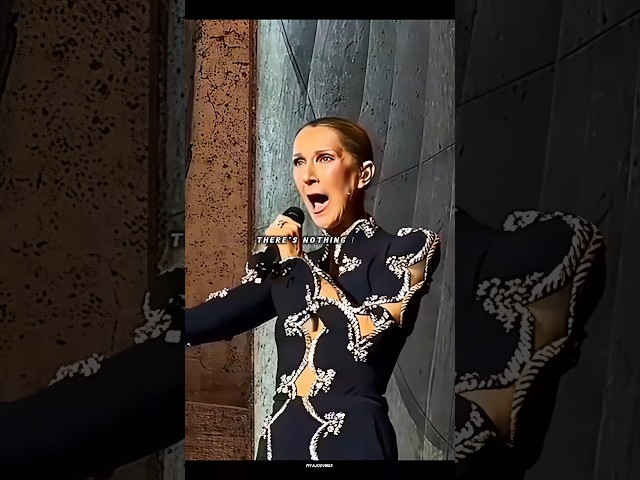
Several comments beneath the Piyajoo Vibes clip noted Dion’s remarkable physical resilience, referencing her well-documented health challenges in recent years. Dion disclosed in late 2022 that she had been diagnosed with stiff-person syndrome, a rare neurological condition that affected her ability to perform and led to the cancellation of significant portions of her touring schedule.
Her gradual return to the stage has been followed closely by fans worldwide, and performances of any kind carry additional weight in that context. The comment noting that it was “truly amazing to see her back on stage performing again” captures a sentiment that appears throughout the broader public conversation around her current work.
For audiences encountering this clip, the appeal operates on multiple levels simultaneously. There is the historical layer — the song’s connection to one of the highest-grossing films in cinema history and its place in the popular music canon. There is the vocal layer — the technical accomplishment of a performance that has remained a benchmark for the ballad form.
And there is the personal layer, the private emotional associations that individual listeners bring to a song they may have first heard at a specific moment in their own lives.
Music that functions effectively on all three of those levels simultaneously is comparatively rare, and “My Heart Will Go On” has demonstrated over nearly three decades that it belongs in that category.
The clip shared by Piyajoo Vibes offers a focused opportunity to experience Dion’s performance of a song that has defined her public identity more than perhaps any other single work in her catalog.
Whether encountered for the first time or revisited after years of familiarity, the performance in the video below stands as a document of one of the most distinctive voices in contemporary music applied to one of the most emotionally durable songs of the past thirty years. The full performance is available to watch below.